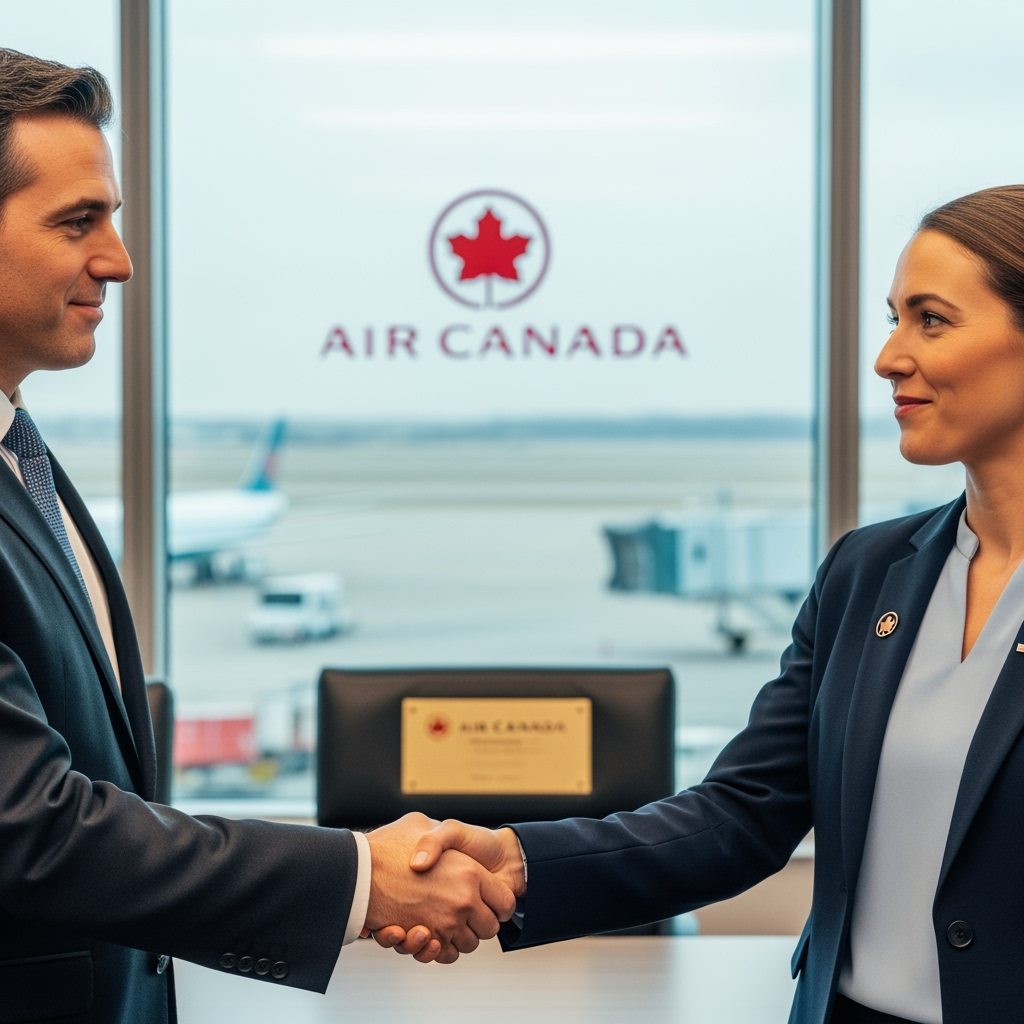
Air Canada’s unionized flight attendants have reached a settlement with the nation’s largest airline, concluding the first cabin crew strike in 40 years that disrupted travel for hundreds of thousands.
The strike, which lasted nearly four days, prompted the airline serving approximately 130,000 passengers daily to retract its third-quarter and annual earnings forecasts.
In early trading, Air Canada’s shares increased by 4%, though they have dropped 14% this year.
Stay updated with the latest news. Follow KT on WhatsApp Channels.
The airline plans a phased return to operations, anticipating full restoration might take over a week, while the union confirmed mediation completion with Air Canada and its low-cost unit, Air Canada Rouge.
“The strike is over. We have a tentative deal to present,” announced the Canadian Union of Public Employees on Facebook.
Air Canada mentioned some flights will be canceled over the next week to 10 days until schedules stabilize, offering affected customers options for refunds, travel credits, or rebooking on other airlines.
The strike began on Saturday after negotiations with the airline broke down, with attendants demanding payment for duties like passenger boarding.
While negotiation details remain undisclosed, the union stated unpaid tasks will now be compensated.
CUPE, representing 10,400 Air Canada flight attendants, aimed to address unpaid work, surpassing recent gains by U.S. airline staff like those at American Airlines.
In an uncommon act of defiance, the union continued striking after the Canada Industrial Relations Board labeled their actions illegal.
The refusal to comply with the board’s return-to-work order led to a stalemate involving the company, workers, and government.
Jobs Minister Patty Hajdu urged both parties to consider government mediation, increasing pressure on Air Canada by promising to probe unpaid labor claims in the airline industry.
For two years, unions in aerospace, construction, airline, and rail sectors have demanded higher pay and better conditions amid a tight labor market.
Air Canada’s attendants have long advocated for contracts including pay for ground duties like passenger boarding.
On Monday, the CEO refrained from offering solutions to the deadlock in a Reuters interview, defending the airline’s proposal of a 38% total compensation increase for attendants.
While many customers supported the attendants, frustration over flight cancellations mounted.
Retiree Klaus Hickman missed a Toronto flight earlier but rebooked with another airline, worried about making his return flight to Calgary for a connection to Germany.
Hickman empathizes with workers seeking better pay but is concerned about his health and travel issues.
“They need more money to survive, just like everyone else,” he commented.
Air Canada, part of the global Star Alliance, typically transports 130,000 passengers daily.
James Numfor, 38, from Regina, Saskatchewan, was stranded in Toronto for two nights after returning from his brother’s funeral in Cameroon. Air Canada provided only one hotel night for his family, leaving them without further assistance, forcing them to sleep at the airport.