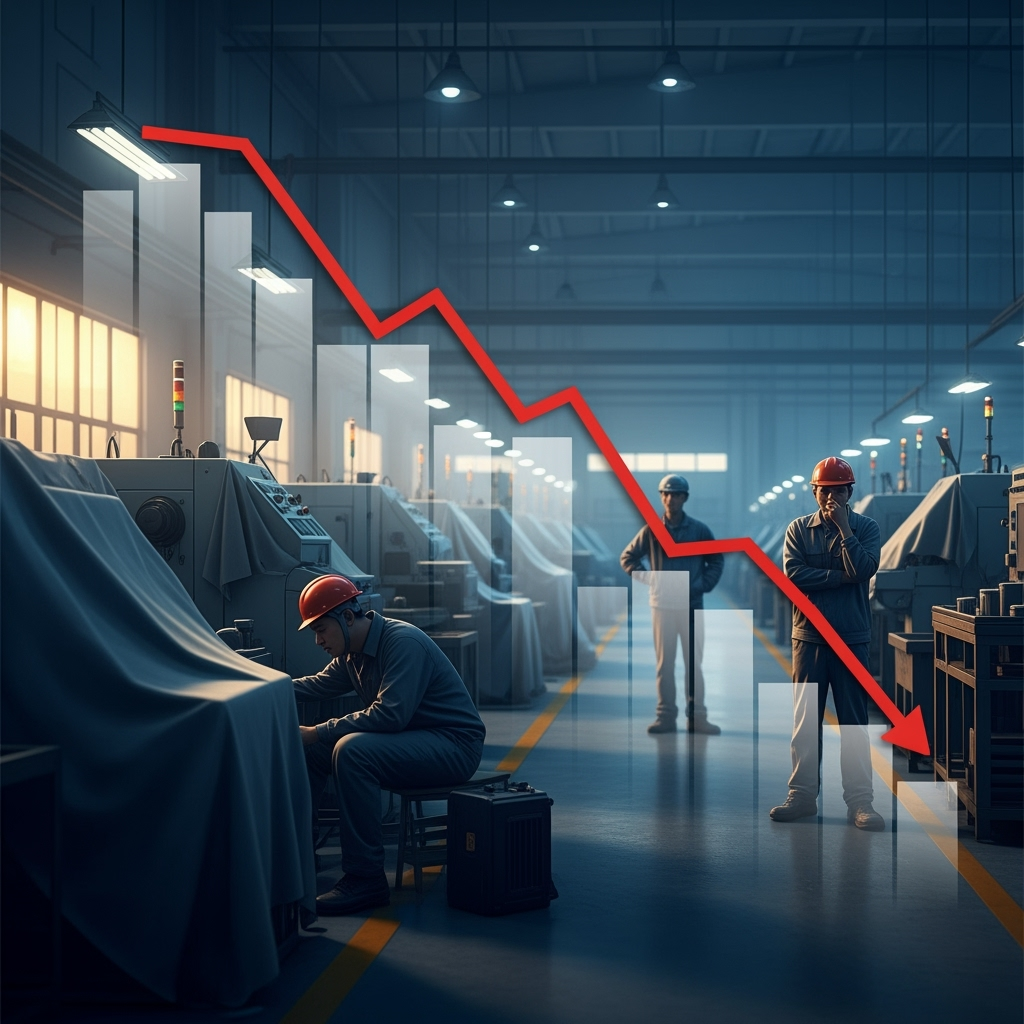
China’s manufacturing activity shrank for the fifth straight month in August, according to an official survey released on Sunday. This suggests that producers are waiting for further clarity on a trade deal with the U.S., while domestic demand remains sluggish.
The official purchasing managers’ index (PMI) increased slightly to 49.4 in August from 49.3 in July. It remains below the 50-mark that separates growth from contraction and missed a median forecast of 49.5 from a Reuters poll.
China’s economy is facing challenges such as weakening exports due to U.S. tariffs, a downturn in the property sector, rising job insecurity, heavily indebted local governments, and extreme weather. Economists warn that these pressures threaten Beijing’s ambitious 2025 growth target of “around 5%.”
The non-manufacturing PMI index, which includes services and construction, expanded at a faster pace, rising to 50.3 from 50.1 in August, as reported by the National Bureau of Statistics (NBS).
The NBS composite PMI, which includes both manufacturing and non-manufacturing, was 50.5 in August compared to 50.2 in July.
China’s economic momentum has slowed in the third quarter due to persistently weak domestic demand and a cooling property market, said Zhiwei Zhang, president and chief economist at Pinpoint Asset Management.
“The macro outlook for the rest of the year largely depends on how long exports can remain strong and whether fiscal policy will become more supportive in Q4,” Zhang stated.
While July exports exceeded forecasts, the increase was supported by a low base and driven by a surge in shipments to Southeast Asia, as Chinese exporters strive to grow market share there amid fears of losing access to the U.S., the world’s largest consumer market—a push that some producers have called a “mad rat race.”
Earlier this month, the U.S. and China extended their tariff truce for another 90 days, maintaining levies of 30% on Chinese imports and 10% duties on U.S. goods. However, this uncertainty is eroding confidence on both sides of the Pacific.
Profits at China’s industrial firms fell for a third consecutive month in July, official data showed on Wednesday. This highlights how businesses are also struggling with subdued demand and persistent factory-gate deflation at home, putting pressure on Beijing to implement more stimulus measures.
Policymakers have increased consumer subsidies, but a prolonged property slump is still curbing spending, as real estate is a key store of household wealth.
Households’ reluctance to take out mortgages was reflected in July’s bank lending data, which unexpectedly contracted for the first time in 20 years.
Consumer spending could take a further hit if a recent ruling by China’s top court banning firms and employees from evading social insurance payments leads to job losses. Many companies and workers are already struggling to make ends meet, with urban unemployment edging up to 5.2% in July from 5% in June.
The decision is expected to support cash-strapped local authorities, who have been deprived of land-sale revenue, in replenishing depleted pension coffers as demands on public finances continue to grow. For instance, extreme weather alone has caused $2.2 billion in road damage since July 1.
Analysts polled by Reuters forecast the private sector RatingDog PMI to come in at 49.7, up from 49.5 a month earlier. The data will be released on Monday.