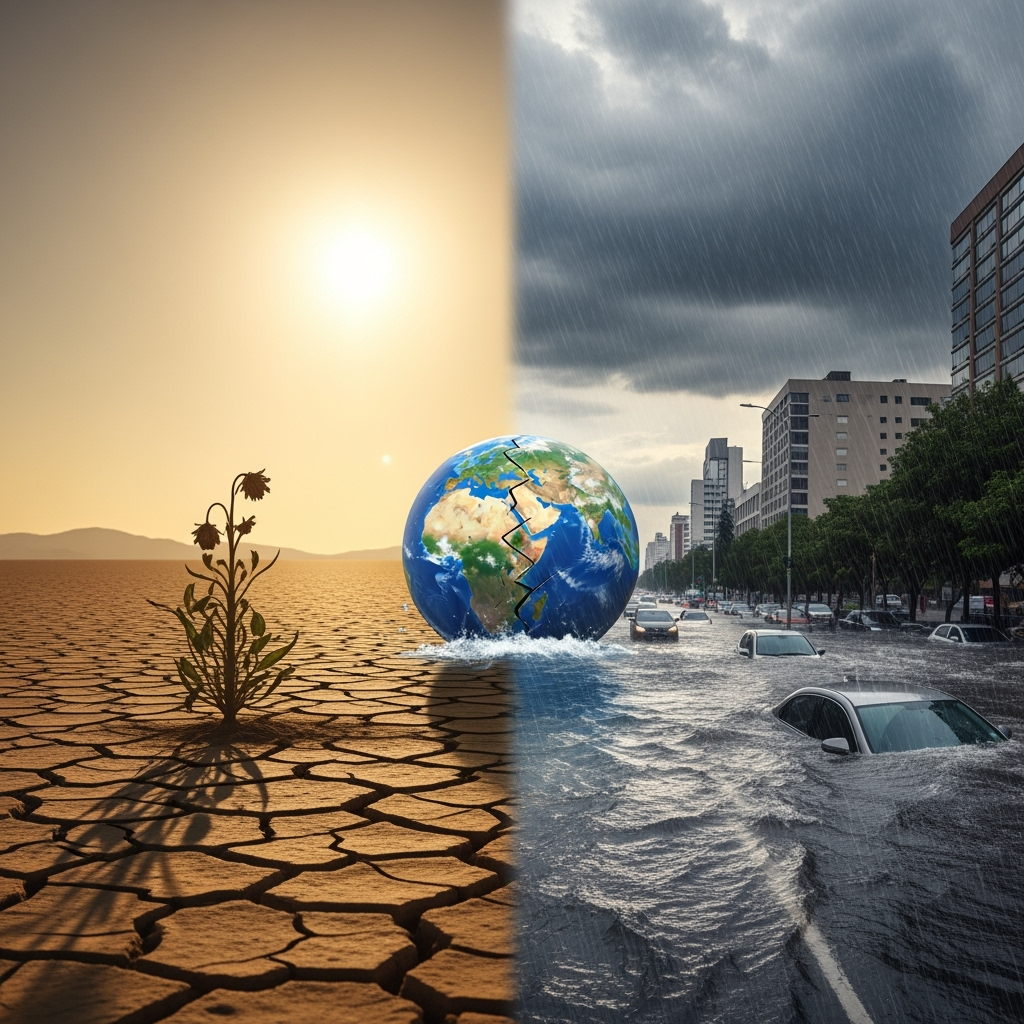
Climate change is causing increasingly erratic and extreme fluctuations between deluge and drought worldwide, the United Nations warned on Thursday.
The UN’s World Meteorological Organization stated in a report that the global water cycle is becoming more unpredictable, with shrinking glaciers, droughts, imbalanced river basins, and severe floods causing significant damage.
“The world’s water resources are under growing pressure and, at the same time, more extreme water-related hazards are having an increasing impact on lives and livelihoods,” WMO chief Celeste Saulo cautioned in a statement released with the annual State of Global Water Resources report.
Last year was the hottest on record, resulting in prolonged droughts in northern parts of South America, the Amazon Basin, and southern Africa.
Meanwhile, parts of central Africa, Europe, and Asia experienced wetter weather than usual, facing devastating floods or deadly storms, the report noted.
– ‘Increasingly Erratic’ –
Globally, the WMO noted that last year marked the sixth consecutive year of a “clear imbalance” in the world’s river basins.
“Two-thirds have too much or too little water, reflecting the increasingly erratic hydrological cycle,” it said.
The organization also highlighted the declining water quality in major lakes due to warmer weather, with glaciers shrinking across all regions for the third consecutive year.
The meltwater contributed approximately 1.2 millimeters to the global sea level in a single year, increasing the flooding risk for hundreds of millions of people living in coastal areas, the report warned.
The WMO called for more monitoring and data sharing across the board.
“Understanding and quantifying water resources and hydrological extremes is critical for managing risks,” the report emphasized, highlighting the dangers of droughts, floods, and glacier loss.