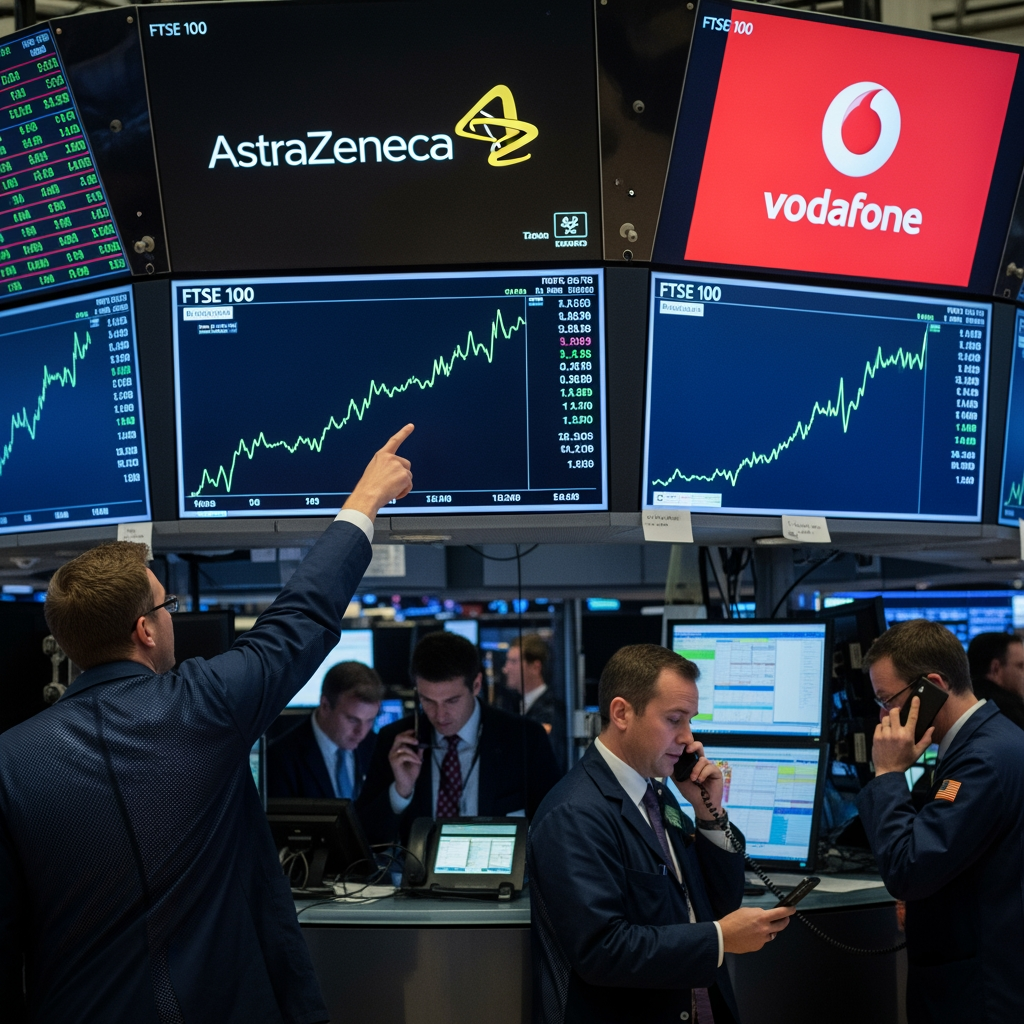
Britain’s FTSE 100 reached a record high for the second consecutive session on Tuesday. Weak UK labor market data raised hopes for Bank of England rate cuts, and drugmaker AstraZeneca hit an all-time high.
The blue-chip index closed up 1.2% at 9,899.6 points, while the mid-cap FTSE 250 increased by 0.8%.
AstraZeneca rose by 2.6%, solidifying its position as Britain’s largest listed stock by market value, driven by momentum from last week’s better-than-expected quarterly results.
Expectations for a BoE rate cut in December were strengthened by clear signs of cooling in Britain’s labor market, with unemployment rising to 5%, the highest in four years, and wage growth continuing to slow.
“There’s more slack building in the labor market – perhaps more so than assumed by the MPC (the BoE’s Monetary Policy Committee) in its November projections; and pay momentum continues to slow. Both should be encouraging for the MPC,” said Deutsche Bank’s chief economist Sanjay Raja.
The pound initially fell against the dollar following the data but stabilized to trade nearly flat.
In equities, both the pharma and healthcare indexes gained more than 2.5%, with AstraZeneca joined by GSK rising 3%, while consumer healthcare group Haleon climbed 3.2%.
Among energy companies, Shell rose 2.2% to its highest in more than a year, while BP gained 2.6%, buoyed by higher oil prices due to U.S. sanctions on Russian oil.
Vodafone jumped 8.3% to a more-than two-year high after a strong performance in Germany helped the company to raise its annual profit forecast and increase dividends for the first time in eight years.
Scientific tools maker Oxford Instruments surged 14.9%, its biggest single-day gain in nearly four years, on improved order momentum.
On the downside, food supplier Hilton Food slumped 22.7% to a ten-year low after warning that profit growth was likely to be challenging in the next financial year.