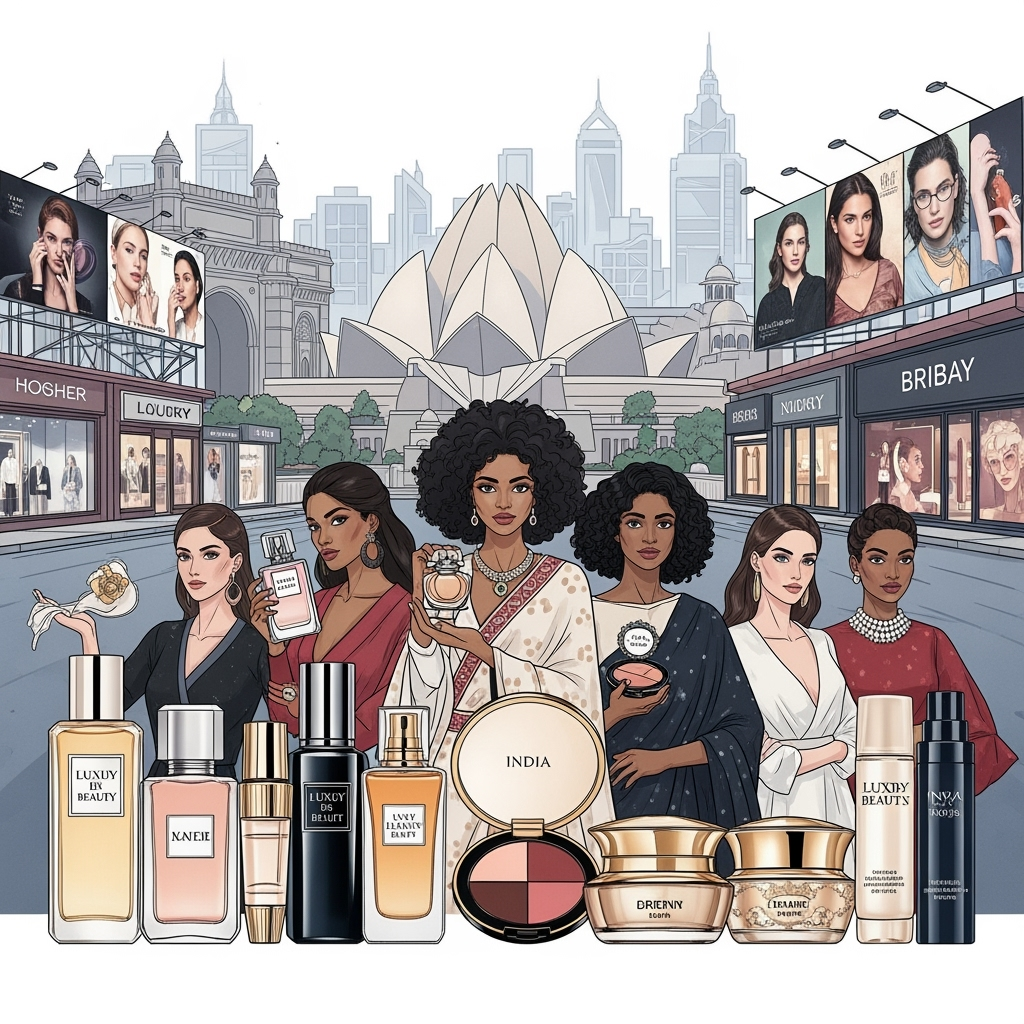
From Japan’s Shiseido to France’s L’Oreal, global cosmetics giants are increasingly focusing on India, viewing it as a key growth market for premium offerings while sales slow in developed economies.
India’s luxury beauty market is expected to grow fivefold to $4 billion by 2035 from $800 million in 2023, driven by its young, affluent, social-media savvy consumers with rising disposable incomes, according to a report by consulting firm Kearney and luxury beauty distributor LUXASIA.
Luxury beauty currently represents only 4% of the $21-billion beauty and personal care market in India, compared to 8% to 24% in leading Southeast Asian countries and 25% to 48% in developed markets such as China and the United States.
This indicates a vast potential for growth.
“India is the last bastion of growth for premium beauty,” said Sameer Jindal, managing director for investment bank Houlihan Lokey’s corporate finance business in India.
“The Indian consumer is willing to experiment and try out new things.”
US beauty giant Estee Lauder, which owns brands like Clinique and MAC, anticipates a strong path for expansion and long-term growth in India, despite facing sluggish sales in the Americas and Asia-Pacific.
“India today, within the Estee Lauder network, is seen as one of the priority emerging markets,” said country general manager Rohan Vaziralli, noting plans to initially target 60 million women in the country of over 1.4 billion.
Homemaker R. Priyanka, based in the southern city of Chennai, expressed excitement over having better access to Estee Lauder’s Jo Malone London fragrance in India, as a result of these companies’ efforts.
“It is easier than asking someone abroad to get it for you every time,” she added.
While global beauty brands may need to adapt some of their products for India, which experiences sultry temperatures in summer and oppressive humidity at other times, they face little competition from local brands.
Kearney and LUXASIA identified only Forest Essentials and Kama Ayurveda as major competitors, highlighting that domestic brands account for less than a tenth of luxury beauty sales.
In more established markets like China, Japan, and South Korea, domestic brands hold a 40% share.
“There is, of course, a premium perception gap between globally established brands and Indian brands,” said Devangshu Dutta, founder of retail consultancy Third Eyesight.
Global beauty giants’ substantial marketing budgets also give them an advantage over domestic brands, according to other industry observers.
Wooing Indian shoppers
Estee Lauder is analyzing online sales patterns to identify smaller cities to target, such as Siliguri in West Bengal, partnering with designers like Sabyasachi Mukherjee, and launching products such as kohl, an eyeliner favored by Indians.
The company has also invested in Forest Essentials, a brand featuring herbal ingredients, and in a program offering funding to domestic beauty start-ups.
This year, France’s L’Oreal announced increased investment in India, aiming to tap into the “elevated beauty desires” of the nation’s young, digitally savvy, empowered women shoppers to drive growth. It declined to comment further.
South Korea’s Amorepacific, known for brands like Innisfree and Etude, is attempting to leverage the Korean beauty craze in India with products tailored to the market.
These products include items for the popular “cleanser, serum, moisturizer, and sunscreen” beauty regimen, according to country head Paul Lee.
Japan’s Shiseido, with over 150 years of history, introduced its NARS brand on Indian beauty retailer Nykaa’s website this year and plans to expand its brand presence in the subcontinent.
Global brands are very enthusiastic about India, where consumers are spending more to keep up with trends like “cherry makeup,” noted Nykaa co-founder Adwaita Nayar, referring to a look featuring flushed cheeks, glossy lips, and soft pink eyes.
Amazon, which has also witnessed a significant surge in beauty demand in India, aims to identify emerging global trends and introduce more brands, said Siddharth Bhagat, director of beauty and fashion at the e-commerce company in India.
Retailer Shoppers Stop, which also introduces foreign labels, plans to open 15 to 20 beauty stores each year over the next three years to increase its revenue from the segment to a quarter from less than a fifth currently, according to its beauty business CEO Biju Kassim.