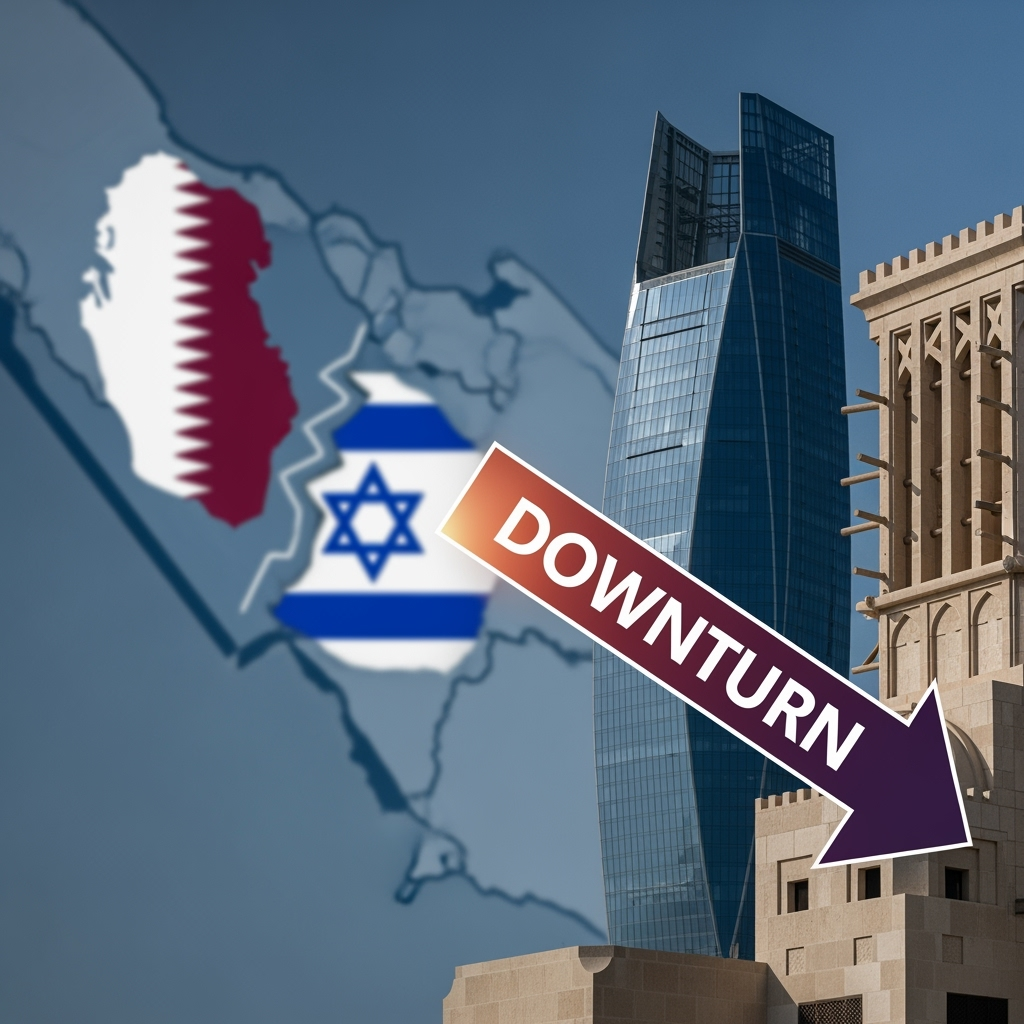
Most of the UAE and other Gulf stock markets opened slightly lower on Wednesday, following heightened geopolitical tension in the region after Israeli strikes targeting senior Hamas officials in Qatar’s capital, Doha.
At the opening of the markets on Wednesday, the Dubai Financial Market’s (DFM) general index slipped 0.27 percent to 5,941.34 points, while Abu Dhabi Securities Exchange dropped 0.213 percent to 9,932.49 points.
Similarly, Qatar Stock Exchange also plummeted 0.34 percent to 11,070 soon after the opening on Wednesday morning.
Stay up to date with the latest news. Follow KT on WhatsApp Channels.
Israel attempted to kill the political leaders of Hamas with an airstrike in Qatar on Tuesday, escalating its military action in the Middle East.
The regional stock markets also recorded drops after the previous geopolitical tension between Israel and Iran, but later recovered as tensions eased in the region. Similar to other markets, the Gulf equity markets are also prone to geopolitical tensions.
The Saudi stock exchange, the largest in the region, was also impacted by the regional tension, dropping 0.42 percent to 10,494 points on Wednesday morning.
The UAE stock markets usually track the global equity markets, but regional geopolitical tensions could also influence investor sentiment.
Bahrain Stock Exchange also inched lower at the opening of the markets, losing 0.04 percent to 1,945.9 points.
Boursa Kuwait also followed the regional trend, dipping slightly in the early hours on Wednesday.
However, Oman’s Muscat Stock Exchange bucked the regional trend, rising 0.27 percent to 5,086 points.