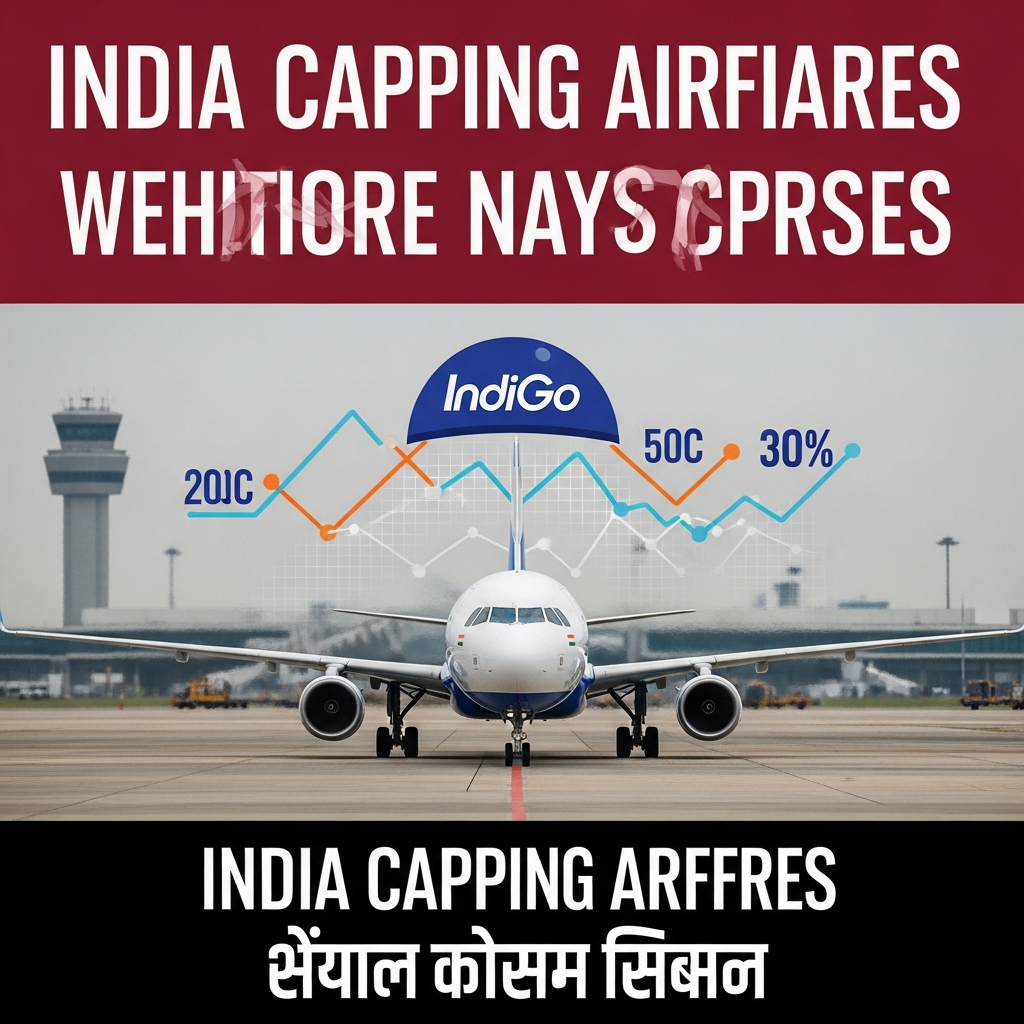
India capped airline fares on Saturday as IndiGo’s cancellation of hundreds of flights over five days led to a significant increase in fares with other airlines on popular routes. Passengers forced to seek alternative flights at the last minute reported having to pay exorbitant amounts just to reach their desired destinations without further delay.
The Indian government stated it was capping fares to maintain pricing discipline in the market. However, it did not provide details on what the caps would be.
The Ministry of Civil Aviation said in a statement, “In order to protect passengers from any form of opportunistic pricing, the Ministry has invoked its regulatory powers to ensure fair and reasonable fares across all affected routes. An official directive has been issued to all airlines mandating strict adherence to the fare caps that have now been prescribed. These caps will remain in force until the situation fully stabilizes.”
Stay up to date with the latest news. Follow KT on WhatsApp Channels.
“The Ministry will continue to closely monitor fare levels through real-time data and active coordination with airlines,” they added.
How much are other airlines charging?
On Saturday (December 6) morning, travel booking platform MakeMyTrip showed a significant rise in airfares for trips between major Indian cities like Mumbai, Delhi, and Bengaluru.
SpiceJet economy class flights from New Delhi to Bengaluru were priced from Rs63,000 (Dh2,572) to Rs84,000 (Dh3,429), while Air India flights (with one stop) from New Delhi to Hyderabad were about Rs62,000 (Dh2,531), almost 10 times more than fares on a regular weekday.
Flights from Mumbai to Delhi were about Rs25,000 (Dh1,020) to Rs40,000 (Dh1,633). Lowest fares from Mumbai to Delhi are around Rs6,000 (Dh245) to Rs8,000 (Dh326) on a regular day.
Last-minute Delhi–Chennai tickets are showing in the Rs62,000-Rs82,000 range. A Delhi–Guwahati flight is priced between Rs23,998 and Rs35,015, according to an ANI report.
Outrage over surge in fares
The price surge added to the woes of passengers already hassled by IndiGo’s cancellations. Some Indian celebrities spoke up about their ordeal on social media.
Singer Rahul Vaidya said he had to shell out Rs420,000 (Dh17,148) for last-minute Air India tickets for himself and those traveling with him from Goa to Mumbai on Thursday. Actress Nia Sharma took to Instagram to reveal that she paid Rs54,000 (Dh2,204) for her domestic Air India flight ticket.
Others spoke up in support, slamming airlines for taking advantage of passengers’ plight and called for a cap on prices. Actor Sonu Sood posted, “In a war or crisis, selling essentials at sky-high prices is blatant exploitation. The same applies when airlines hike fares 5-10x during regulatory or operational disruptions. Crisis isn’t a license to profiteer. We need strict fare caps — no more than 1.5-2x — to protect the common traveler.”
Former Indian cricketer Harbhajan Singh posted on X, “It’s concerning to see continued flight disruptions by IndiGo Airlines, causing inconvenience to passengers. The situation is worsened by rising fares on Air India, leaving travelers with limited, costly options. Immediate action is needed to ensure reliable service and fair pricing for all.”
However, Air India and Air India Express issued a statement after the caps announced by the Ministry of Civil Aviation, clarifying that, since 4 December, economy class airfares on non-stop domestic flights have been “proactively capped” to prevent the usual demand-and-supply mechanism being applied by revenue management systems.
“We are aware of screenshots of last-minute itineraries with one-stop or two-stop flights or a combination of economy and premium economy or business cabins taken from third-party platforms. It is not technically possible to cap all such permutations, but we are engaging such platforms to exercise oversight. Air India and Air India Express are seeking to add capacity to help travelers and their baggage reach their destinations as quickly as possible,” their spokesperson said.
IndiGo crisis continues
Air travel across India has been in turmoil this week after IndiGo canceled thousands of flights, prompting the government to announce special relief for the carrier and the operation of additional trains to help clear the backlog.
The flight cancellations are the biggest crisis ever for 20-year-old IndiGo, which has prided itself on on-time performance and attracted passengers with low-cost fares.
On Friday, more than 1,000 IndiGo flights were canceled. After the government announced the exemptions to the rules for IndiGo, the airline said it could return to normal operations between December 10-15.
The Delhi airport in a post on X on Saturday said flight operations are steadily resuming, but that some IndiGo flights continue to be affected.
Airport sources told Reuters that IndiGo canceled 124 flights in Bengaluru on Saturday, 109 in Mumbai, 86 in New Delhi, and 66 in Hyderabad.
Other major Indian airlines, including Air India and Akasa, have not had to cancel flights due to the new rules.
[With inputs from Reuters]