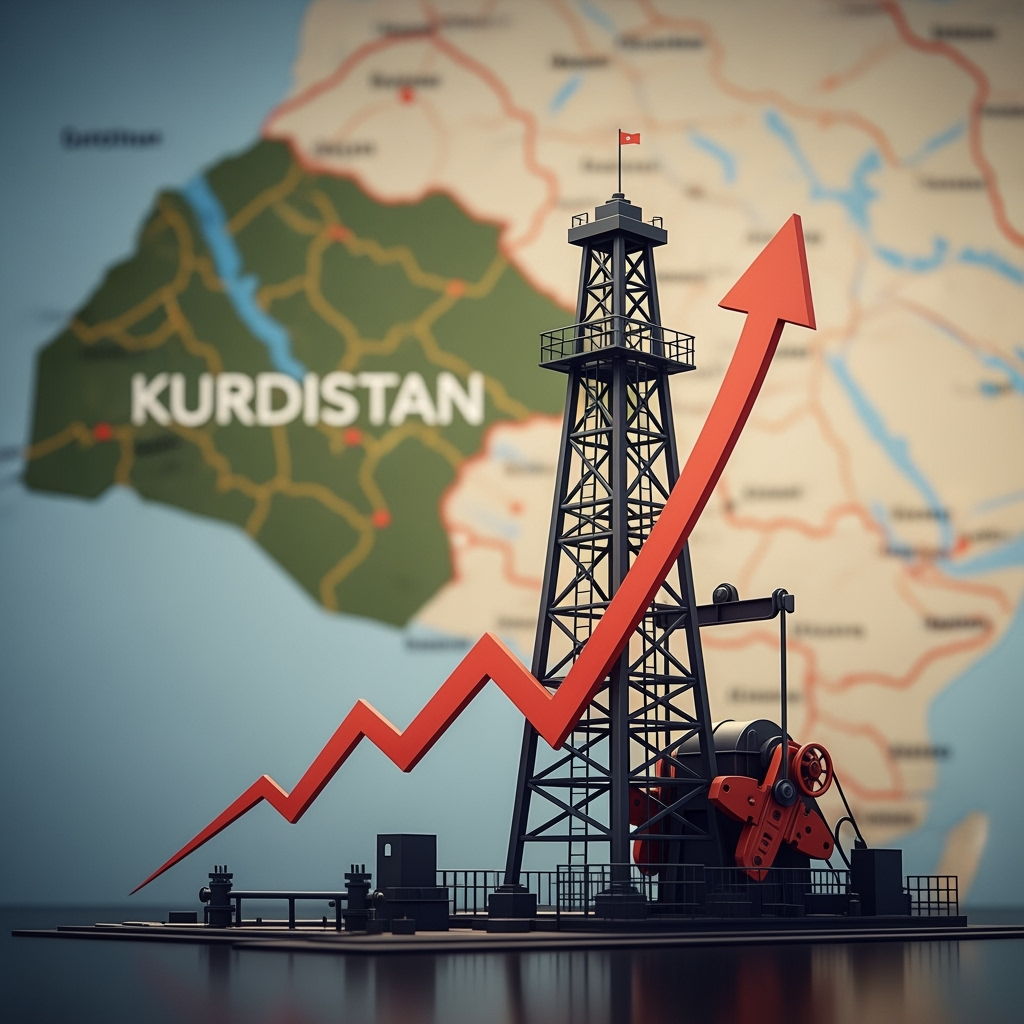
Oil prices rose by more than $1 a barrel on Tuesday after a deal to resume exports from Iraq’s Kurdistan stalled, easing some investor concerns that the restart would worsen worries about global oversupply. By 12:46 p.m. EDT (1646 GMT), Brent crude futures were up $1.06, or 1.59%, to $67.63 a barrel, while U.S. West Texas Intermediate crude rose $1.15, or 1.85%, to $63.43 a barrel, with both benchmarks recovering modest earlier losses.
Pipeline oil exports from Iraq’s Kurdistan region to Turkey had not restarted on Tuesday despite hopes of an agreement to resolve the deadlock, as two major producers demanded debt repayment guarantees. The agreement between Iraq’s federal and Kurdish regional governments and oil companies aims to resume exports of approximately 230,000 barrels per day of oil from Kurdistan to the global market via Turkey, halted since March 2023.
Brent and WTI had fallen for the previous four sessions, declining around 3%.
“This was a perfect example of do not count your barrels until they have been pumped. The market sold off on reports of a Kurdistan deal, and the lack of a deal has now taken those barrels out of the market,” said Phil Flynn, a senior analyst at Price Futures Group. Overall, the global oil market is bracing for increased supply and slowing demand, affected by the adoption of electric vehicles and economic pressures driven by U.S. tariffs. In its latest monthly report, the International Energy Agency said world oil supply would rise more rapidly this year and a surplus could expand in 2026 as OPEC+ members increase output and supply from outside the producer group grows. Still, risks loom over the market as traders monitor the European Union’s consideration of stricter sanctions on Russian oil exports, as well as any escalation of geopolitical tensions in the Middle East.
“Supportive elements are still low OECD oil inventories,” said UBS analyst Giovanni Staunovo, referring to stockpiles in higher-income economies around the world. “On the other hand, higher crude exports from OPEC+ are a headwind for prices as well as the lack of new sanctions targeting Russian oil exports.” U.S. crude oil stockpiles were expected to have risen last week, while gasoline and distillate inventories likely fell, according to a preliminary Reuters poll on Monday.
The market awaits weekly oil stock data from the American Petroleum Institute, later on Tuesday.
“The market will be keeping a close eye on distillate inventories, the soft underbelly of the market,” said Price Futures Group’s Flynn.
A build in distillate stocks would help ease concerns surrounding Russian supplies amid attacks on the country’s oil infrastructure, Flynn added. Ukraine’s military struck two Russian oil distribution facilities in the Bryansk and Samara regions overnight, Kyiv’s general staff said. Ukrainian President Volodymyr Zelenskiy was set to meet U.S. President Donald Trump at the United Nations on Tuesday and press for new sanctions on Russia, in a fresh bid to persuade Trump to swing more firmly behind Kyiv’s war effort.