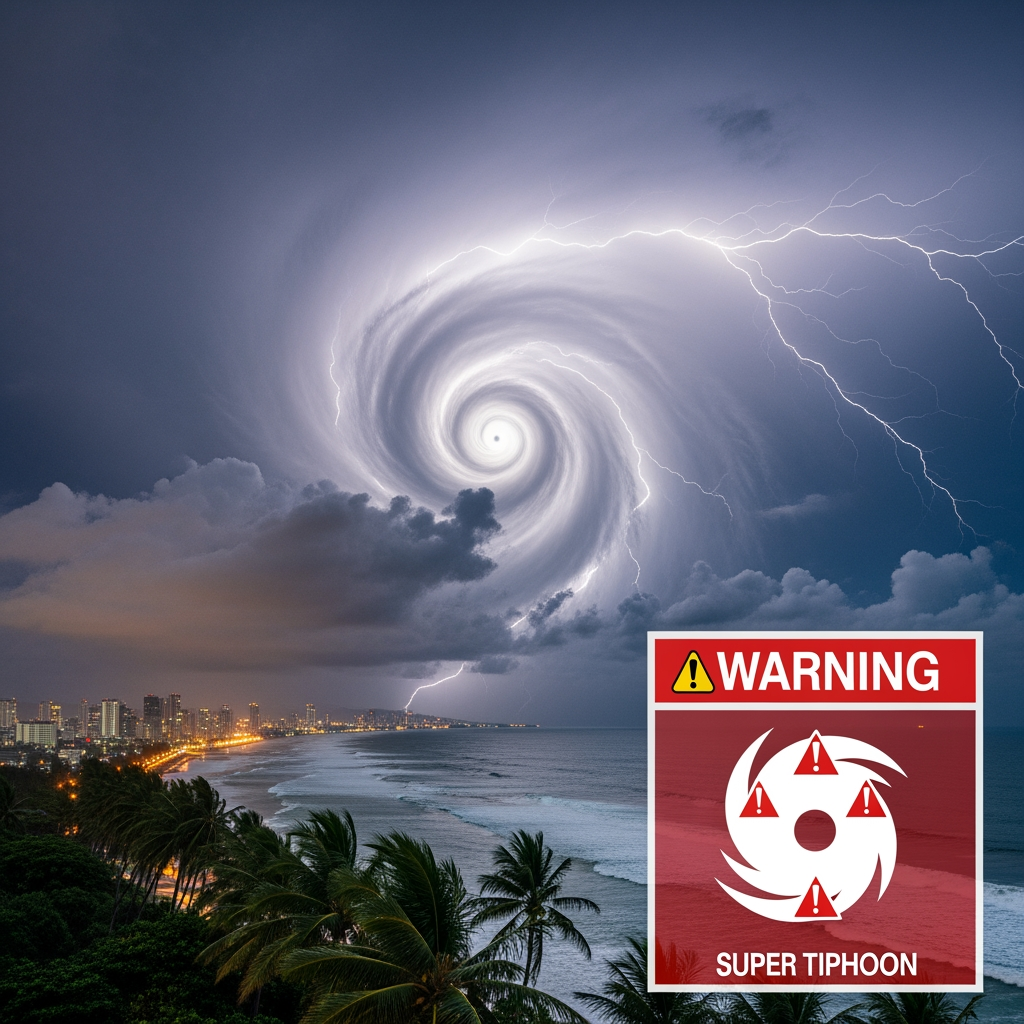
The Philippines’ weather bureau has issued a warning for life-threatening storm surges up to five meters and destructive winds as Typhoon Fung-wong approaches the country’s eastern coast. It is forecasted to intensify into a super typhoon before making landfall on Sunday night.
The massive circulation of the typhoon, spanning 1,500 kilometers (932 miles), is already affecting parts of the eastern Philippines with heavy rains and winds, according to PAGASA weather forecaster Benison Estareja.
“It can cover almost the entire country,” Estareja stated. Fung-wong, locally known as Uwan, is currently packing maximum sustained winds of 140 kph and gusts up to 170 kph, and could strengthen to 185 kph as it approaches land, Estareja added. This is powerful enough to destroy homes, topple trees, and damage structures.
Stay up to date with the latest news. Follow KT on WhatsApp Channels.
Up to 200 mm of rainfall is expected in eastern Philippine provinces, especially in the Bicol region and parts of Samar, increasing the risk of widespread flooding and landslides. Northern and central Luzon could see 100-200 mm of rainfall during its passage.
PAGASA urged residents in low-lying and coastal areas to evacuate to higher ground and cease all marine activities, warning of destructive storm surges that could inundate coastal communities, along with violent winds.
Several local governments have suspended classes for Monday, and the Philippines’ flag carrier has canceled some flights in anticipation of Fung-wong’s expected landfall.
This warning comes just days after Typhoon Kalmaegi caused destruction across the region, affecting coastal communities, toppling trees, and damaging roofs and windows.
Kalmaegi resulted in the deaths of 204 people in the Philippines and five in Vietnam, displacing hundreds of thousands and causing widespread power outages.
Vietnam’s disaster agency reported damage to nearly 2,800 homes and noted that about 500,000 people remain without electricity. In the Philippines, severe flooding destroyed homes and clogged streets with debris.
Vietnam and the Philippines are highly vulnerable to tropical storms and typhoons due to their locations along the Pacific typhoon belt, frequently suffering damage and casualties during peak storm seasons.
In Thailand, Kalmaegi’s lingering impact led to heavy rain and localized flooding in parts of the northeast and central regions.
Scientists have warned that storms like Kalmaegi are becoming more powerful as global temperatures rise.