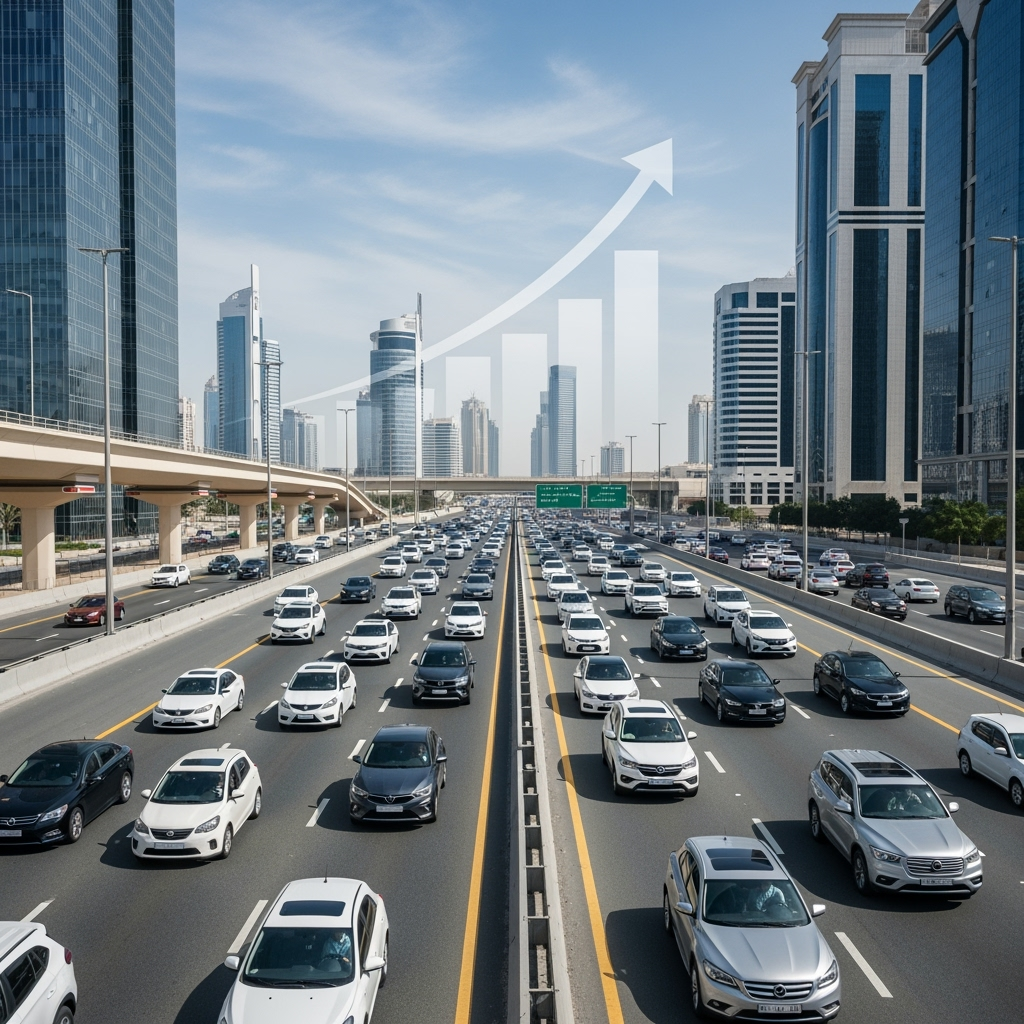
The UAE is experiencing a sharp rise in the number of vehicles on its roads as the country’s population grows.
According to official data released by Dubai’s toll gate operator, Salik, the number of active registered vehicles in the country reached 4.56 million by June 2025, up from 4.17 million in June 2024. This marks a 9.35 percent increase year-on-year, adding around 390,000 vehicles to the roads.
In addition, vehicle registrations rose by 2 percent quarter-on-quarter during the second quarter of 2025. This rise coincides with a population boom, with Dubai’s population growing by over 208,000 between June 2024 and June 2025, according to the Dubai Statistics Centre.
Stay up to date with the latest news. Follow KT on WhatsApp Channels.
Statistics by the Roads and Transport Authority (RTA) revealed that during daytime hours, the number of vehicles on the roads in Dubai alone reaches 3.5 million — reflecting a 10 percent increase in registered vehicles over the past two years, far surpassing the global average of 2-4 percent.
After a seasonal dip in traffic during the summer months, when many residents travel abroad to escape the heat, congestion is quickly building up again, particularly during peak morning and evening hours. With schools set to reopen the next day, traffic volumes are expected to increase further as residents return from holidays. In addition, many residents from neighbouring emirates drive into Dubai, increasing the number of vehicles on the road.
The Roads and Transport Authority, Dubai, has already identified key factors for the surge in traffic congestion and has accordingly laid out plans to improve traffic flow up to 30 percent.
To ease traffic congestion, the Authority has put in place dynamic toll tariffs, 30 infrastructure projects worth billions of dirhams in 3 years; commercialization of key services such as Salik, Dubai Taxi, Parkin and Mada Media; flexible and remote working initiatives, heavy vehicle restrictions, school zone improvements and dedicated bus lanes.
In addition, the RTA is also enhancing 11 major road corridors including Umm Suqeim-Al Qudra Corridor, Hessa Street and Al Fay Street among others.
The surge in vehicle numbers has sparked discussions on the need for updated car ownership and registration policies. In March, Suhail Al Mazrouei, UAE Minister of Energy and Infrastructure, highlighted that vehicle growth in Dubai had surpassed 8 percent, stressing the need for improved traffic management.
“The Ministry requested that the issue be included in the UAE Government’s Annual Meetings to mobilize efforts and enhance coordination with local authorities,” Al Mazrouei said.
Compounding the traffic challenges is the daily commute of nearly one million people who travel to Dubai from neighbouring emirates for work and business, placing additional strain on the city’s infrastructure.
Since the post-pandemic recovery in 2021, traffic volumes in Dubai and across the UAE have steadily increased, driven by an influx of professionals and high-net-worth individuals drawn to the country’s dynamic economic landscape.