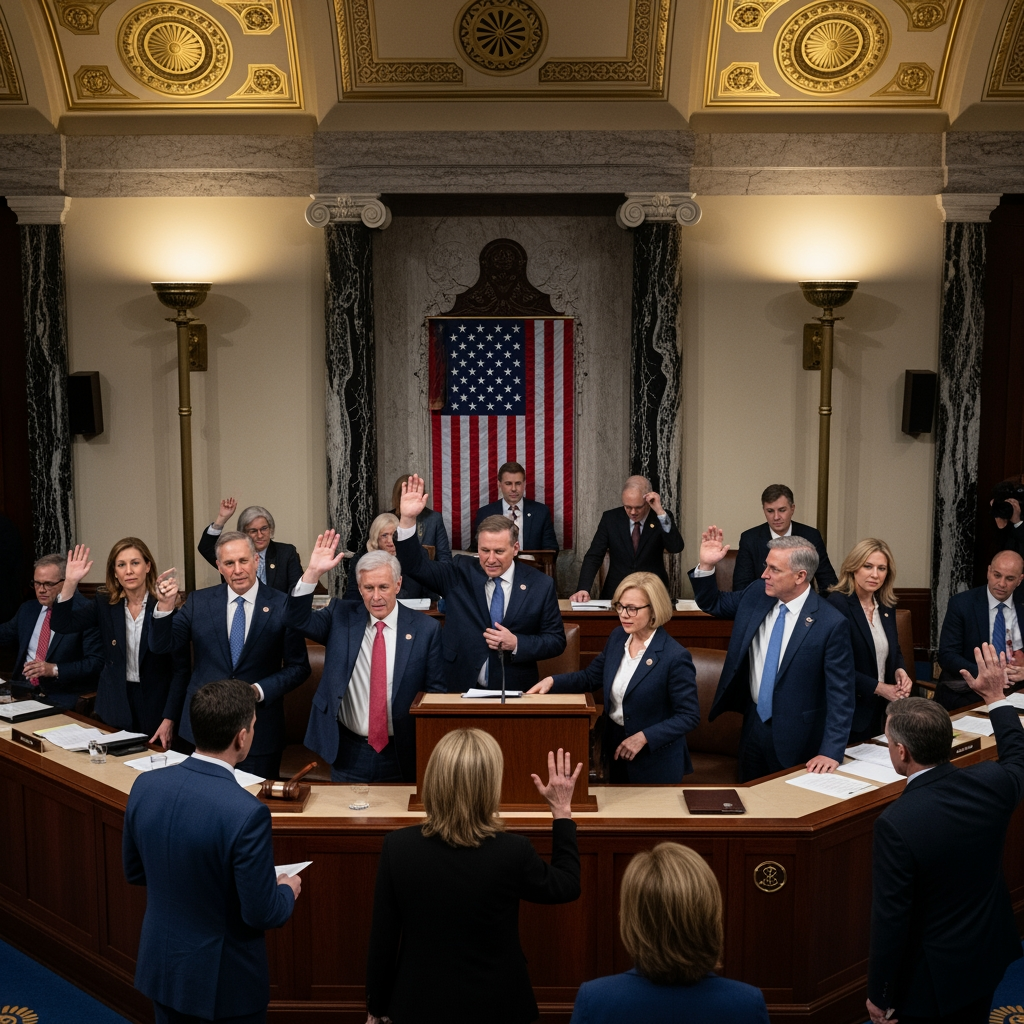
The US Senate on Monday approved a compromise to end the longest government shutdown in US history, breaking a weeks-long stalemate that disrupted food benefits for millions, left hundreds of thousands of federal workers unpaid, and snarled air traffic. The 60-40 vote passed with support from nearly all chamber Republicans and eight Democrats, who unsuccessfully tried to tie government funding to health subsidies set to expire at the end of the year. While the agreement sets up a December vote on these subsidies, which benefit 24 million Americans, it doesn’t guarantee their continuation.
The deal would restore funding for federal agencies that lawmakers allowed to expire on October 1 and stall President Donald Trump’s campaign to downsize the federal workforce, preventing any layoffs until January 30.
Next, it heads to the Republican-controlled House of Representatives, where Speaker Mike Johnson has indicated a desire to pass it by Wednesday and send it to Trump to sign into law. Trump has called the deal to reopen the government “very good.” The deal would extend funding through January 30, leaving the federal government on a path to add about $1.8 trillion a year to its $38 trillion debt. Following Democrats’ high-profile election victories in New Jersey, Virginia, and the election of a democratic socialist as New York City’s next mayor, the deal has angered many Democrats who note there’s no guarantee the Republican-controlled Senate or House would extend the health insurance subsidies.
“We wish we could do more,” said Senator Dick Durbin of Illinois, the chamber’s No. 2 Democrat. “The government shutting down seemed to be an opportunity to lead us to better policy. It didn’t work.”
A late October Reuters/Ipsos poll found that 50% of Americans blamed Republicans for the shutdown, while 43% blamed Democrats.
US stocks rose on Monday, buoyed by news of progress on a deal to reopen the government.
Trump has unilaterally canceled billions of dollars in spending and trimmed federal payrolls by hundreds of thousands of workers, intruding on Congress’s constitutional authority over fiscal matters. These actions have violated past spending laws passed by Congress, and some Democrats question why they should vote for such spending deals in the future.
The deal does not appear to include any specific guardrails to prevent Trump from enacting further spending cuts.
However, the deal would fund the SNAP food-subsidy program through September 30 of next year, preventing any possible disruptions if Congress were to shut down the government again during that time.