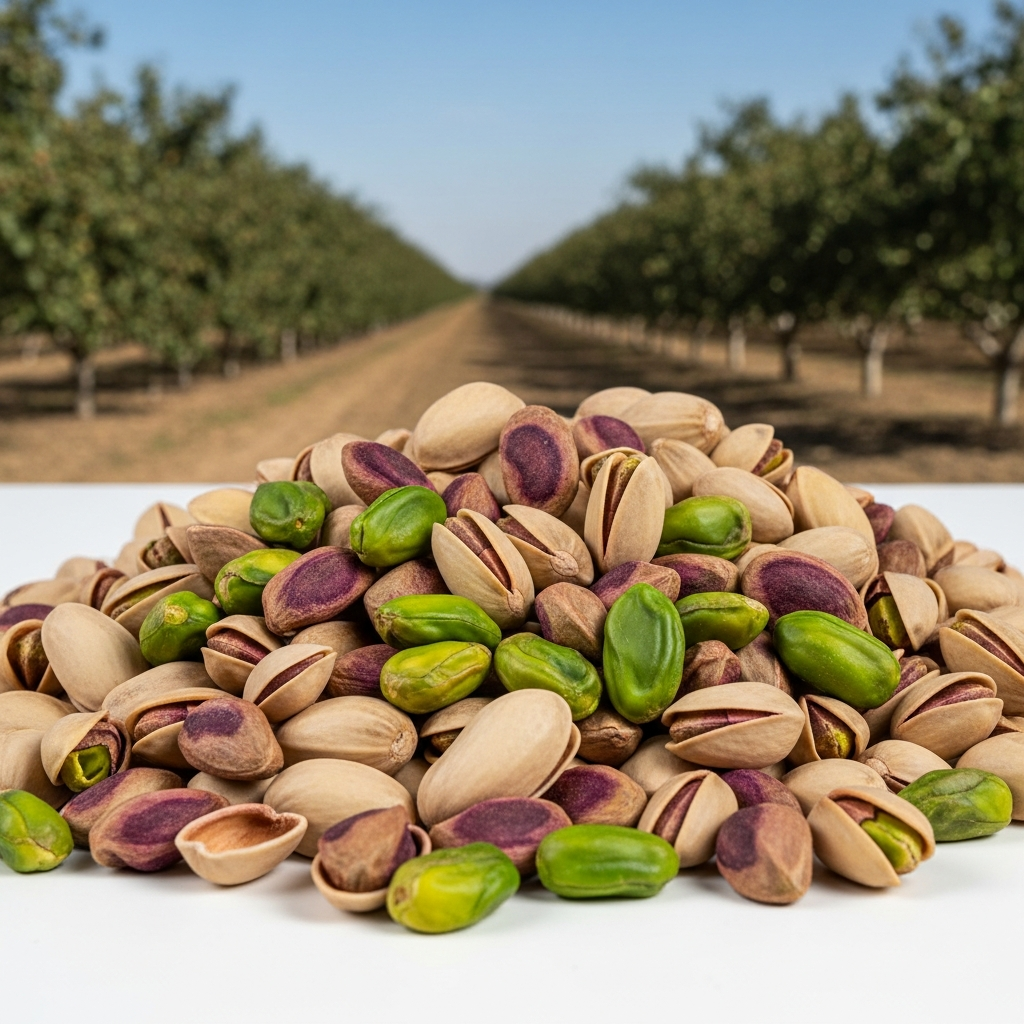
In Argentina’s burgeoning pistachio region, lines of trees with maturing yellow fruits punctuate the arid landscape. This is a testament to the region’s effort to leverage its suitable climate to meet the global pistachio demand, driven by the popularity of pistachio-stuffed Dubai chocolate.
Over the past five years, Argentina’s pistachio acreage has skyrocketed to around 25,000 acres, reports the National Network to Study Pistachio Trees in Argentina, established by scientists in 2023. Most cultivation occurs in San Juan, a province known for mining and agriculture, nestled by the Andes.
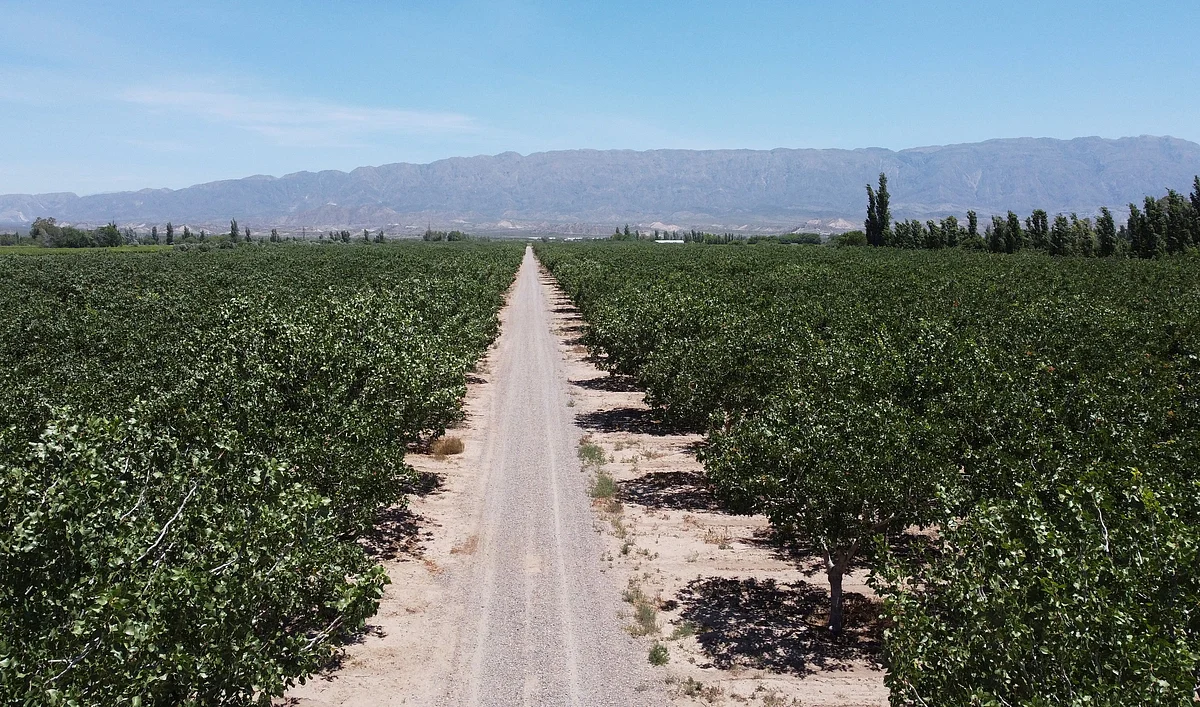
A drone captures pistachio trees flourishing in an orchard owned by Piste, a family business pioneering pistachio farming in Argentina, located in San Juan.
Farmers believe there’s ample room for expansion. The network has pinpointed 65,000 sqkm — 16 million acres — across San Juan, Mendoza, San Luis, and La Pampa as ideal for pistachio growth, which requires about seven years to yield substantial fruit, thriving in hot, arid summers and cool winters.
While the top pistachio producers — the US, Iran, and Turkey — dwarf Argentina, the country stands as South America’s sole significant grower. Producers assert it could emerge as a key exporter, especially during the northern hemisphere’s off-season. “Argentina can undeniably become a major producer,” says Alberto Aguilera, overseeing San Juan’s pistachio groves for SolFrut, which will become one of the largest producers with nearly 3,000 acres when harvesting begins in earnest in 2027. “The land, water, and climate conditions are all here.” Argentine growers typically use rootstock seeds from California, which boasts about 500,000 pistachio-bearing acres. The Wonderful Company, responsible for 15-20% of the US crop, notes a tight supply for pistachio kernels as both an ingredient and a snack.
“Demand is insatiable,” comments Stephen Vasquez, Executive Director of the US Pistachio Administrative Committee, overseeing quality for nearly all US-produced pistachios. This includes Argentina, where the viral success of pistachio-filled “Dubai chocolate” on TikTok in 2023 has led companies to diversify into pistachio dulce de leche and pastries. Even YPF, the national oil and gas company, markets a pistachio alfajor, a classic Argentine treat.
Marcelo Ighani, a 74-year-old Iranian immigrant, recalls being deemed “crazy” when he initiated the nation’s first pistachio crop in the 1980s in San Juan.
In November, at Pisté’s nursery, six women prepared pistachio rootstocks while listening to music. Since 2023, Pisté has more than doubled its annual rootstock production to 400,000 plants expected in 2025, for its use or sale to farmers.
“Demand is overwhelming,” states Maximiliano Ighani, who assists in running the business.
A 2024 report by Argentina’s Federal Council of Investments reveals that the country exports 33% to 50% of its pistachios, primarily to Italy, followed by Russia, Australia, and other Latin American countries.
Producers told Reuters they anticipate export growth as more investors enter the market, meeting local demand and as more pistachio trees mature. Though no official estimates exist, industry leaders claim only a small portion of Argentina’s pistachio acreage currently yields nuts. SolFrut began planting in 2019 on former olive-growing land, investing about $12,000 per acre, according to José Chediack, President of Grupo Phronesis, which owns SolFrut. While acknowledging pistachio’s current “good moment,” he remains cautious about the boom’s longevity. He believes the nut’s potential could increase if macroeconomic improvements under President Javier Milei result in banks offering lower interest rates and extended loan repayment terms. Some producers have swapped vineyards for pistachios and other nuts due to declining global wine consumption.
Anticipating pistachio’s potential before the current boom, Mendoza province, renowned for its Malbec grapes, issued a 2020 press release boasting its expanding pistachio acreage, dubbing the nut “green gold” and including a pistachio-and-cheese empanada recipe.
Ramiro Martins, a third-generation wine producer in Mendoza, planted about 250 acres of pistachios expected to yield in 2026. He’s also replaced vineyards with almond and walnut trees.
“We recognized the market’s shift towards healthier trends,” he explains. “We’ve invested significant hope and luck in this venture.”
In San Juan, home to approximately 800,000 people, pistachio trees rank third in agricultural acreage, trailing vineyards and olive groves.
“Pistachio will significantly impact San Juan’s economy,” states Miguel Moreno, the province’s agriculture secretary. “This sustained demand has surprised everyone, encouraging long-term investments.” The pistachio craze is evident here. At the Tres Cumbres alfajores factory, a worker spreads pistachio paste between cookies. Nearby, the Habana artisanal ice cream shop offers three themed flavors: classic pistachio, pistachio with white chocolate, and Dubai chocolate pistachio — both added this year.
However, a recent visit by Graciela Gomez and her grandson found the store out of plain pistachio. She was incredulous.
“No pistachio? How can that be?” she questioned.