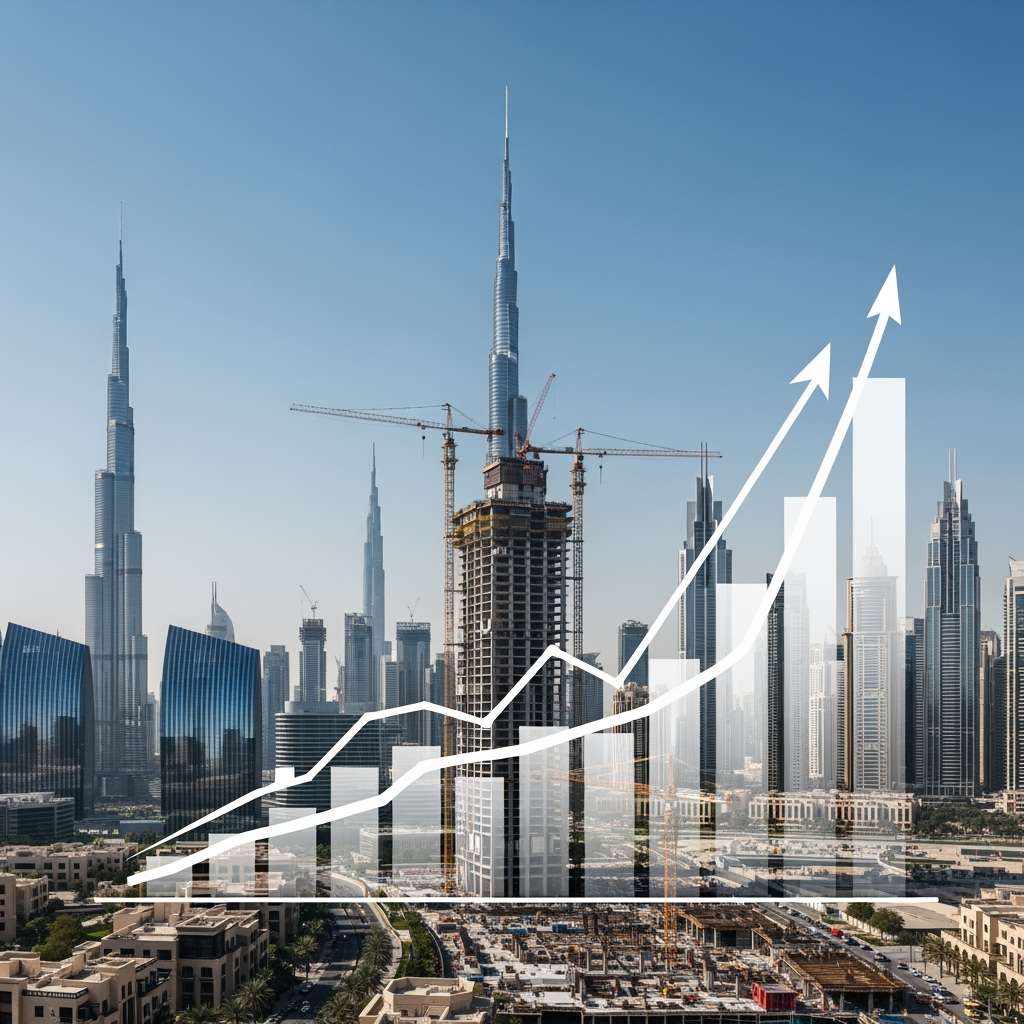
Dubai’s real estate market continues its impressive trajectory through 2025, with new statistics showing a rise in both off-plan and secondary sales as local and international investors deepen their ties to the city.
Research by eXp Dubai reveals a 26% increase in transactions from May to August compared to the year’s first four months, indicating growing momentum despite the typical August slowdown.
The Dubai Land Department reported 75,519 property transactions between May and August, a significant rise from 60,110 between January and April. Although transactions fell 4.5% month-on-month from July to August due to the summer lull, analysts emphasize that the overall trend is upward, driven by domestic demand and strong foreign capital inflows. Off-plan activities led the way, making up 58% of transactions during these months, compared to 52.7% earlier, showcasing developers’ success with flexible payment plans and appealing launch prices.
Stay informed with the latest updates. Follow KT on WhatsApp Channels.
A pivotal shift in buyer behavior is supporting this momentum. Engel & Völkers Middle East reported a 22% increase in secondary market sales in the first eight months of 2025 compared to last year, highlighting that more tenants are choosing to buy homes over renting. Rising rents, attractive mortgage offers, and a growing sense of permanence among expatriates are prompting families and professionals to commit to homeownership. “Ownership is no longer just a dream for many tenants; it’s becoming the preferred choice for long-term security and value,” said Daniel Hadi, CEO of Engel & Völkers Middle East.
Dubai’s residential market reached another milestone in August with 17,879 transactions worth Dh42.4 billion, marking a 17% rise in volume and 12% in value year-on-year. Off-plan sales made up nearly three-quarters of all transactions, up 25% from the previous year, while the resale market also saw gains. Larger homes were in demand, with sales of four-bedroom properties up 70% and five-bedroom or larger homes up 63% over the same period.
Prices are rising for both villas and apartments. Property Monitor notes that in August, average values were Dh1,664 per square foot, 16.3% higher than last year. Villas saw significant increases in lifestyle-focused communities like Victory Heights (up 37%), Dubai Hills Estate (26%), and Arabian Ranches (23.2%). Apartments also experienced growth, led by Jumeirah Village Triangle (29.3%) and Jumeirah Village Circle (17%). Analysts point out that strong population growth, limited supply in mature communities, and Dubai’s status as a global safe haven continue to support price stability.
For investors, Dubai’s rental yields are among the highest worldwide. In August, average gross yields were 6.76%, with apartments at 7.12% and villas at 4.92%. Despite double-digit price growth, yields significantly exceed those in prime international cities like London (3–5%), Singapore (3–4%), and New York (5–7%). As leasing volumes dropped 4% this year and new contracts fell 14%, more residents are opting for ownership as protection against rising rents.
Demand remains diverse, spanning both international investors and local residents. Indian, British, German, Egyptian, and Chinese buyers are highly active, especially in the off-plan market, while domestic buyers are driving the resale segment. Mortgages are increasingly important, with loan-to-value ratios of 70–80% and rates around 3.9%, among the most competitive globally. Simultaneously, cash purchases and developer-backed installment plans keep demand strong in the off-plan sector.
Adding further depth is the First-Time Home Buyer Programme, launched in July by the Dubai Land Department and the Department of Economy and Tourism. This initiative provides first-time Emirati and expatriate buyers with priority access to new launches, preferential pricing, and tailored mortgage products.
Developers like Emaar, Damac, Binghatti, and Danube have committed to allocating at least 10% of new units priced below Dh5 million exclusively to this segment. Banks, including Emirates NBD, Dubai Islamic Bank, and Mashreq, are backing the program with lower rates and faster approvals. Officials state the scheme aligns with the Real Estate Strategy 2033 and the D33 economic agenda, aimed at doubling GDP and boosting homeownership rates.
Market experts anticipate the dual drivers of global investment in off-plan projects and the shift toward resident ownership in the resale market to remain strong through year-end. With population growth, flexible developer offerings, and government-backed initiatives reducing entry barriers, Dubai’s real estate sector is increasingly seen as a long-term growth opportunity rather than just a cyclical play. As Engel & Völkers’ Hadi noted, “Dubai’s property market is evolving beyond short-term investment cycles. It’s about residents choosing to establish roots here — buying homes for security, lifestyle, and long-term value creation. This shift is poised to define the next phase of the city’s real estate journey.”