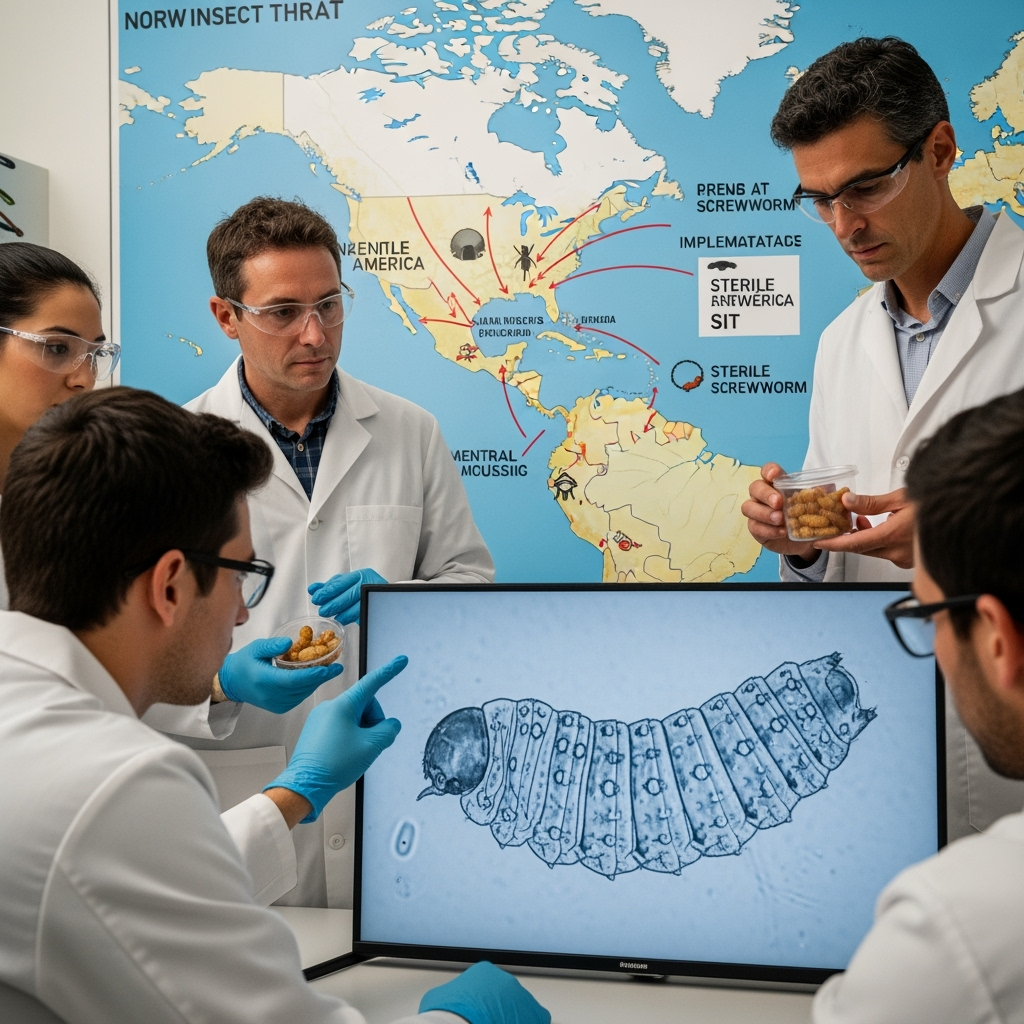
Western media reported that the infected person received treatment, and the authorities took preventive measures. The dangerous screwworm female began its outbreak in Central America and southern Mexico late last year in 2024, targeting livestock and warm-blooded animals by laying its eggs in wounds, with larvae penetrating live flesh and causing deadly damage if untreated. The screwworm infection causes significant losses to livestock and could disrupt the US beef market, which already faces supply shortages, with the cost of the outbreak in Texas alone potentially reaching $1.8 billion.
A ‘fly sterilization’ facility is a dedicated center for producing large numbers of male flies, which are then sterilized before being released into the natural environment. When these sterile males mate with wild females, they prevent reproduction, gradually leading to the collapse and spread of parasite populations. This technique proved successful in eradicating the screwworm in America during the 1960s.
Recently, US Agriculture Secretary Brooke Rollins announced plans to build a new facility in Texas to combat the threat of the parasite’s return, while Mexico has also started constructing a similar facility at a cost of $51 million. According to the US Department of Agriculture, controlling the spread of the parasite requires releasing about 500 million sterile flies weekly to push it away to the ‘Darién Gap’ area between Panama and Colombia.