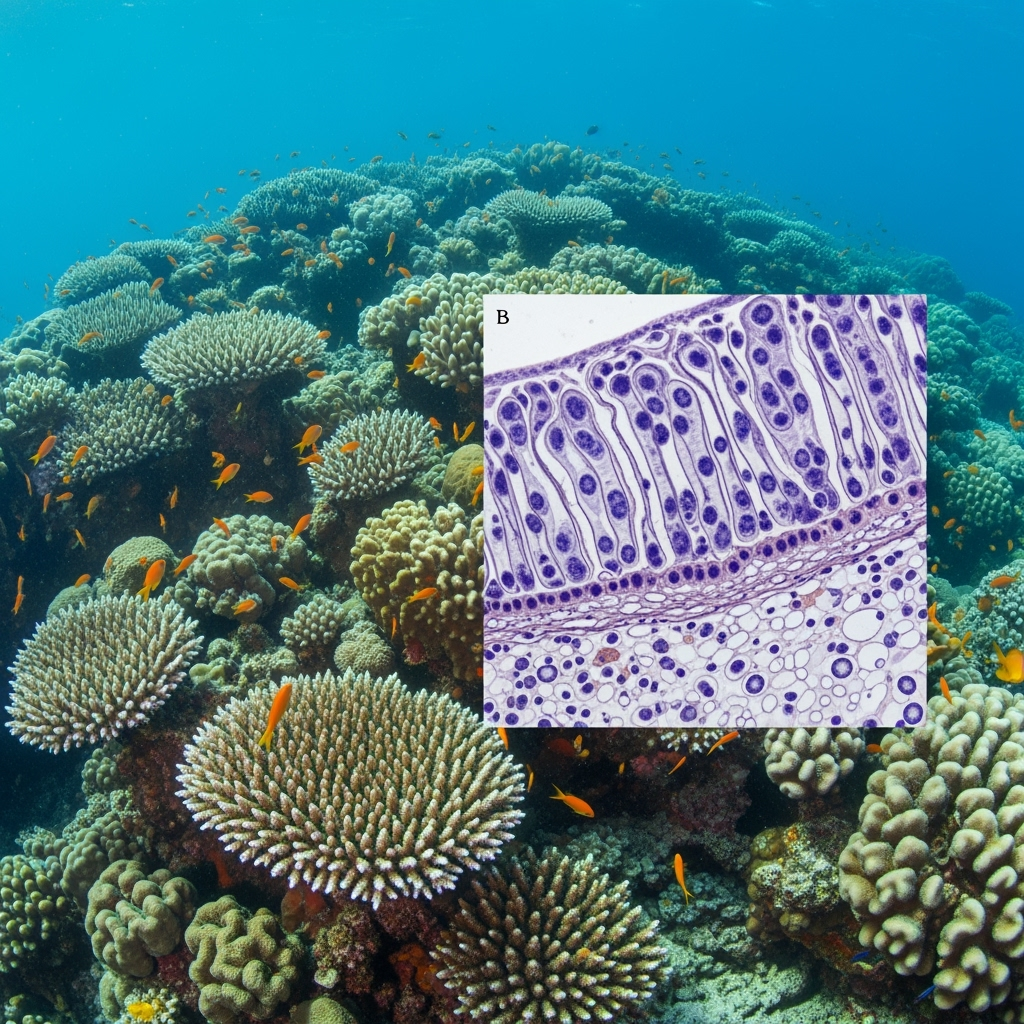
Epithelial tissues, which make up the skin, intestinal membranes, and other organs, consist of tightly adjacent polygonal cells. Previously, it was established that cells in a healthy state from various animal and plant species are arranged according to a single energy-efficient principle, with a certain number of faces. However, it remained unknown whether this principle persists in more organized structures, such as coral reefs, which consist of thousands of small living organisms and polyps.
Specialists from Rostov State Medical University and the University of Montpellier (France) compared the cellular structure of the epithelium with the position of individual polyps in coral colonies. Micro-computer tomography was used to obtain thousands of digital images of coral colonies. The majority (43-51 percent) of structural elements had six neighbors, 25-27 percent had five, and fewer had four, seven, eight, or nine neighbors.
According to the study’s authors, the developed model could be useful for understanding the mechanisms of tissue growth and wound healing, as well as for environmental assessments of coral reef conditions and biomedical applications. Sergei Rochal, the project leader supported by the Russian Science Foundation grant and a professor at the Department of Nanotechnology at Rostov-on-Don University, stated, ‘The acquired knowledge is crucial for understanding the mechanisms of tissue repair and development in the field of regenerative medicine.’ According to him, based on these principles, it is also possible to predict how coral reefs, threatened by climate change and marine pollution, will interact with environmental changes.