In the previous year, neuroscientist Ardem Patapoutian adorned his arm with a unique tattoo. This design, a twisted ribbon, symbolizes the Piezo protein which he discovered in 2010 and later earned him a Nobel Prize in 2021. Three years post-award, Patapoutian decided to immortalize his discovery with ink.
Piezo proteins, as Patapoutian discovered, enable nerve endings in the skin to detect pressure, thus facilitating our sense of touch. “It was a surreal experience to feel the needle inscribing the very protein that allows me to feel it,” he reminisced.
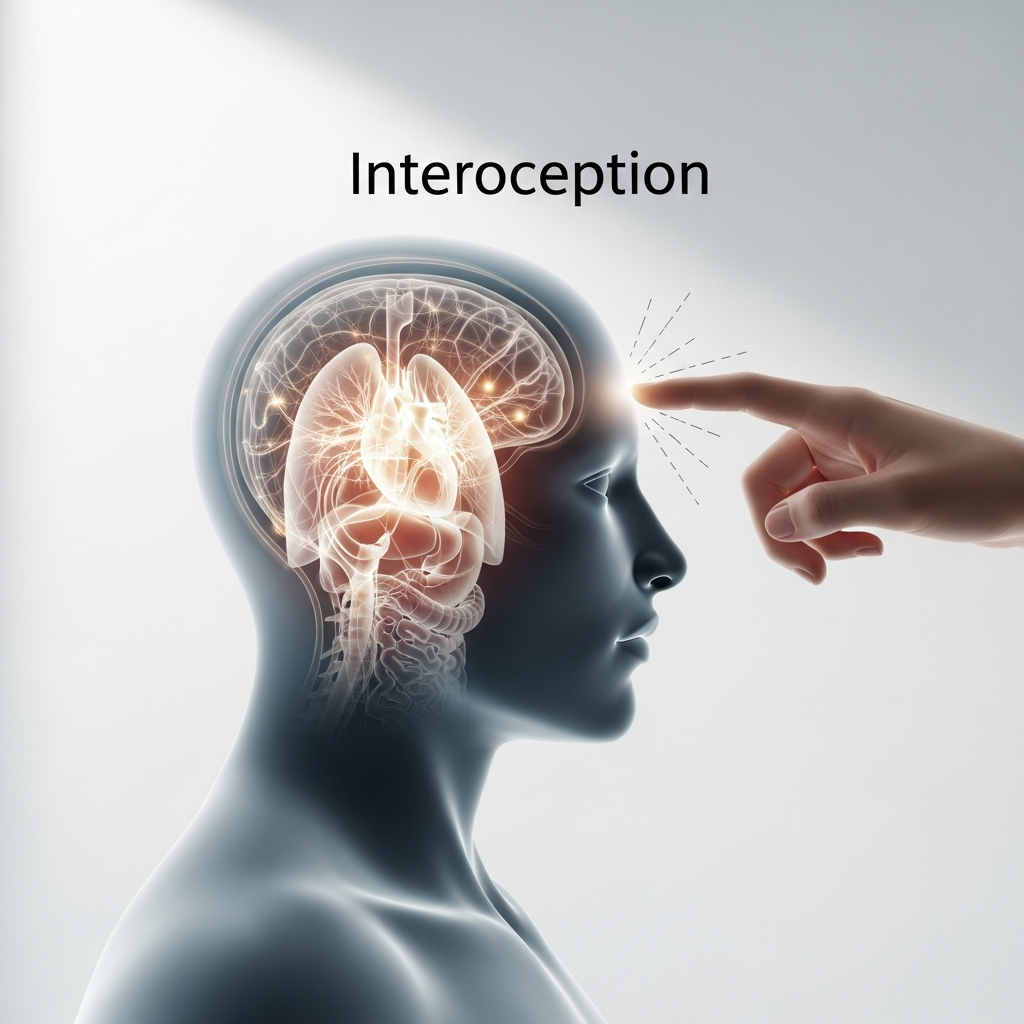
Now, Patapoutian’s research has shifted from studying Piezo’s role in external perception to exploring interoception — the internal communication from body to brain. His work contributes to a broader initiative to map this sixth sense.
Interoception offers the brain a detailed but subconscious overview of the body’s internal state, influencing emotions, behaviors, decisions, and even how we experience illness. Emerging studies indicate psychiatric conditions like anxiety and depression may stem from misinterpretations of these internal signals.
Future treatments may involve recalibrating this internal sense, but a comprehensive understanding of interoception is essential first, Patapoutian asserts.
“We’ve overlooked our body’s complexity,” he remarked.
‘Profoundly Complex’
Interoception is subtly recognized in everyday sensations like a racing heart or a full bladder. Despite its long recognition as a nervous system function, its depth was underestimated. Nobel laureate Dr. Charles Sherrington introduced “intero-ceptors” in 1906, but he underestimated their significance, focusing instead on external sensory input.
Modern advancements have revealed the intricate connections between organs and nerves, allowing scientists to study interoception more thoroughly.
“Decades-old mysteries are being unraveled thanks to new technologies,” stated neuroscientist David Linden from Johns Hopkins University, who is authoring a book on interoception.
Patapoutian’s team, for instance, uses engineered viruses to illuminate nerve endings in mouse organs, revealing Piezo’s role in pressure detection across various body parts.
“Pressure sensing is pervasive within the body,” Patapoutian explained.
Piezo proteins in the aorta monitor blood pressure, while in the lungs, they detect inhalation. They also sense bladder expansion with urine.
The vagus nerve, housing about 100,000 neurons, is heavily involved in interoception, detecting pressure and other changes like temperature, acidity, and nutrients in the intestines.
Additionally, interoceptive signals are monitored by the carotid artery and other brain regions, all contributing to a constant flow of information that guides the brain’s regulatory actions.
“These internal signals continually guide the brain,” noted neuroscientist Diego Bohórquez from Duke University.
Piezo proteins in the lungs, for example, prevent overexpansion during breathing, and the vagus nerve can prompt vomiting if toxins are detected in the gut.
Despite these insights, much about the brain’s use of interoceptive information remains unknown.
“It’s overwhelmingly complex, and our current understanding is limited,” Linden acknowledged.
Understanding Illness Perception
Recent advances have shed light on how interoception influences our perception of sickness.
“When feeling unwell, we often blame a bug, but it’s actually the brain’s response,” explained Harvard neuroscientist Catherine Dulac, who studies illness perception.
The brain actively monitors for infection signals, using them to manage immune responses, energy conservation, and even appetite suppression to prevent harm from sudden nutritional intake.
A Yale study found that interoception helps mice avoid self-poisoning during recovery by reducing appetite in response to gut-sensed amino acids.
The brain also learns from interoceptive signals, enhancing survival by predicting future needs.
“Anticipating needs like oxygen shortage is crucial,” said Cambridge neuroscientist Camilla Nord. “This foresight is vital.”
Interoception thus guides future behavior, learning from new foods or sickness cues to protect against potential threats.
However, misinterpretations of these signals can contribute to disorders, as suspected in psychiatric conditions where the brain’s signal processing may be faulty.
Emerging treatments focus on correcting these misinterpretations, as seen with GLP-1 drugs that mimic hunger-reducing gut signals to aid weight loss.
Research also explores altering brain regions like the mid-insula to improve interoception in psychiatric disorders, as demonstrated by Nord’s team’s trials using ultrasonic waves.
Patapoutian cautions that understanding interoception is a prerequisite to harnessing its potential.
At Scripps Research, he is developing an atlas of interoception, discovering, for example, that nerve endings in fat tissue detect pressure, though their exact function is unknown.
“We need to understand what our nerves sense throughout the body,” Patapoutian emphasized.
This article originally appeared in The New York Times.