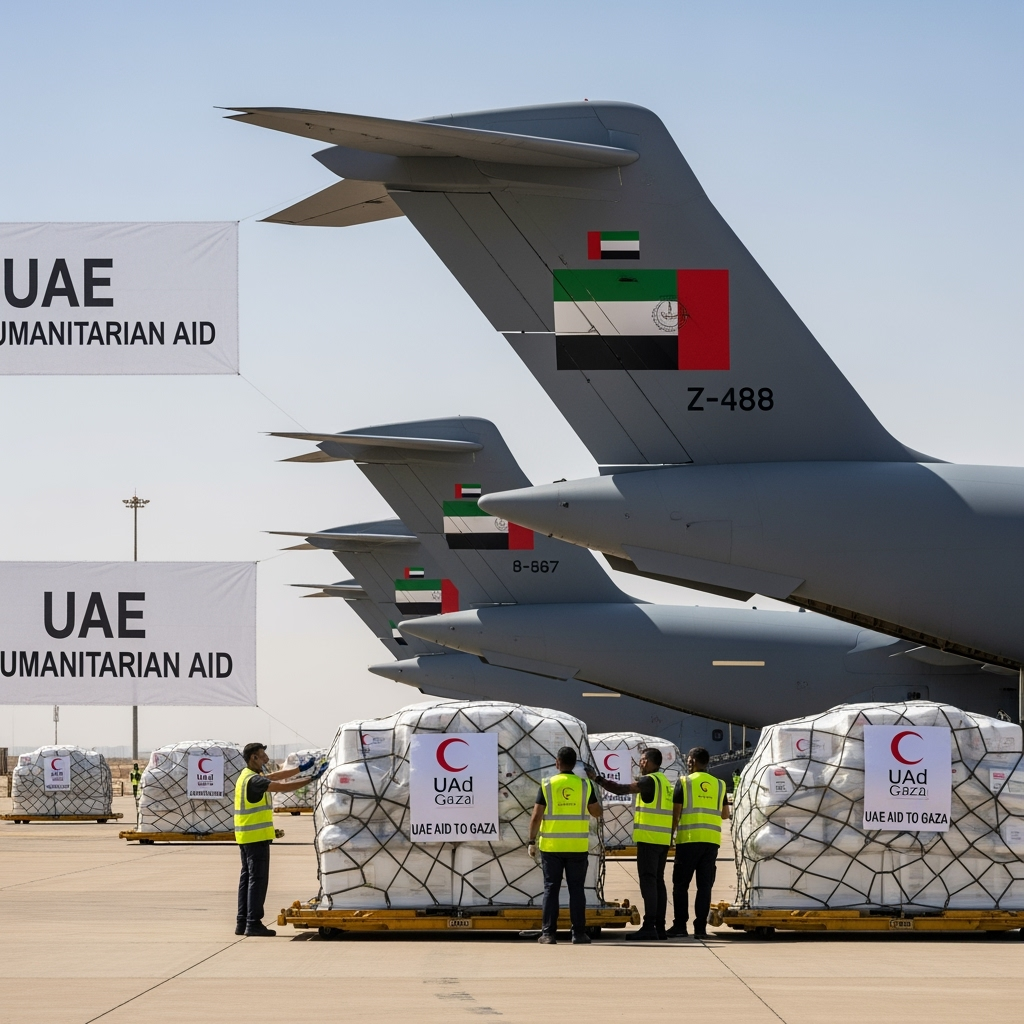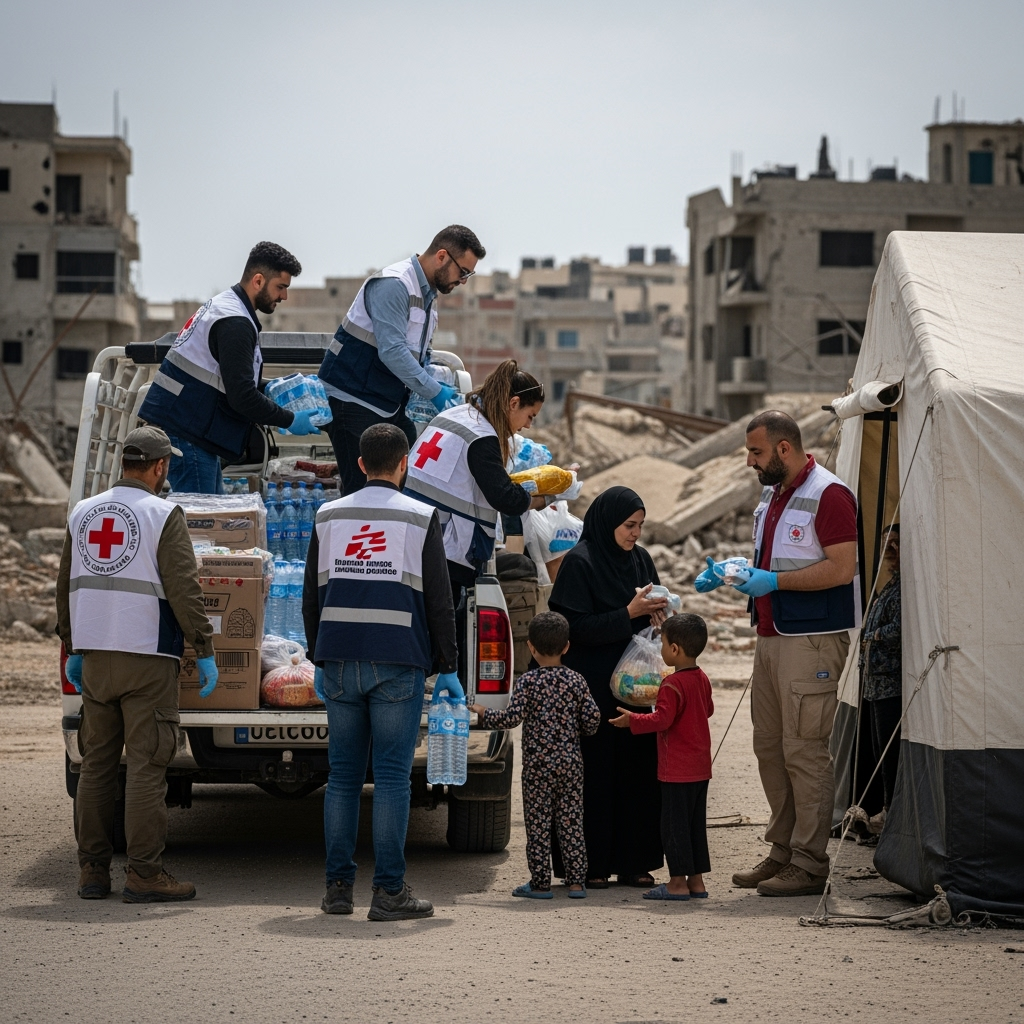
According to the Jordanian statement, the airlifts carried 36 tons of aid as part of an extensive international cooperation to enhance relief efforts amid ongoing difficult humanitarian conditions in the sector, as reported by Petra, the Jordanian news agency.
The agency added that the Jordanian planes were accompanied by several members of the National Guidance and Media Committee in the Jordanian House of Representatives to closely observe the humanitarian and relief efforts undertaken by the armed forces in efficiently delivering aid to the sector.
The operation involved active participation from five planes: two from the Royal Jordanian Air Force, one from France, one from the United Arab Emirates, and one from the Federal Republic of Germany, reflecting the extent of international coordination and integration in relief efforts.
On March 2, Israel closed the Gaza crossings to humanitarian, relief, and medical aid, causing an unprecedented deterioration in humanitarian conditions. Recently, the Israeli army announced the suspension of its military operations in three areas of the Gaza Strip—Al-Mawasi, Deir al-Balah, and Gaza City—daily from 10 a.m. to 8 p.m. local time until further notice, for humanitarian purposes, allowing aid to enter Gaza through land corridors and airlifts amid increasing international pressure on Israel to lift the blockade on Gaza, which is experiencing an escalating hunger crisis.
Israeli Prime Minister Benjamin Netanyahu urged the United Nations to stop blaming his government for the humanitarian situation in Gaza after Israel announced the opening of “safe routes” for aid entry into the sector. For six days, humanitarian aid trucks have been entering from the Rafah border crossing toward the Kerem Shalom crossing, preparing to enter Gaza.
Recently, active talks and efforts have resumed to reach a potential ceasefire agreement between Israel and Hamas in Gaza, mediated by Qatar, Egypt, and the United States. The proposed agreement includes a 60-day truce, halting fighting, and a partial exchange of prisoners and detainees, followed by negotiations aimed at a permanent ceasefire and ending the war. However, on July 24, U.S. envoy to the Middle East Steve Witkoff announced the failure of the latest round of indirect talks between Hamas and Israel in Doha, deciding to withdraw the U.S. delegation from Gaza negotiations for consultation, accusing Hamas of unwillingness to reach a ceasefire in the sector.
Israel resumed its bombardment of Gaza on March 18, after a nearly two-month halt, specifically since the ceasefire agreement with Hamas took effect on January 19, following the failure of talks to extend the first phase of the agreement or transition to its second phase. The ceasefire agreement between Israel and Hamas was supposed to continue once the first phase was extended, which ended on March 1, or move into its second phase, but disagreements between Israel and Hamas regarding the next steps prevented this.