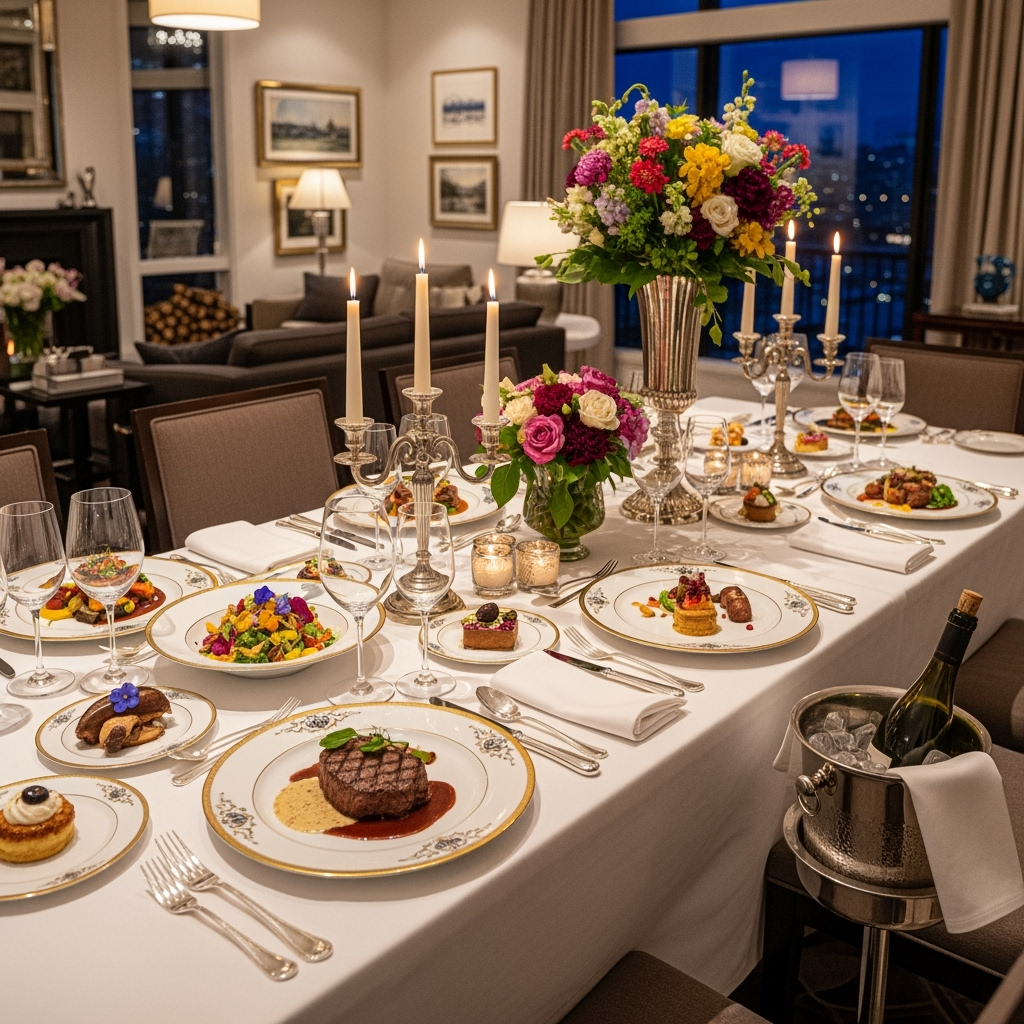
In a luxurious Palm villa in Dubai, a young billionaire recently hired a three-star Michelin chef for a private weekend event. Despite the chef’s hesitance, his team proposed a staggering six-figure daily fee, unprecedented in private dining. To everyone’s surprise, the offer was quickly accepted. This was about more than just food; it was a statement. For the ultra-wealthy, hosting haute cuisine at home has become the ultimate display of power, indulgence, and spectacle. There was a time when luxury dining was defined by securing a table at Alain Ducasse in Monaco or a rare reservation at Noma in Copenhagen.
The elite once chased unique restaurant experiences, but this has shifted in recent years. With the rise of private chefs, an increase in home entertaining among the wealthy, and the glamorization of kitchen rituals on social media, dining at home is now a new platform for luxury expression. What was once private is now a public spectacle, documented and styled to reflect a lifestyle as curated as a haute couture wardrobe. In essence, fine dining at home has become mainstream.
Explore Instagram or TikTok, and you’ll be drawn into the viral world of private chefs sharing “a day in my life” inside billionaire homes. From presenting fresh produce flown in from Provence to serving multi-course dinners with ingredients from three continents, these glimpses into the kitchens of the wealthy ignite both curiosity and envy. These videos amass millions of views, not because the dishes are unattainable, but for what they symbolize — a seamless blend of food, presentation, and exclusivity.
The private chef has become a new status symbol, as recognizable as a chauffeur or stylist in luxury circles. This trend reflects a broader social shift. The affluent seek intimacy and privacy without sacrificing indulgence. Hosting friends at home with a Michelin-starred chef crafting a bespoke tasting menu offers not just bragging rights but a controlled environment tailored to the host’s tastes. It’s no surprise that demand for live-in chefs has surged in cities like Dubai, London, and New York, where the wealthy favor private gatherings over public exposure.
Exquisite Table Settings
Agencies specializing in high-end culinary talent are flourishing, placing chefs in homes where dining is more performance than sustenance. The setting is as crucial as the cuisine. Luxury kitchens have become canvases for extravagant design. Dior Maison has introduced collections of porcelain plates and tableware adorned with archival prints. Gucci Décor offers bold crockery and embroidered linens that turn dinner tables into fashion statements. Louis Vuitton has ventured into limited-edition cutlery and serving pieces that blur the line between utility and art.
For lifestyle collectors, these pieces are akin to owning a Birkin bag or a Royal Oak — they signal taste, access, and a keen eye for detail. Even kitchen hardware is being elevated. Sub-Zero refrigerators, La Cornue ranges, and Gaggenau ovens are no longer hidden but displayed as mechanical jewels of the home. In some penthouses, luxury kitchen islands are clad in rare marble from Carrara or Patagonia, transforming food preparation into theatrical performance.
The wealthy are investing in their kitchens as much as in art collections, recognizing that today’s ultimate social flex may be the chef’s counter at home rather than the living room gallery. Social media has accelerated this transformation. The dinner party has always been a staple of luxury society, but Instagram has made it performative. An exquisitely plated dessert on a custom Dior plate is instantly photographed, hashtagged, and shared with thousands or even millions. The home table becomes the stage, the dinner guest the audience, and the brand the silent co-star.
Unlike discreet Michelin-starred meals in restaurants, home dining experiences are broadcast as curated lifestyle moments. The narrative shifts from “I dined at this restaurant” to “this is my life.” This ripple effect is seen in luxury gastronomy trends globally. In Los Angeles and Dubai, boutique agencies now specialize in pairing chefs with households for limited engagements, akin to artist residencies. In London and Paris, sommeliers are hired as frequently as chefs, crafting personal wine-tasting programs that rival five-star hotel cellars.
In New York, design studios collaborate with architects to create “dining theaters” in homes, where lighting, acoustics, and tablescapes are optimized for impact both live and on camera.
The culinary world has merged with interior design, hospitality, and performance art. Another trend is the collaboration between luxury brands and chefs. Gucci Osteria, led by Massimo Bottura, has made waves in Florence and Beverly Hills. Dior has tried pop-up cafés in Paris and Seoul, turning brand storytelling into an edible experience. It’s only a matter of time before these brands expand into private homes with curated dining packages or exclusive chef partnerships. Imagine a Louis Vuitton dinner where each course is served on archival Monogram porcelain, complemented by an LV trunk that becomes a dessert trolley. These concepts align perfectly with the direction of luxury — total lifestyle immersion.
Home Hospitality Evolution
The business implications are equally intriguing. Luxury brands are embracing this trend by creating “home hospitality” lines. Hermès has expanded its Maison collection to include glassware and table décor. Ralph Lauren Home has curated entire dining-room aesthetics inspired by old-world grandeur. Niche brands like Ginori 1735, owned by Kering, have seen demand rise as dinner parties return as cultural theater. Even technology is being integrated — smart dining tables with temperature control and AI menu planners are becoming part of the luxury kitchen toolkit. As this culture evolves, new collectibles emerge. For watch enthusiasts, it might be a Patek Philippe; for sneaker fans, limited-edition Jordans; for luxury hosts, it’s bespoke porcelain or a Michelin chef-prepared dinner. These experiences are curated with the same precision as art or jewelry, with every detail — from monogrammed menu cards to serving spoon choices — signaling taste.
Ultimately, haute cuisine at home is less about food and more about lifestyle performance. It blends the private with the public, intimacy with spectacle, turning the kitchen into a cultural catwalk.