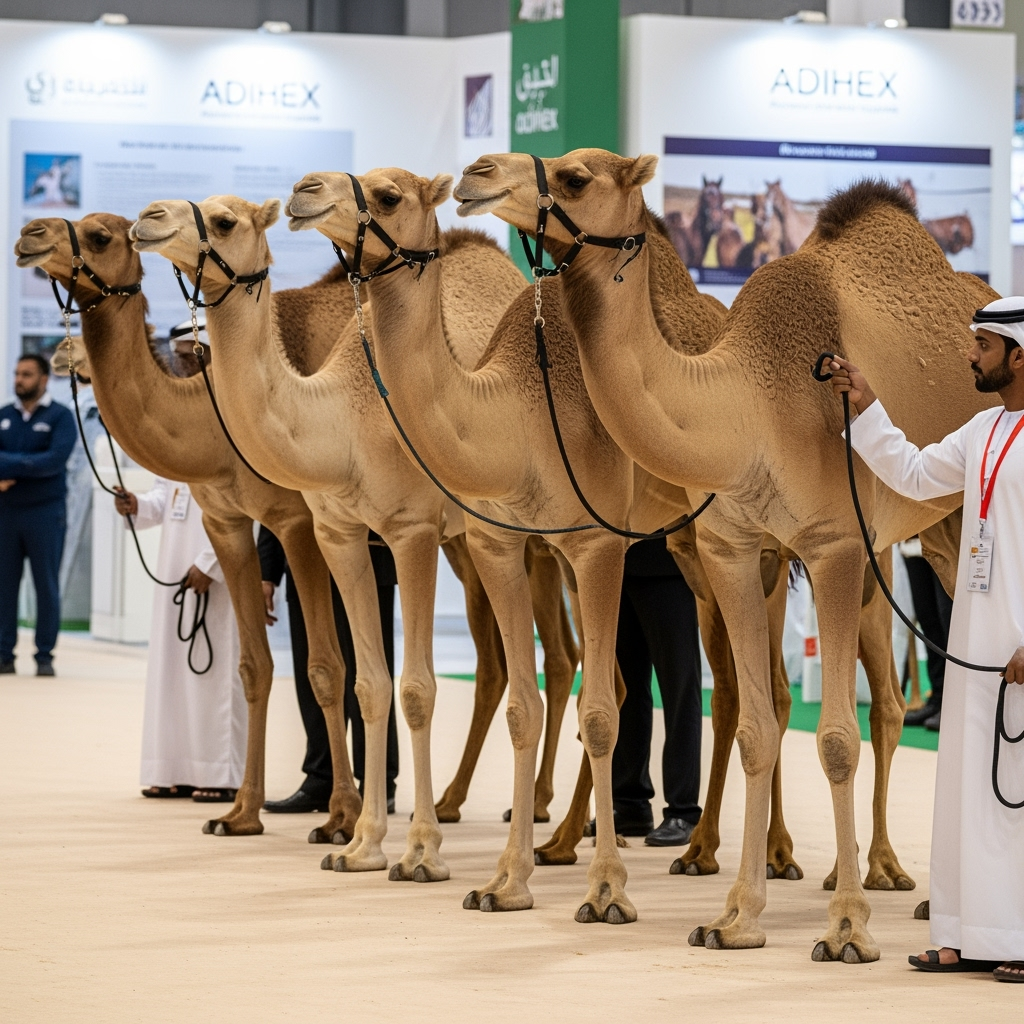
Mabrokan, one of the UAE’s most famed beauty camels, continues to make headlines through science, as his cloned offspring were showcased at the Abu Dhabi International Hunting and Equestrian Exhibition (ADIHEX) this week.
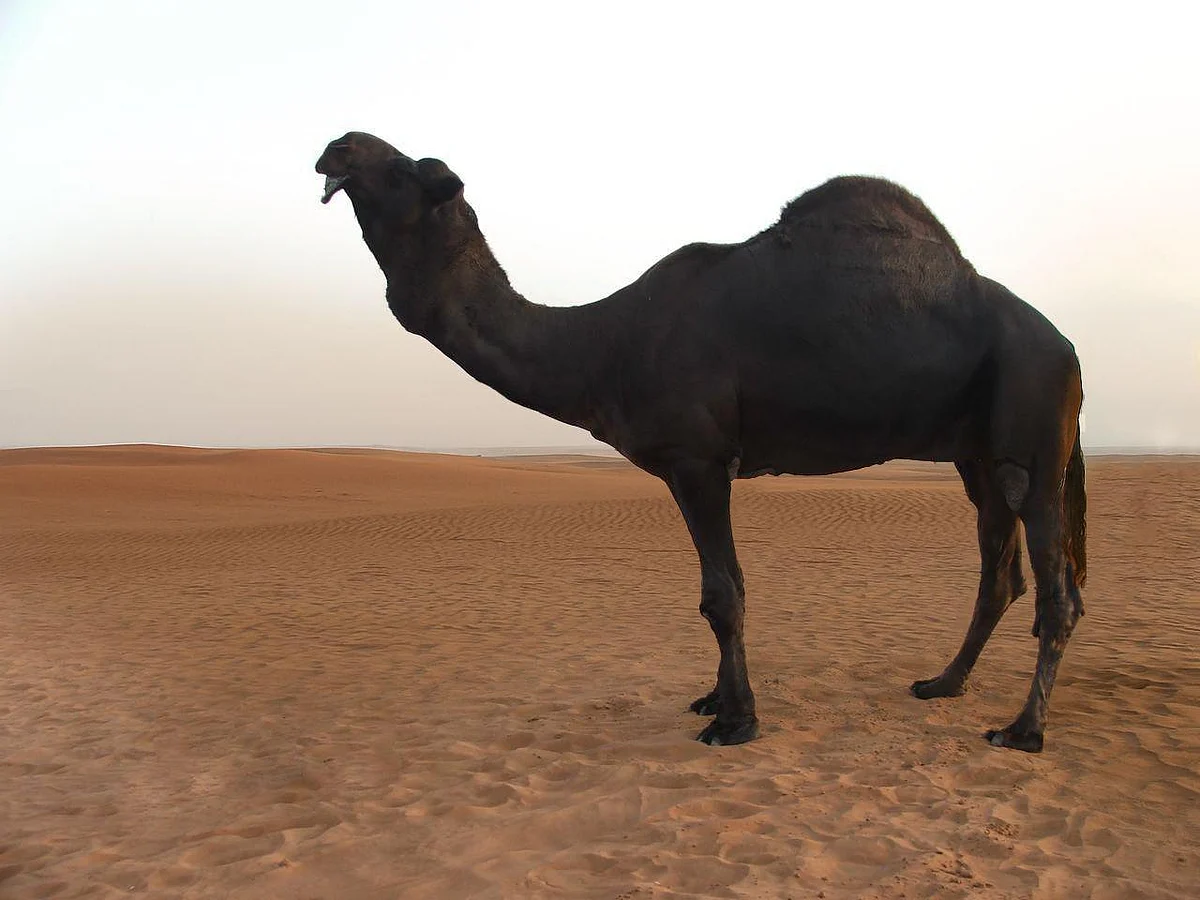
Mabrokan. Photo: UAEBRC
Between 2008 and 2010, Mabrokan gained fame for winning numerous “Best in Show” titles at the Al Dhafra Festival. Known for his massive 1,000 kg size and unique appearance, he was sold for $5 million before his death in 2010, ranking him among the most expensive camels ever sold.
A decade later, the UAE Biotech Research Center (UAEBRC) successfully revived his genetic line using stored skin samples. In 2021, eleven calves identical to Mabrokan were born, marking a scientific milestone that preserved his lineage.
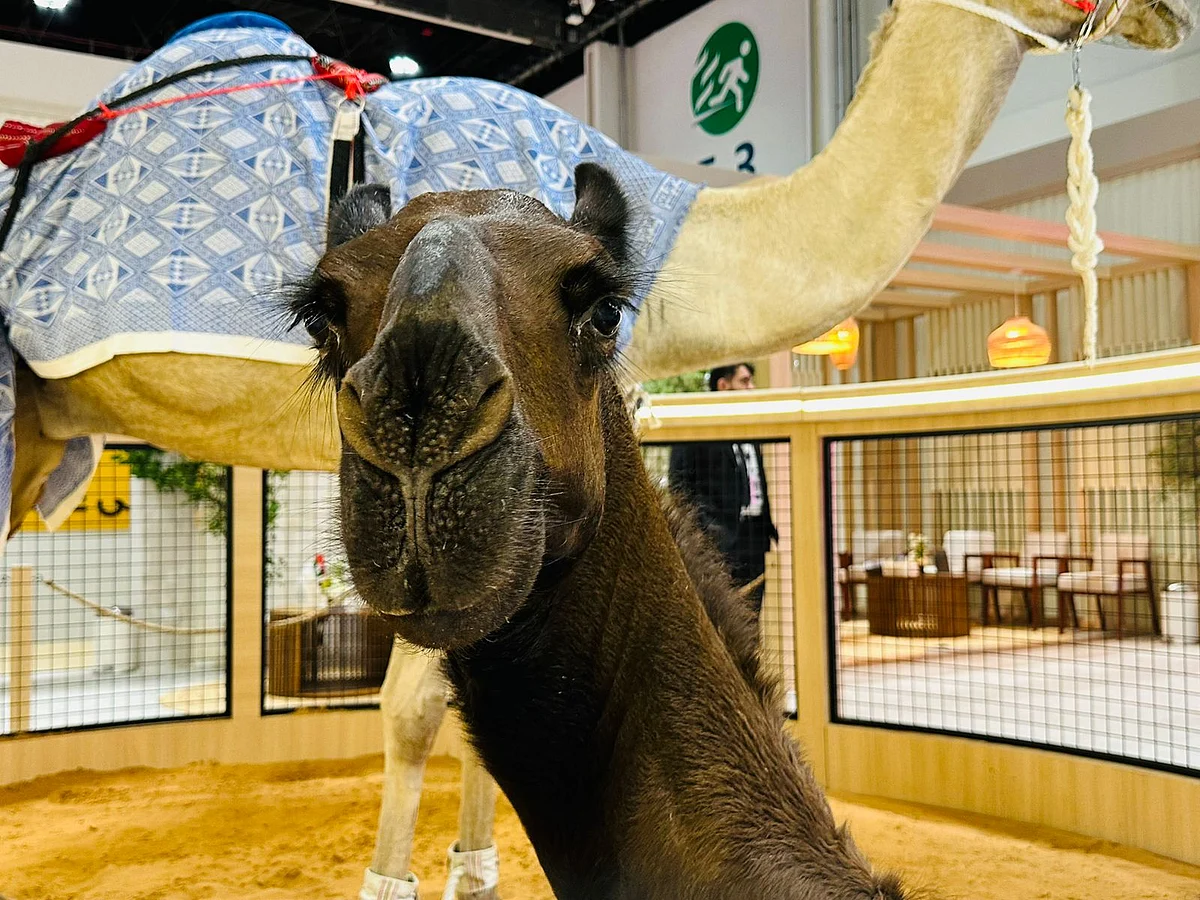
Photo: UAEBRC
At ADIHEX, many gathered to see Mabrokan’s clones alongside other white cloned camels from UAEBRC. The center has produced around 400 camel clones since its first procedure in 2020, surpassing Mabrokan’s 11 clones.
Dr Ghbisha Al Kitbe, a veterinarian at UAEBRC, stated to Khaleej Times, “The first cloning procedure was completed in 2020. To date, about 400 camels have been cloned. The quality of our cloning is precise and high.” She pointed out that the center offers cloning as a service, not as a sale. “If you own a unique camel, we’ll clone it for you [for a fee]. These camels remain with their owners, who showcase them here for cloning.”
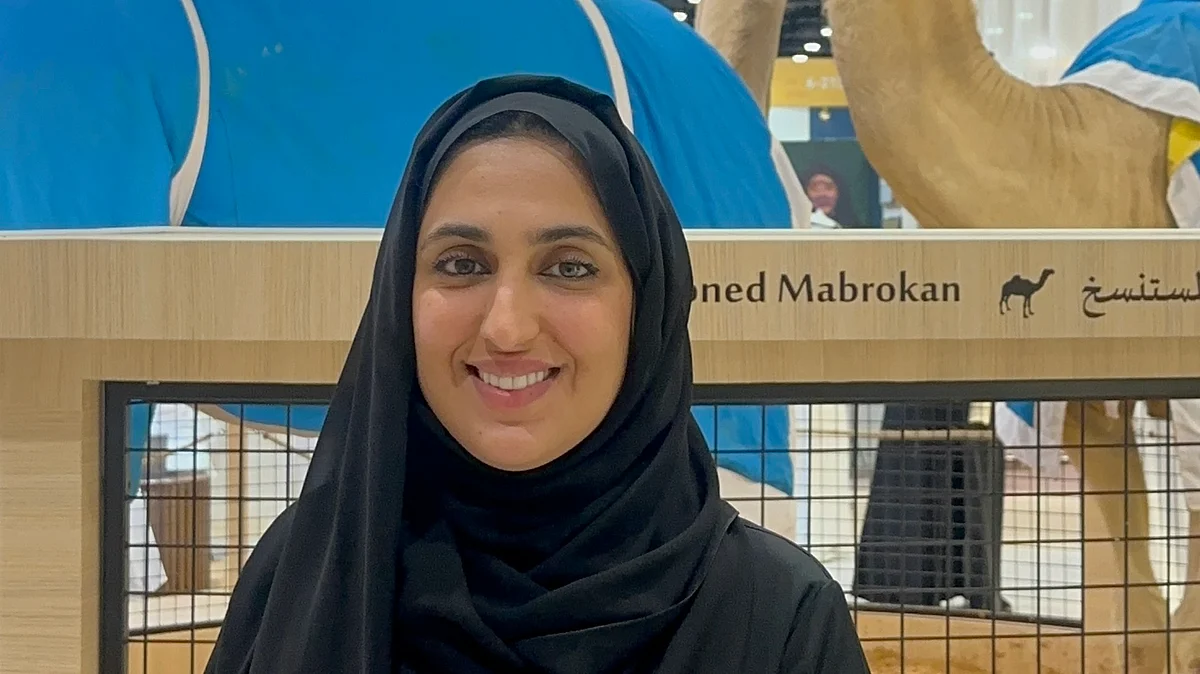
Dr. Ghbisha Al Kitbe. Photo: Haneen Dajani
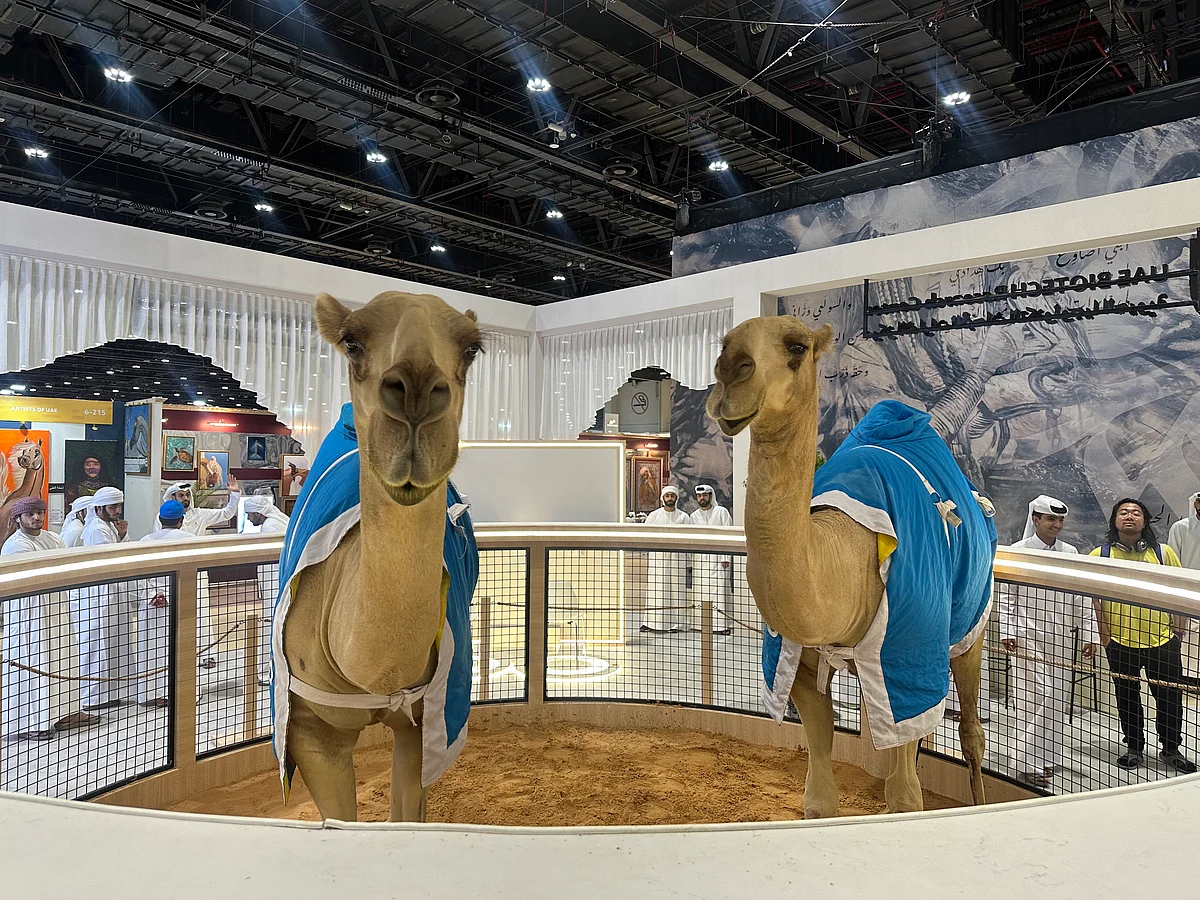
Photo: Haneen Dajani
One of Mabrokan’s cloned descendants is now valued at about Dh66 million, emphasizing the cultural and economic importance of preserving elite bloodlines.
From Screen to Science
Mabrokan’s tale was also featured in the Netflix documentary King of Clones, which included Dr Alex Tinson, Director of Research at the Presidential Camel Center. He reminisced, “Mabrokan was the first camel to score a perfect 10 in a beauty contest. He was large, strong, with lion-like teeth, quite grumpy, and a logistical challenge due to his size and value.”
Recalling Mabrokan’s sudden death in 2010, Dr Tinson shared, “I was dining in Rome when I got the news of Mabrokan’s death. I instructed to preserve his testicles and skin, and then we forgot about it for a decade.”
These preserved tissues later allowed UAEBRC scientists to clone him.
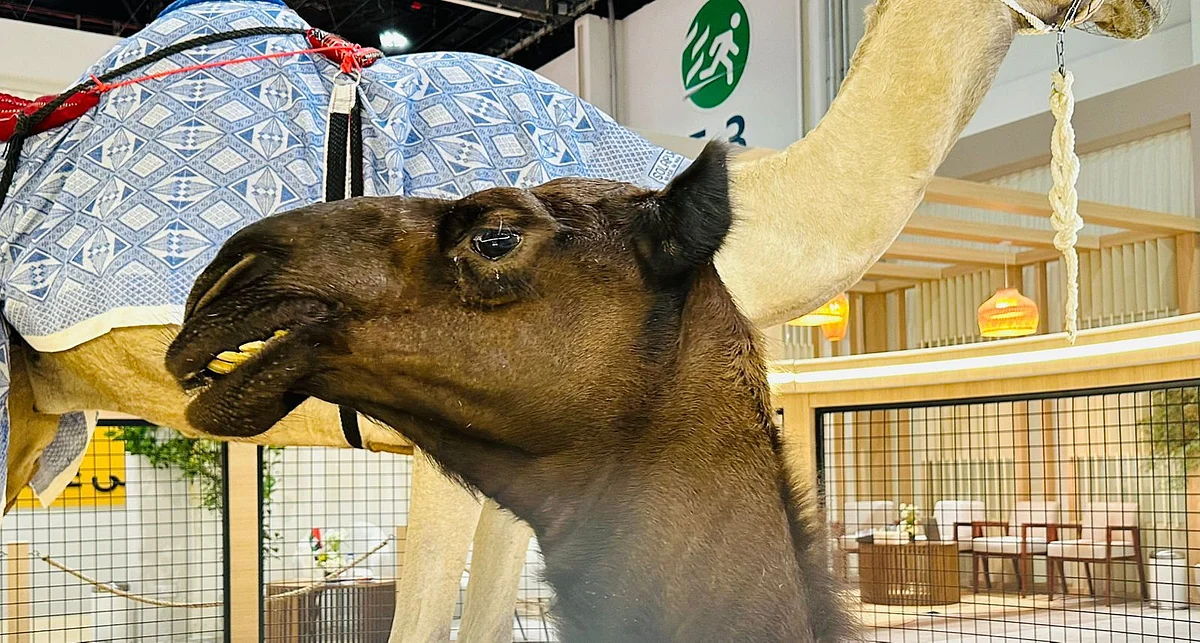
Photo: UAEBRC
‘A Sense of Awe’
Dr Woo Suk Hwang, CEO of UAEBRC, who brought cloning technology to the center, spoke about witnessing cloned camels’ births. “Every time I see such a creature, I feel the greatness of science and technology, a sense of awe at how much it contributes to humanity,” he said in King of Clones. He also addressed critics who view cloning as “playing God.”

Dr Woo Suk Hwang. Photo: Haneen Dajani
“Cloning isn’t about playing God. It’s about genetic copying. Imaginative tales about cloning have been debunked by history; decades have passed, and no Frankenstein has been born.”
Watch a video explaining the cloning process here: