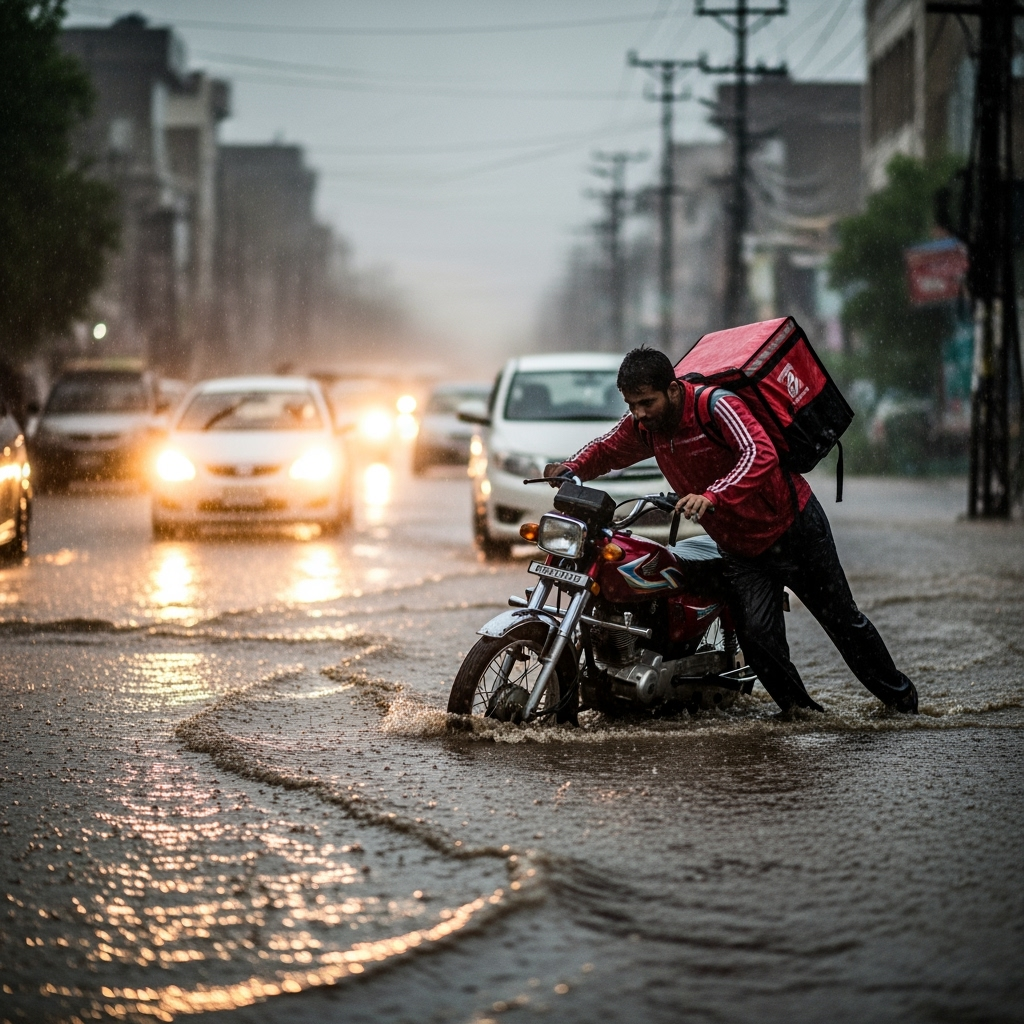
Abdullah Abbas navigated the flooded streets of Lahore, battling to push his motorcycle to deliver food on schedule.
The water rose to his waist, his jeans drenched and rolled above his sandals, risking electrocution and diseases.
Despite monsoon rains inundating Pakistan’s cities, Foodpanda, a Singapore-based delivery service, continues to receive numerous orders.
“If I fail to deliver, my Foodpanda account might get suspended, leaving me without income,” Abbas shared with AFP in Lahore’s historic district, known for its crowded, narrow streets.
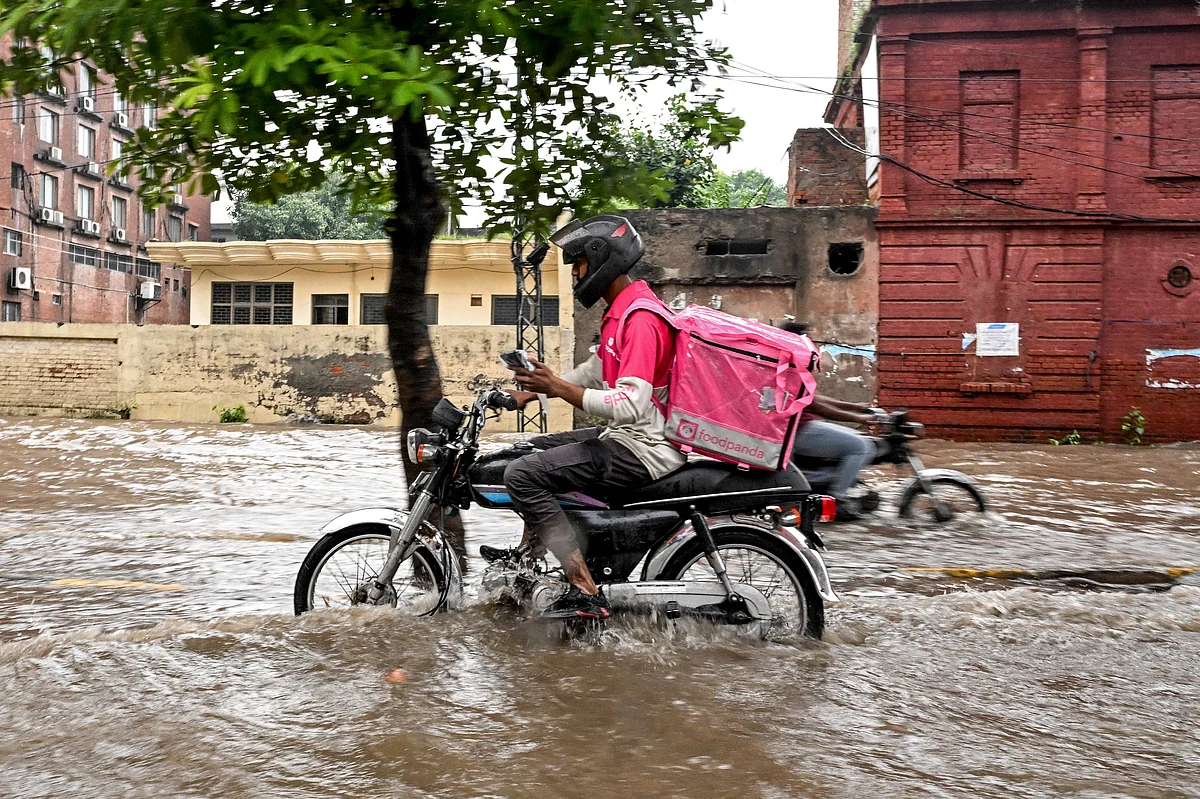
Abdullah Abbas, a rider for Foodpanda, wades through a flooded Lahore street after heavy rain. — AFP
“I need this money for my school fees,” added the 19-year-old, in his final year of secondary education.
Since June, monsoon rains have claimed over 1,000 lives in Pakistan, swelling rivers and ravaging rural areas.
Urban centers like Lahore and Karachi, housing over 14 million and 25 million people respectively, face flooding partly due to poor urban planning.
Abbas earns about $7 daily, above average, but only in fair weather.
To reach the average monthly income of $140, he works seven days a week for over 10 hours alongside his studies.
“Customers can be rude, adding to the stress,” noted Muhammad Khan, a 23-year-old Foodpanda rider, skillfully maneuvering his bike through Karachi’s muddy roads.
In Pakistan, where 45% live below the poverty line, climate change poses significant threats, with minimal resources for adaptation.
‘Stressful’
By mid-August, Pakistan had received 50% more monsoon rain than the previous year, according to authorities, while in India, these rains annually claim hundreds of lives.
Though South Asia’s monsoon is crucial for agriculture, climate change is making it unpredictable.
The Human Rights Commission of Pakistan reported that brown water flooding city streets stems not only from climate change but also “clogged drains, poor waste disposal, inadequate infrastructure, encroachments, elitist housing developments.”
Doctors warn that prolonged exposure to damp conditions can lead to fungal infections and flu, while contact with dirty water can cause eye and skin infections.
Gig workers for apps like Foodpanda, Bykea, and InDrive comprised nearly 2% of Pakistan’s workforce, or half a million people, in 2023, per Fairwork, a University of Oxford project.
Fairwork evaluated six digital platforms in Pakistan, noting they meet “minimum fair work standards.”
The International Labour Organization states gig workers lack government protection and face systematic labor standard violations.
Muneer Ahmed, 38, left his chef job to join Bykea, seeking autonomy.
“When it rains, people prefer rickshaws or buses, leaving me jobless,” he said, waiting by a flooded street for orders.
“Rain is a curse for the poor,” he remarked, monitoring his phone for customers.
Daily wage workers, often in construction, see work vanish in the rain.
Zahid Masih, a laborer, hasn’t found work for four days, he shared while sheltering under a Karachi bridge with fellow workers.
“Jobs appear only after the rain ends. We can’t afford to stay idle,” stated the father of three.
“Sitting at home means our stoves remain cold.”