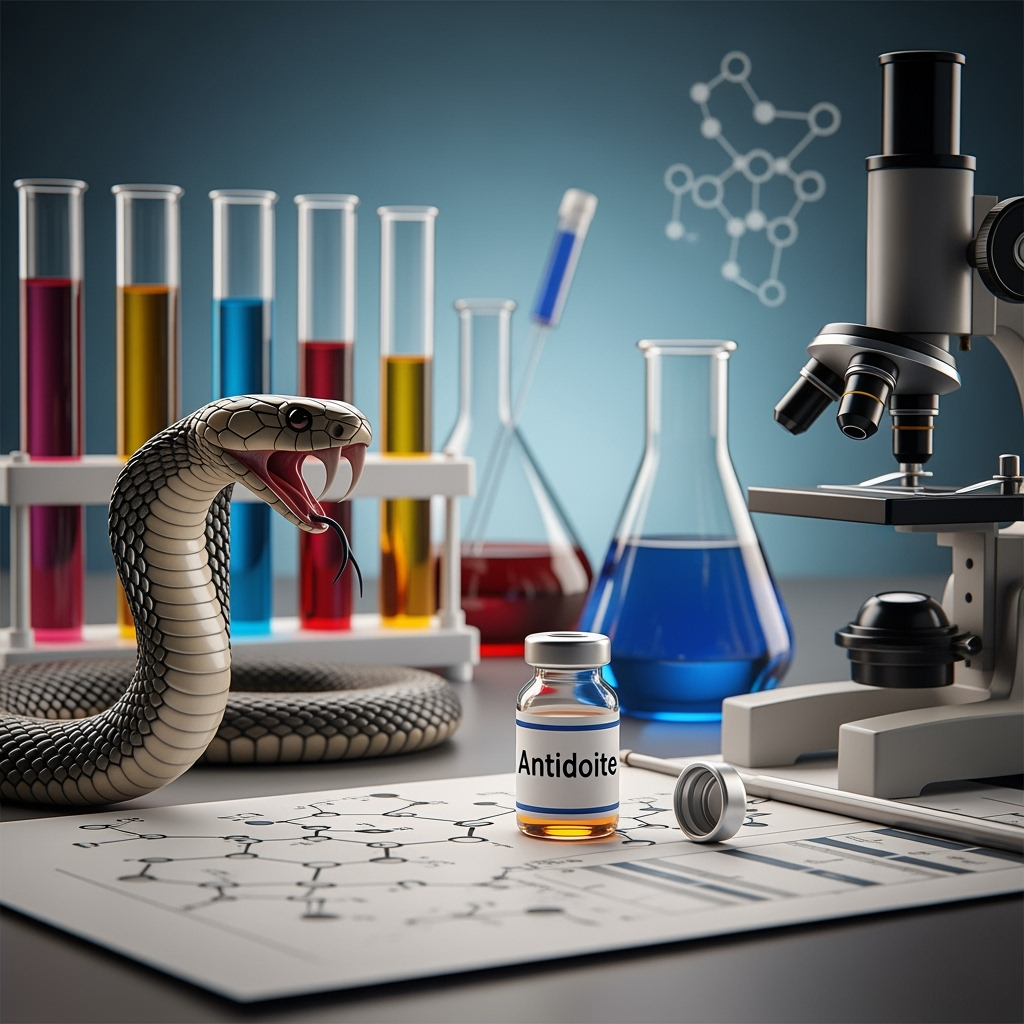
This was achieved after conducting experiments on the venom of American snakes, known as ‘Bothrops’, which are from the family of venomous snakes, according to the Russian Ministry of Education and Science. The results were published. Snake bite poisoning causes various toxic effects in humans, potentially leading to death. Antivenoms effectively prevent death but cannot completely prevent localized muscle tissue damage. Therefore, complementary treatments are needed. Scientists studied the ability of exopolysaccharides extracted from microalgae to help inhibit protein activity and reduce the effects of bites. Tens of thousands of people die annually from snake bites, with most deaths occurring in tropical and subtropical countries in Africa, Asia, Latin America, and Oceania, where snake venom contains proteins that disrupt blood clotting and lead to tissue necrosis. Current antivenoms are expensive, not always available, and may also cause side effects (skin rash, malaise, fever, allergic reactions). Biologists treated microalgae cells with alcohols, which precipitate polysaccharides and allow them to be separated from other cell components, then tested the ability of the obtained compounds to inhibit venom activity. To do this, venom samples were preserved with algae polysaccharides for five minutes, after which their ability to destroy proteins and fats, as well as disrupt blood clotting, was measured. This study, conducted in collaboration with colleagues from the Fluminense Federal University (Brazil) and Kemerovo State University (Kemerovo), is expected to be beneficial in developing new drugs to reduce the effects of snake venoms, especially in areas with limited access to medical care. According to the professor, this discovery opens new horizons in finding an effective antidote for many types of venomous snakes, including the common viper, which can be found in almost all regions of Russia.