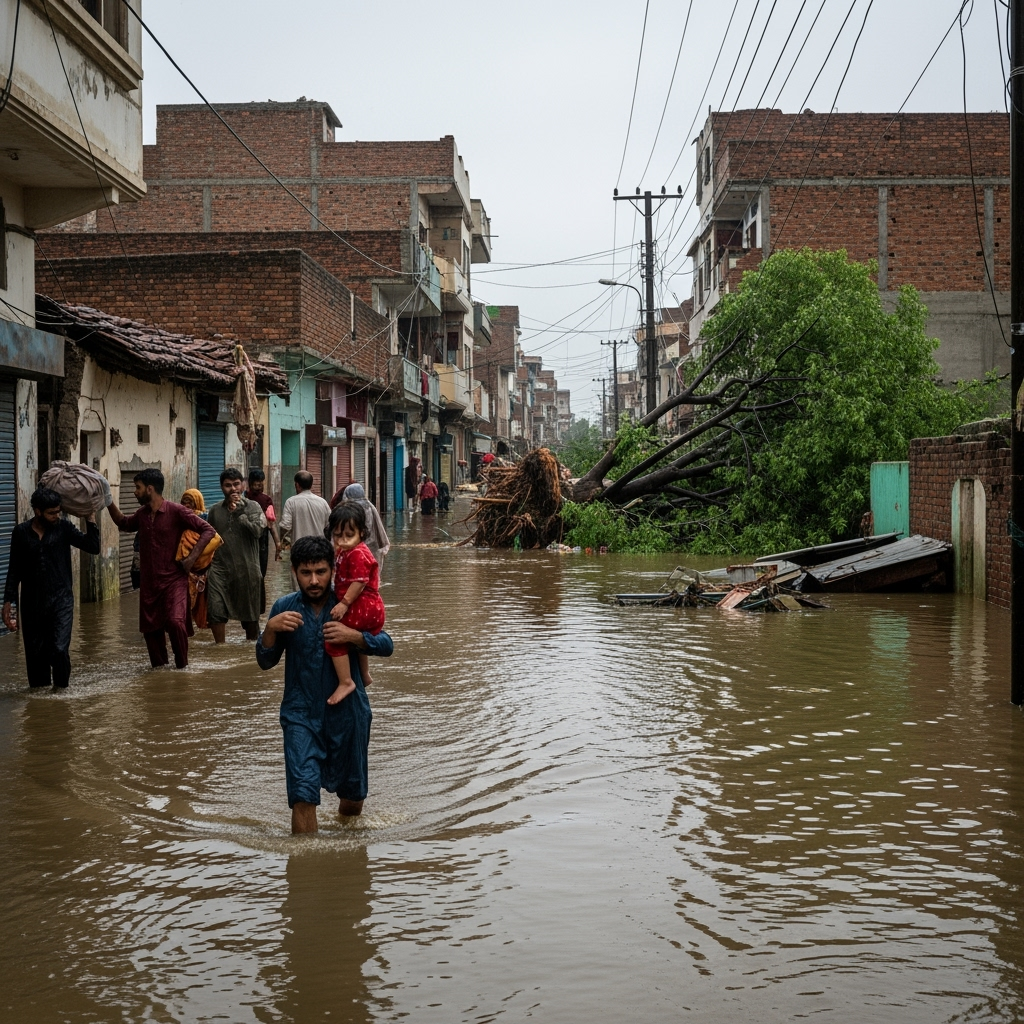
On Tuesday, rescuers and locals resumed their search for survivors as the death toll from five days of heavy rainfall approached 400. Authorities have cautioned that the monsoon downpours will persist until the weekend.
The relentless rains in northern Pakistan have triggered floods and landslides, devastating entire villages, trapping residents under debris, and leaving many missing.
According to the National Disaster Management Authority (NDMA), 356 fatalities were reported in Khyber Pakhtunkhwa, a mountainous region in northwest Pakistan bordering Afghanistan, since Thursday evening.
Additional casualties in nearby areas have raised the total death toll to nearly 400 over the past five days.
In the severely affected village of Dalori in Khyber Pakhtunkhwa, rescuers sifted through mud and stones, hoping to find survivors and recover bodies of the missing.
As rescuers worked, villagers watched and prayed, a day after the search was paused due to more intense rainfall.
Umar Islam, a 31-year-old laborer, struggled to hold back tears while speaking about his father, who died on Monday.
“Our suffering is indescribable,” Islam told AFP, as neighbors tried to console him.
“We lost everything in minutes,” he said. “Our lives are shattered.”
Fazal Akbar, 37, another resident, described the aftermath as “terrifying.”
“It happened so quickly that no one had time to react. Announcements were made from the mosque, and villagers rushed to start the rescue,” Akbar said.
“In less than 20 minutes, our village was reduced to rubble.”
Continued Rainfall
Many roads are damaged, complicating rescue efforts in flood-hit areas.
Communication remains challenging, with phone networks disrupted in affected regions.
Heavy rain began on Tuesday in southern Pakistan, which had been spared the worst of the monsoon.
Rain is forecasted to last until Saturday, with “another spell” expected by the month’s end, according to NDMA chairman Lieutenant General Inam Haider Malik.
Since June 26, more than 700 people have died in monsoon rains, with nearly 1,000 injured. The monsoon is expected to continue until mid-September.
Authorities warned of urban flooding in major cities in Sindh province, including Karachi, due to “weak infrastructure.”
It has also been raining in 15 districts in Balochistan, with the main highway to Sindh blocked for heavy vehicles, said provincial disaster official Muhammad Younis.
Between 40 and 50 houses were damaged in two districts, he noted.
Landslides and flash floods are common during the monsoon season, which usually starts in June and ends in September.
Pakistan is one of the world’s most climate-vulnerable countries, frequently facing extreme weather.
In 2022, monsoon floods submerged a third of Pakistan, resulting in around 1,700 deaths.