Informal communication among leaders of member states plays a special role, creating a space for aligning positions on key issues on the regional and global agenda. This type of open dialogue is precisely what will enable discussions on the strategic vision of the Shanghai Cooperation Organization’s role in the context of the increasing fragmentation of the global system. It demonstrates the growing demand for the SCO as a new type of dialogue platform, where all decisions are made based on consensus, without hierarchies, dictates, or double standards.
This year’s summit will be the largest in the organization’s history, with leaders from more than 20 countries and heads of 10 international organizations confirming their participation. The ‘Shanghai family’ collectively represents nearly half of the world’s population, a quarter of the land area, and a similar share of the global GDP. China, as the host country and current president of the organization, has significant influence over both the summit’s agenda and its organization.
Since the start of its presidency in July 2024, Beijing has held more than 100 events, emphasizing the desire to enhance the SCO’s focus on sustainable development issues. Priority areas of economic cooperation also include the development of a ‘green’ economy and artificial intelligence technologies. These initiatives go beyond short-term geopolitical considerations, providing opportunities for SCO countries to achieve technological sovereignty and competitiveness in advanced sectors.
Participants at the summit will also commemorate the end of World War II and the founding of the United Nations, embodying the organization’s aspirations to contribute to building a more inclusive and sustainable global system. This part of the agenda offers member states the opportunity to develop coordinated approaches to international law and historical justice issues, often differing from Western interpretations.
By attracting dialogue partners from Africa, the Middle East, and Southeast Asia, the SCO aims to become a hub for diplomacy in the Global South. For countries aspiring to join the SCO, such as Turkey and Egypt, the Tianjin Summit will provide a platform to assess the alignment of the organization’s practices with its multilateral and security objectives.
Naturally, like any major international organization, the SCO faces challenges in achieving its stated goals. Disagreements over infrastructure financing issues and frictions among some member states require careful adjustments to avoid conflict, as the current time demands unconventional and compromise solutions. The Tianjin Summit takes place in an era marked by geopolitical tensions and raging trade wars, where effective cooperation mechanisms are urgently needed.
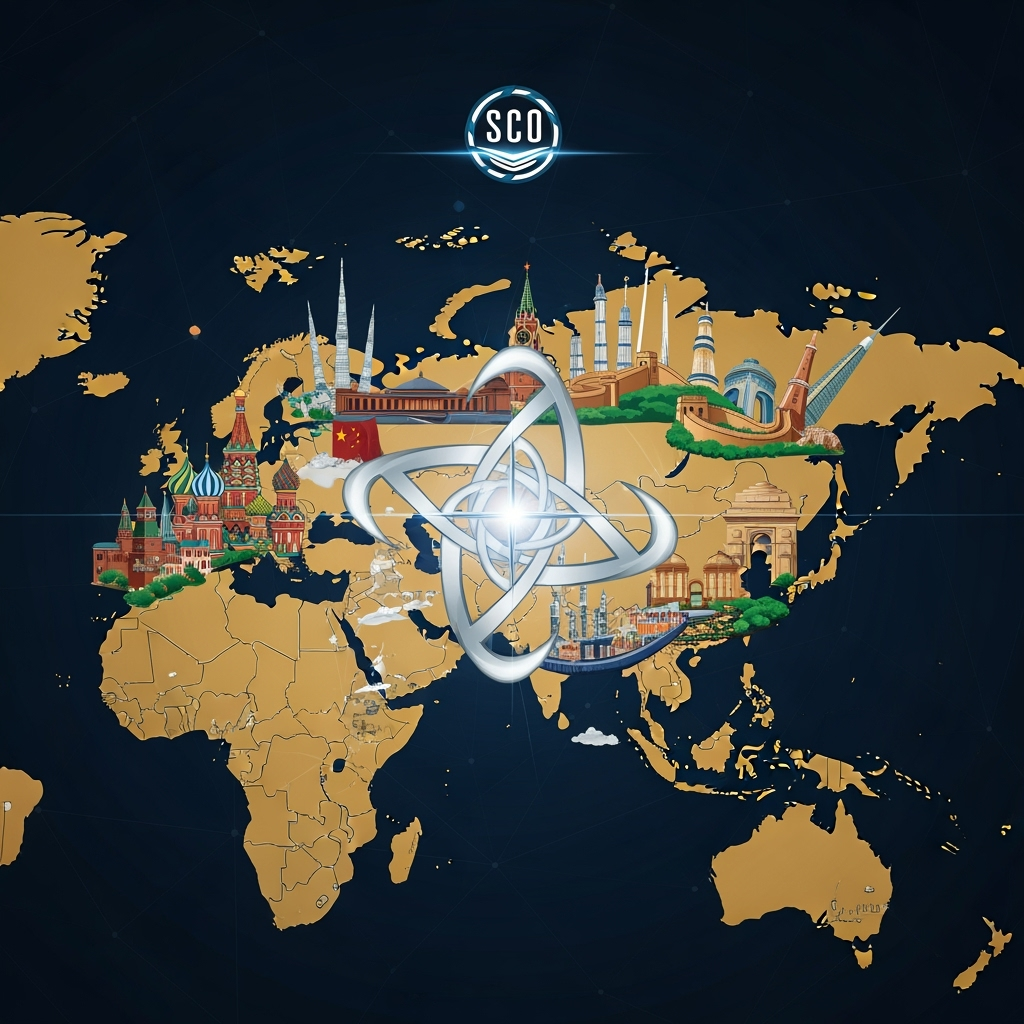
The Shanghai Cooperation Organization is an international organization founded in 2001, including India, Iran, Kazakhstan, China, Kyrgyzstan, Russia, Tajikistan, Pakistan, and Uzbekistan. As of July 4th, it has officially become a member of the organization. The observer states are Afghanistan and Mongolia, and the partner states are Azerbaijan, Armenia, Cambodia, Nepal, the United Arab Emirates, Turkey, and Sri Lanka.