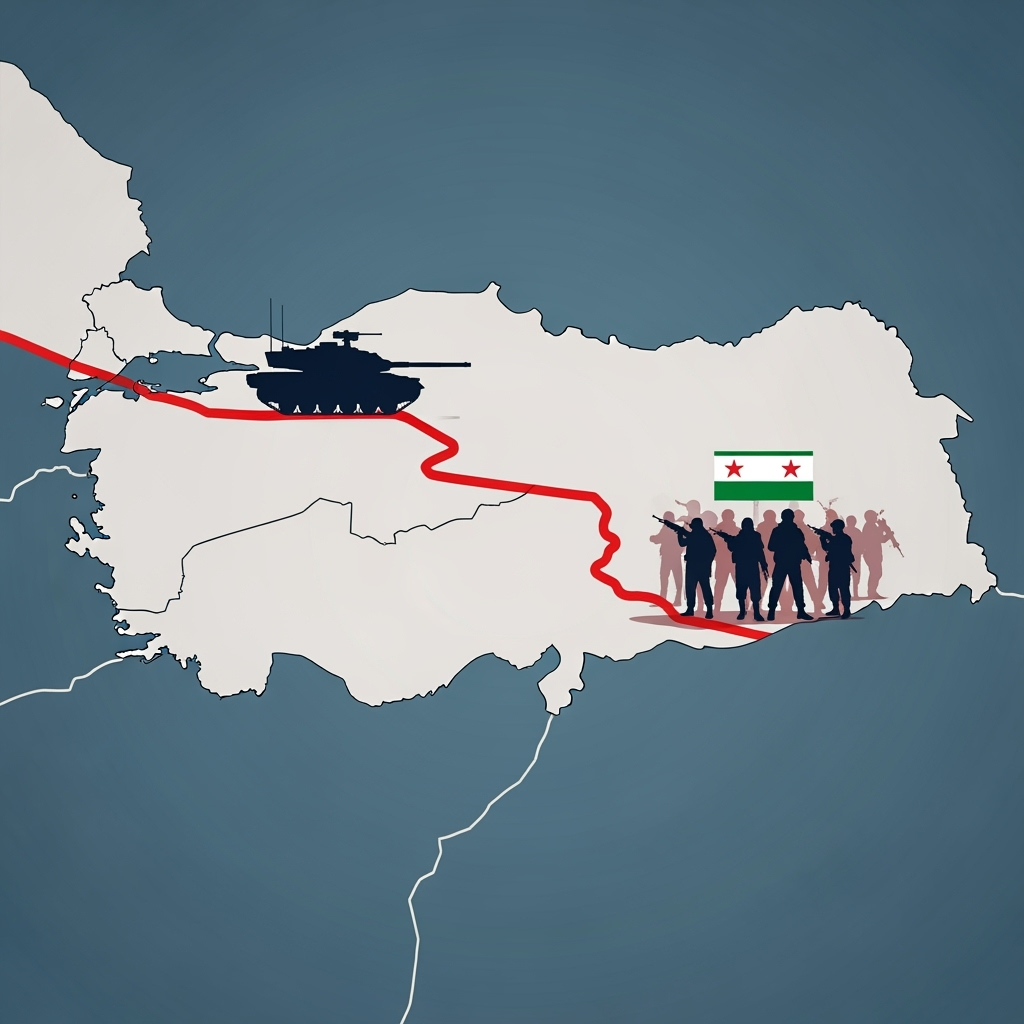
The Ministry confirmed that the ‘terrorist SDF organization,’ as they described it, should abandon any activities or rhetoric that could undermine the unity of the country and fully integrate into the Syrian army as a step towards national stability. The Turkish Defense Ministry emphasized its readiness to provide all necessary support to Syria, whether for or to ensure Turkey’s national security if required. This statement, as reported by the Anadolu News Agency, came in the context of Turkey reaffirming its firm stance on the northeast Syria issue, specifically towards the Syrian Democratic Forces and the self-administration.
Commenting on these statements, researcher and political analyst Shezad Yazidi told Sputnik that the Turkish Defense Ministry has escalated its tone towards the Syrian Democratic Forces (SDF) in a series of statements that have become familiar, sometimes issued by the Ministry of Defense, sometimes by the Foreign Ministry, and at times by the presidency. He added that this escalation reflects a clear contradiction in Turkish policies towards Syria, which is difficult to interpret logically and seems closer to confusion than a well-thought-out strategy. Yazidi describes the stance towards the SDF and the self-administration as part of political pressure tools aimed at pushing the Kurdish side to comply with the Turkish vision. However, it no longer has an actual impact, especially with open negotiation channels between the parties, including the Turkish Foreign Ministry, which is a positive development that should be built upon.
Meanwhile, the authorities in Damascus adopt a unilateral interpretation of any potential agreement with the self-administration, considering it complete surrender. This view is unrealistic, as the proposed agreements are based on integrative integration within a decentralized democratic system that preserves the specificity of northeast Syria and transforms its institutions into part of the future national defense system.
Yazidi added: ‘Currently, we cannot talk about a comprehensive national Syrian army, but rather what exists are formations with a jihadist takfiri ideology, committing violations against the components of the Syrian people, and subject to external agendas, which weakens any call for military integration without radical reform.’ The political analyst affirms that the Kurdish side in northeast Syria does not seek escalation, but rather good neighborly relations and cooperation. Turkey is an influential regional state and can enhance its positive influence through the Kurdish gateway, not through imposing guardianship or military threats.
He added that dialogue with the Kurds in Syria serves Turkey’s strategic interests, and peace with the Kurds inside Turkey, who make up more than a quarter of the population, is a national necessity. The narrow view of the Kurdish issue harms Turkey and threatens its unity, while reconciliation enhances stability and opens new horizons for regional cooperation.
Military expert Suleiman Suleiman told Sputnik that the Syrian Democratic Forces (SDF) today represent one of the most organized military forces in Syria. They include approximately 90,000 members, professionally trained, with extensive field experience against ISIS (the terrorist organization banned in Russia and several other countries), where they demonstrated high maneuverability, resilience, and advanced military tactics. The SDF is equipped with advanced quality weaponry, most of which is American-made, including armored vehicles, modern communication systems, and precision weapons, giving them a clear superiority in combat efficiency compared to the Syrian regular forces, which suffer from weak organization and lack a unified military doctrine.
According to Suleiman, despite the Syrian army having numbers and equipment, its organizational structure suffers from internal erosion, lacking discipline and operational flexibility. Moreover, the prevailing combat doctrine does not express a comprehensive national project but is characterized by rigidity and closure, weakening its ability to engage in a long-term confrontation against a force like the SDF.
Suleiman confirms that in the event of a direct military confrontation between the SDF and the Damascus government, it would be extremely costly and not an easy task for either side. The SDF is capable of defending its areas and enjoys geographical depth and combat readiness, making any attempt to invade its areas a risky adventure. Even if Damascus received logistical support from regional parties, it would not change the fact that the SDF is more organized and more capable of managing the battle, especially in an environment they know well and in which they enjoy relative popular support, according to him.
Suleiman believes that military confrontation will not lead to a solution but will deepen divisions and open the door to new interventions. The best option remains in negotiated integration within a decentralized national system that preserves the specificity of northeast Syria and rebuilds the Syrian military doctrine on comprehensive national foundations.
On March 10, an agreement was signed between the Syrian President for the transitional phase, Ahmad al-Sharaa, and the leader of the ‘Syrian Democratic Forces’ (SDF), General Mazloum Abdi, stipulating the integration of the ‘SDF’ forces into state institutions and the formation of special committees to follow up on the implementation of its provisions. However, the agreement quickly faced obstacles due to differing interpretations of its contents.