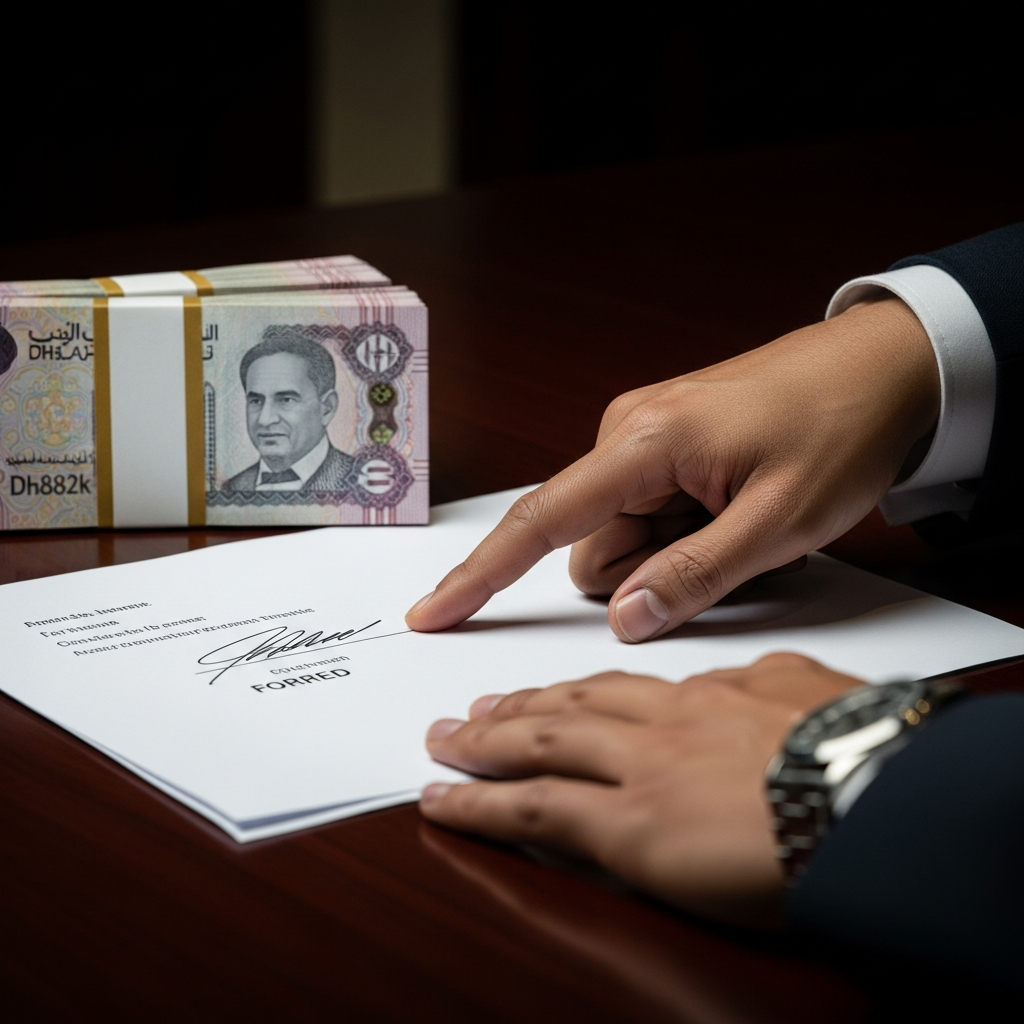
A federal court has sentenced a man for orchestrating a complex forgery scheme that deceived a UAE bank into clearing over Dh882,000 of his personal debts. He had submitted fraudulent documents exaggerating his income and faking housing obligations.
The verdict, which includes a suspended three-month jail sentence and a fine matching the bank’s payment, underscores the UAE’s strict stance against financial fraud and document falsification.
Court records reveal the case initiated when the defendant sought a debt-purchase facility, claiming a desire to consolidate his liabilities. To boost his eligibility, he provided a “To Whom It May Concern” letter showing a monthly salary above Dh50,000, along with a lease approval indicating an annual rental of Dh190,000. These documents appeared to be issued by a government body, featuring official stamps and signatures.
Stay updated with the latest news. Follow KT on WhatsApp Channels.
Convinced of the documents’ authenticity, the bank approved the application, settling the man’s debts with two other banks, totaling over Dh882,000.
However, internal auditors detected discrepancies upon reviewing the file. The bank sought confirmation from the mentioned government entity, which verified that it had not issued the salary certificate or lease approval.
Further investigations uncovered the debt-purchase request was also fraudulent, with the man falsely claiming a salary of Dh56,000 and using a forged signature.
These findings led to a formal complaint and criminal investigation. Prosecutors presented digital evidence, bank testimonies, and official correspondence proving the documents were fake, arguing that the man intentionally misled the bank for unjust financial gain.
In court, the defendant denied the charges, claiming the documents were genuine. The judges dismissed his defense, asserting that the prosecution provided clear evidence of intentional forgery and intent to defraud.
The court upheld the initial ruling, sentencing him to three months in jail and imposing a fine of Dh882,500 — the exact amount the bank disbursed due to the forged documents.
Legal experts assert the case highlights the UAE’s robust legal protections for financial institutions and its zero-tolerance policy towards document forgery, especially in cases that erode trust in the banking sector.