Classrooms have always been evolving spaces and in the UAE, there’s an ongoing effort to modernize and enhance them. The nation equips tomorrow’s workforce with cutting-edge technology and global standards to guarantee continual development.
This is achieved through regulatory bodies like the Knowledge and Human Development Authority (KHDA) in Dubai, the Department of Education and Knowledge (Adek) in Abu Dhabi, and the Sharjah Private Education Authority (SPEA), which annually inspect schools, provide improvement feedback, optimize teacher training, and gather stakeholder opinions.
Since the launch of UAE Vision 2021 in 2010, the Ministry of Education has implemented multiple strategies to foster a sector rich in innovation and sustainability.
In 2024, Dubai introduced the E33 strategy to once again transform the education system. Aisha Miran, KHDA’s director general, stated: “The E33 strategy marks a shift from a traditional, institution-focused model to a learner-centered education ecosystem.”
With its diverse population, the UAE hosts curricula from around the world, simplifying the process for expatriates to find their preferred syllabi.
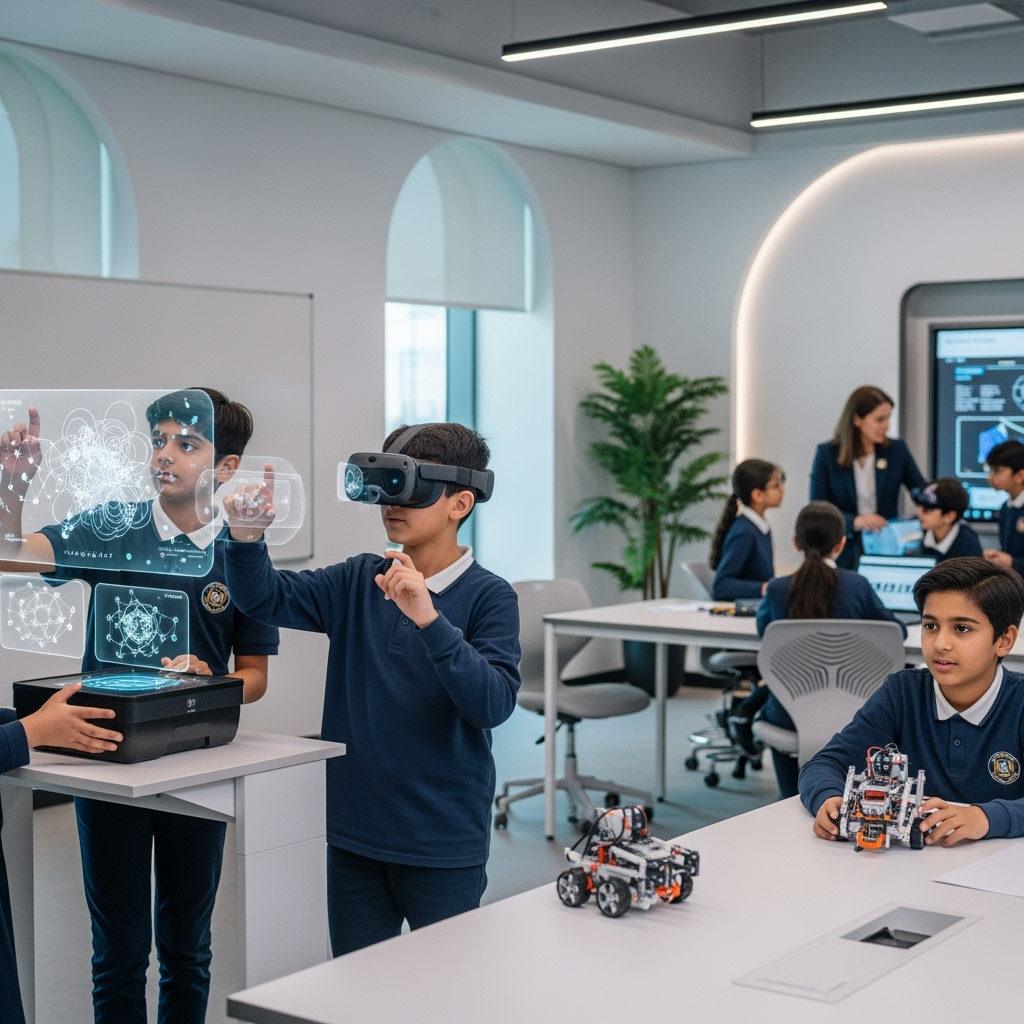
It also leads in tech adoption across various fields, including education, offering real-time, practical experiences that teach students collaboration, creativity, and critical thinking, preparing them for the future.
However, the UAE maintains its cultural heritage by integrating Arabic and Islamic teachings in early education stages.
James Lynch notes, “The UAE leads in education by prioritizing innovation, wellbeing, and future skills. Focus on digital literacy, sustainability, and personalized learning reflects global trends like AI, highlighting the importance of character and creativity alongside academics.”
The changes are well-received across the UAE. “As a UAE parent, I feel privileged to be in a country that values children’s wellbeing and academic future,” says Suzanne Samaan, a Dubai mother of 10-year-old twins in an IB school. She appreciates trends like later school start times, as seen at Bloom World Academy in Barsha South, benefiting students and working parents.
“Another great initiative is ‘no screen days’ in some schools,” she adds. “Encouraging hands-on activities fosters creativity, motor skills, and emotional health.”
As students return to school amid evolving performance metrics, here are emerging trends:
1. Unified calendar
This July, a unified academic calendar was introduced for all UAE schools, requiring 182 instructional days, with flexibility in consultation with the Ministry of Higher Education and other authorities. “While this shift requires adjustment, it’s an opportunity to refine our practices,” says Nargish Khambatta, principal and CEO of GEMS Modern Academy.
2. Embracing diversity and inclusion
Inclusion has long been a priority in the UAE, especially in education. “UAE Vision 2030 ensures quality education for all,” says Khambatta. “At GEMS, inclusion is central, involving individual education plans, specialist support, and community embrace of diversity.”
Barney Durrant, headmaster at Brighton College Abu Dhabi, emphasizes preparing students for global collaboration and communication, teaching values and empathy to nurture success.
3. AI in classrooms
With AI’s rise and the UAE’s digital transformation, schools are incorporating new tech to enhance education through personalized lessons and gamified classes. “Teachers use AI to tailor learning experiences in real time,” explains Khambatta. Rashmi Nandkeolyar, DPS Dubai principal, stresses the importance of balancing AI use with critical thinking development.
4. Call for wellbeing
The pandemic highlighted mental health importance. Dr. Diksha Laungani advises parents and educators to monitor children for second-hand trauma signs and foster conversations for empowerment. The UAE prioritizes wellbeing for educators, parents, and students.
5. Arabic in early years
Schools are introducing Arabic in early education, supported by the KHDA Guide for engaging learning through play and cultural experiences. James Lynch highlights investment in Emirati educators to shape future generations.
6. More tech in classrooms
The pandemic accelerated tech use in classrooms. The UAE’s Rahhal program offers flexible learning experiences. “We combine face-to-face teaching with digital platforms, fostering collaboration and lifelong learning,” Lynch adds.