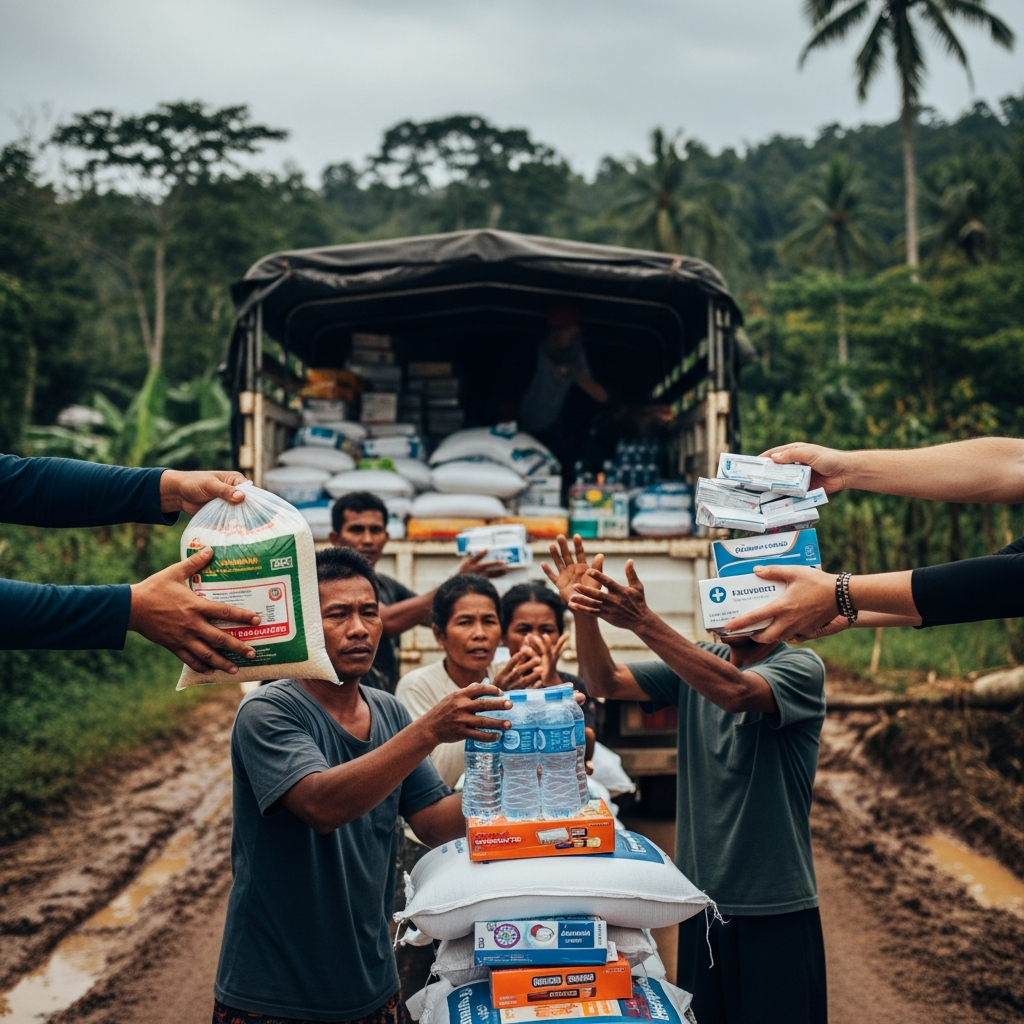
In response to severe flooding that claimed approximately 1,200 lives across four countries, Indonesia and Sri Lanka’s governments and aid organizations are urgently mobilizing support for hundreds of thousands left stranded.
Last week’s intense monsoon rains, intensified by two tropical cyclones, drenched Sri Lanka and parts of Sumatra in Indonesia, southern Thailand, and northern Malaysia.
Climate change is intensifying rainfall as warmer air holds more moisture, while warmer seas can intensify storms.
Stay informed with the latest updates. Follow KT on Whatsapp Channels
Although the floodwaters have mostly receded, countless individuals remain in shelters, facing challenges in accessing clean water and food.
In Aceh, one of the hardest-hit areas in Indonesia, locals informed AFP that those who could, were stockpiling essentials.
“Road access is largely blocked in flooded regions,” said 29-year-old Erna Mardhiah while waiting at a Banda Aceh petrol station.
“Fuel shortages are a major concern,” she added from the queue she had been in for two hours.
This scarcity has driven prices up sharply.
“Prices are soaring… chillies alone cost 300,000 rupiah per kilo ($18), leading to panic buying,” she explained.
On Monday, Indonesia’s government announced the dispatch of 34,000 tonnes of rice and 6.8 million liters of cooking oil to Aceh, North Sumatra, and West Sumatra—the three hardest-hit provinces.
“Delays are not an option,” asserted Agriculture Minister Andi Amran Sulaiman.
– Risk of Food Shortage –
Aid groups are rushing supplies to impacted areas, cautioning that local markets are running low on essentials, with prices having tripled.
“Communities throughout Aceh face significant food shortages and hunger risks if supply lines aren’t restored within the next week,” said Islamic Relief.
The charity shipped 12 tonnes of food on an Indonesian navy vessel expected to reach Aceh on Tuesday.
In Sumatra, 631 people lost their lives, and 472 remain missing, with a million people displaced, according to the disaster agency.
Survivors recounted terrifying, sudden floods.
In East Aceh, Zamzami described the floodwaters as “unstoppable, like a tsunami wave.”
“The water’s magnitude was inexplicable,” said the 33-year-old, who, like many Indonesians, uses a single name.
Villagers sought refuge atop a local two-story fish market, now working to clear the mud and debris amidst power and communication outages.
“Access to clean water is a struggle,” he told AFP on Monday.
“Children are developing fevers, and there’s no medicine.”
The weather system that hit Indonesia also soaked southern Thailand, resulting in 176 deaths.
In Malaysia, two more fatalities occurred.
– Colombo Floodwaters Recede –
A separate storm triggered heavy rains throughout Sri Lanka, leading to flash floods and deadly landslides, killing at least 390 people.
Another 352 remain unaccounted for, with some of the hardest-hit central areas still difficult to access.
President Anura Kumara Dissanayake declared a state of emergency, labeling it the “most challenging natural disaster in our history” and called for international assistance.
Sri Lanka’s air force, supported by Indian and Pakistani forces, has been evacuating stranded individuals and delivering essential supplies.
In the mountainous Welimada region, security forces recovered 11 residents’ bodies buried by landslides, a local official reported on Monday.
Meanwhile, in Colombo, floodwaters were gradually receding on Tuesday.
Residents accustomed to seasonal flooding were taken aback by the speed of the rising waters.
“We experience minor floods annually, but this was different,” delivery driver Dinusha Sanjaya told AFP.
“It wasn’t just the volume of water, but how rapidly everything was submerged.”
Although rainfall has decreased, landslide warnings remain in effect across much of the severely affected central region, officials stated.