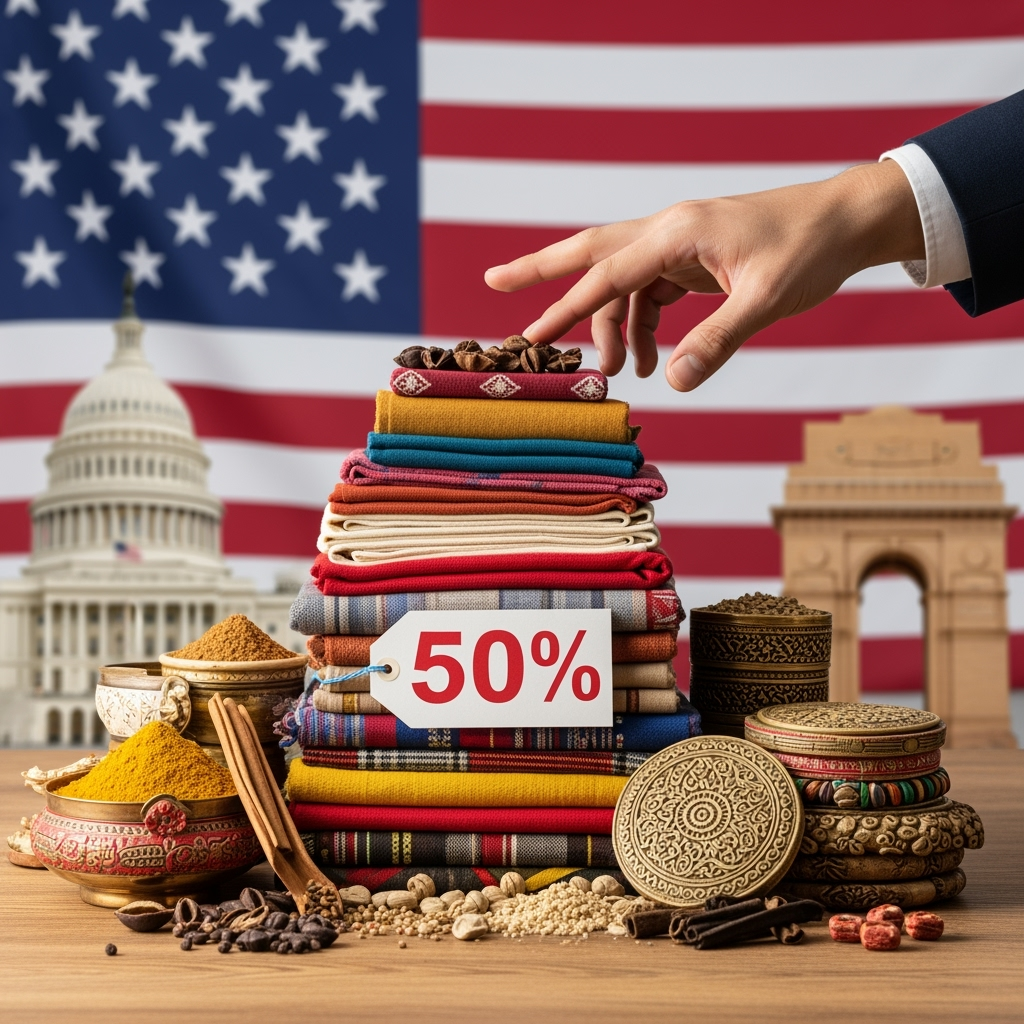
On Wednesday, the US implemented a 50% tariff on numerous Indian goods, doubling the previous duty as President Donald Trump aimed to penalize New Delhi for purchasing Russian oil.
Trump has intensified pressure on India regarding these energy deals, a crucial revenue stream for Moscow’s war efforts in Ukraine, as part of his strategy to end the conflict.
This latest move strains US-India relations, prompting New Delhi to consider strengthening ties with Beijing.
Stay informed with the latest updates. Follow KT on WhatsApp Channels.
Since his return to the presidency in January, Trump has imposed new tariffs on both allies and competitors, with this 50% rate being among the highest faced by US trading partners.
Notably, exemptions remain for sectors that might face separate tariffs, such as pharmaceuticals and semiconductors.
The Trump administration has initiated investigations into these and other sectors, potentially leading to additional duties. Smartphones are also among the exempt products.
Industries already targeted, like steel, aluminum, and automobiles, are similarly exempt from these nationwide tariffs.
In 2024, the United States was India’s leading export market, with exports valued at $87.3 billion.
Analysts warn that a 50% duty resembles a trade embargo and could severely impact smaller businesses.
Exporters of textiles, seafood, and jewelry are already experiencing canceled US orders and losses to competitors like Bangladesh and Vietnam, raising concerns about significant job losses.
‘Trust Erosion’
New Delhi has condemned Washington’s actions as “unfair, unjustified, and unreasonable.”
As the world’s fifth-largest economy, India is seeking to mitigate the impact, with Prime Minister Narendra Modi pledging to reduce the tax burden on citizens during his annual Independence Day speech.
Modi has also promised self-reliance, vowing to protect national interests.
The foreign ministry previously stated that India began importing Russian oil as traditional sources were redirected to Europe amid Russia’s invasion of Ukraine.
It highlighted that Washington had encouraged these imports to bolster global energy market stability at the time.
In 2024, Russia accounted for nearly 36% of India’s total crude oil imports. Purchasing Russian oil saved India billions in import costs, keeping domestic fuel prices stable.
Nonetheless, the Trump administration remained steadfast on its tariff plans as Wednesday’s deadline approached.
Trump’s trade adviser, Peter Navarro, commented last week that “India seems reluctant to acknowledge its role in the bloodshed.”
“It’s aligning with Xi Jinping,” Navarro added, referring to the Chinese president.
Wendy Cutler, senior vice president at the Asia Society Policy Institute, told AFP: “One of the most concerning developments in the Trump tariff scenario is how India transitioned from a promising candidate for an early trade deal to a nation facing some of the highest tariffs imposed by the US on any trading partner.”
Cutler, a former US trade official, noted that India has been reforming and opening up despite its historically tough stance on trade.
However, these advancements may be jeopardized by Trump’s steep tariffs.
“The high tariffs have rapidly eroded trust between the two countries, which could take years to rebuild,” she stated.
Trump has utilized tariffs to tackle issues ranging from perceived unfair trade practices to trade imbalances.
US trade deficits were a primary reason behind his higher tariffs on numerous economies, which took effect in early August, impacting partners from the European Union to Indonesia.
However, the 79-year-old Republican has also targeted specific countries like Brazil, in response to the trial of its former president Jair Bolsonaro, accused of plotting a coup.
US tariffs on several Brazilian goods increased to 50% this month, although with broad exemptions.