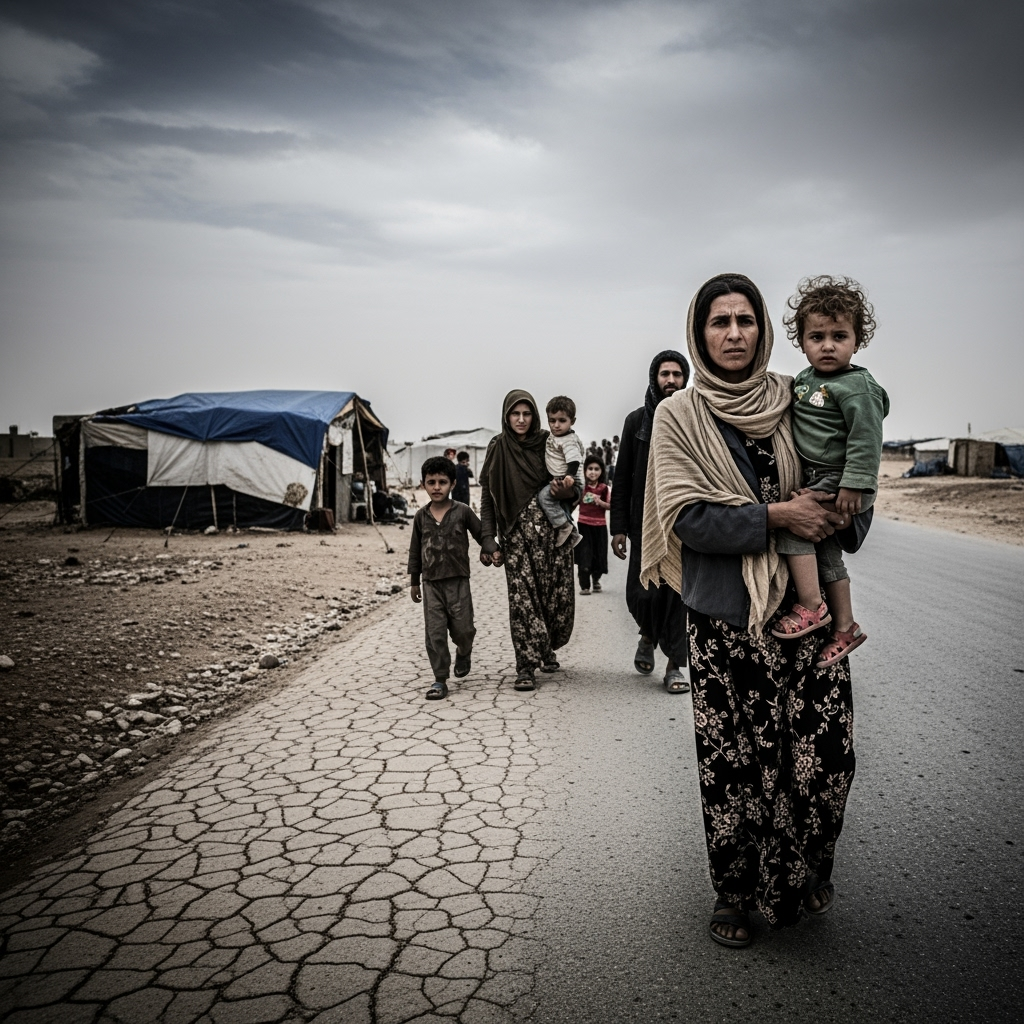
In his statement on Wednesday, he mentioned that Yemen is currently experiencing an extremely difficult humanitarian situation, even more so than the countries from which the migrants originate. The choice of Yemen as a destination by migrants is due to several reasons, including the long coastline on the sea, proximity to the countries of origin, and the lack of coastal surveillance due to the fragility of the central government. Additionally, historical reasons make the Yemeni society’s environment and history rooted in migration, as Yemeni migrants live in most countries worldwide. This has resulted in migrants entering Yemeni cities without facing rejection from the locals and living normally among the people.
He continued, “There are various entities or many players with regional and international connections, and they are attracted through unclear organizations. Naturally, not all migrants are involved, only some. The danger lies in the illegal nature of migration, beyond the control of the central government in Aden. Their route is through (Aden-Yafea-Dhale), which are mountainous areas, and they usually settle in the Reda area near the districts of (Damt, Juban, and Al-Shaib), which are rugged mountainous districts where many extremist organizations are present.
Qasim highlighted that migrants, in any case, pose a threat to navigation, the economy, security, and other factors, particularly in the city of Reda, which is the most stable for migrants and acts as a destination and haven for them. We observed the conflict among migrants in Aden about a year ago, as well as their ascent to the highest mountains of Hadramout, an act that international entities could exploit for various security and espionage tasks.
The death toll from a boat sinking in the Arabian Sea has risen to more than 70, with over 70 others still missing. Yemen has been experiencing a fragile truce since the United Nations announced on October 2, 2022, that the Yemeni government and the “Ansar Allah” group had not reached an agreement to extend and expand the six-month truce.
For the tenth consecutive year, the Arab country is suffering from an ongoing power struggle between the internationally recognized government and the “Ansar Allah” group, with its consequences affecting various aspects. It has caused a humanitarian crisis described by the United Nations as one of the worst in the world. Since September 2014, the “Ansar Allah” group has controlled the majority of central and northern Yemen provinces, including the capital, Sana’a. On March 26, 2015, an Arab coalition led by Saudi Arabia launched military operations to support the Yemeni army in reclaiming those areas from the group.
The ongoing war in Yemen, until late 2021, has claimed the lives of 377,000 people and inflicted cumulative economic losses estimated at $126 billion. According to the United Nations, 80% of the population, approximately 35 million people, require humanitarian assistance.