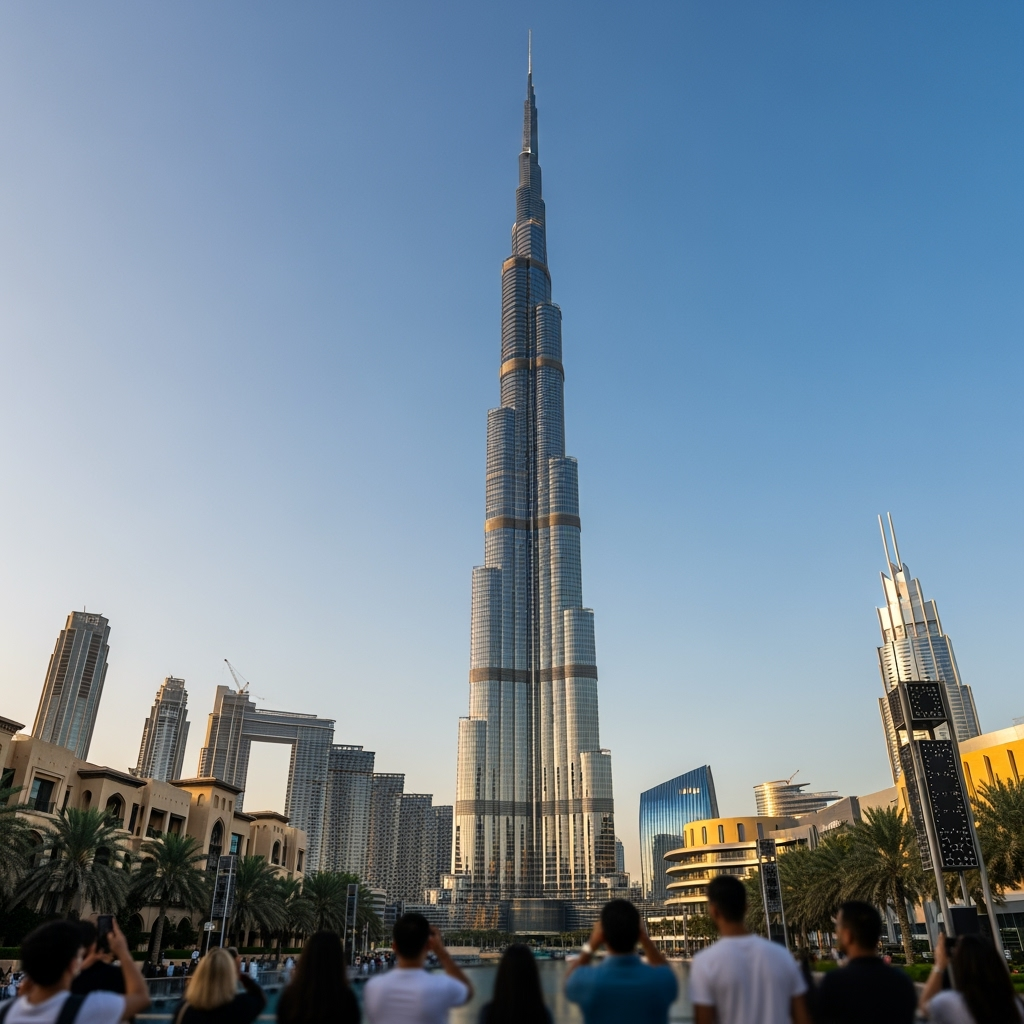
Fifteen years ago, on a cool January evening, the world was treated to a dazzling display. Fireworks lit up Dubai’s skyline, synchronized with a spectacular fountain show, as a towering structure of glass and concrete made its historic debut. At 828 meters, the Burj Khalifa stood as Dubai’s audacious symbol of ambition—an architectural masterpiece that, even 15 years later, exemplifies the city’s relentless pursuit of global significance. “Its iconic status only grows with time,” notes Adrian Smith, the visionary architect behind this modern marvel.
Smith is well-acquainted with skyscrapers. A renowned American architect, his portfolio includes some of the world’s most iconic towers, such as the Burj Khalifa in Dubai, the Jin Mao Tower in Shanghai, and the Trump International Hotel & Tower in Chicago. But was building the tallest structure always a dream for this Chicago-based architect? “Designing that building was life-changing,” Smith, now 80, recounts. “As a young architect, I often wondered if I’d ever work on a super-tall building. It wasn’t a specific goal, but the thought lingered in my mind.”
Reflecting on the tower’s 15-year impact, we spoke with Smith, now retired, to explore the grand vision that redefined design boundaries, the cultural and economic significance of the Burj Khalifa, his cherished memories from the project, and its lasting legacy as a symbol of Dubai’s rapid evolution.
Insights from an interview:
Adrian, 15 years later, how do you view your involvement in the Burj Khalifa, a global icon and symbol of Dubai?
It’s incredible that it’s been 15 years since its completion, and it remains the world’s tallest building. It’s thriving, and I hope it continues to hold that title. Other developers and architects have attempted to build taller structures, but these projects are challenging, costly, and technologically demanding.
You’ve recently retired, leaving behind an extraordinary legacy. How did your passion for architecture begin?
Architecture wasn’t on my radar as a kid. It was in high school that I started considering it, thanks to my mom. I used to cut out pictures of buildings from newspapers and magazines, and she noticed my interest, suggesting I might want to be an architect.
At around 15, I didn’t fully understand what an architect did. My mom explained, and I began researching. I found books on Frank Lloyd Wright, whose work intrigued me with its organic designs that harmonized with their surroundings. That’s when I knew architecture was my calling.
Was designing the world’s tallest building a childhood dream?
Designing the Burj Khalifa was indeed transformative, though it wasn’t a childhood goal. Early in my career at Skidmore, Owings & Merrill, I worked on the John Hancock Center—a 100-story building. Although I was assigned to less glamorous tasks, it was fascinating to be part of a significant project.
While not the tallest globally, it inspired my interest in super-tall buildings. As I advanced, I worked on increasingly taller structures. The Jin Mao Tower in Shanghai, completed in 1998, was pivotal, sparking China’s economic boom and setting the stage for the Burj Khalifa.
In retirement, do you reflect on your career achievements?
I’ve been publishing books on my work and that of my firms. My aim is to leave a legacy for future generations, including my family, so they understand who I was and what I accomplished. I’m fascinated by genealogy and the past, just as much as I am by envisioning the future.
What role does the Burj Khalifa play in your legacy?
It’s probably the most defining building of my career. While each project feels like a cherished child, the Burj Khalifa stands out for its significance and the impact it had on my identity as an architect.
What memories stand out from the Burj Khalifa project?
The opening ceremony was unforgettable. The tower was illuminated with a grand light and fountain show, accompanied by fireworks—a complete surprise and a first for a building. I recall Sheikh Mohammed’s gleaming eyes, reflecting his joy.
Did you anticipate the Burj Khalifa’s global impact 15 years ago?
The Burj Khalifa was a monumental leap for Dubai, anchoring its status as a major global city. Sheikh Mohammed’s ambitious vision for Dubai was significantly realized through the Burj Khalifa.
Does architecture reflect a city’s ambitions and identity?
Undoubtedly. Architecture and urban planning shape a city’s character. Mohamed Alabbar understood the development potential of the Burj Khalifa, enhancing the area’s value and transforming Dubai.
Can you share your initial thoughts from the first meeting about the Burj Khalifa?
In 2003, Emaar invited us to New York to discuss super-tall buildings. We presented our previous projects, and Mohamed Alabbar appreciated our work, eventually leading to the Burj Khalifa.
Can you describe the first sketches?
They initially considered a 550-600 meter structure. I proposed a three-legged, spiraling design to counteract wind forces. The final design, with its iconic spire, achieved the desired height and silhouette.
What was the biggest design breakthrough for the Burj Khalifa?
Wind was a major challenge. The building’s form mitigated wind forces, and the Y-shaped structure enhanced residential spaces. The curved stainless steel mullions created a shimmering effect, a subtle yet significant design choice.
Was sustainability a focus 15 years ago?
Yes, we prioritized efficiency, using less material to reduce emissions. The mixed-use design minimized travel and space. We also integrated photovoltaic panels and innovative climate walls, showcasing sustainable practices.
How did the Burj Khalifa address Dubai’s climate and sustainability?
The climate wall innovation kept heat out, and condensation from cooling systems was repurposed for irrigation. These features were novel at the time and effective in Dubai’s heat.
How would you approach the design today with current technology?
Today’s technology allows for glass-integrated photovoltaics, potentially achieving net-zero carbon. Dubai’s sunlight makes this an ideal development.
How do you view the Burj Khalifa’s legacy 15 years on?
The Burj Khalifa transformed Dubai, anchoring its global city status. It remains a timeless and contemporary icon, embodying the goal of enduring design.