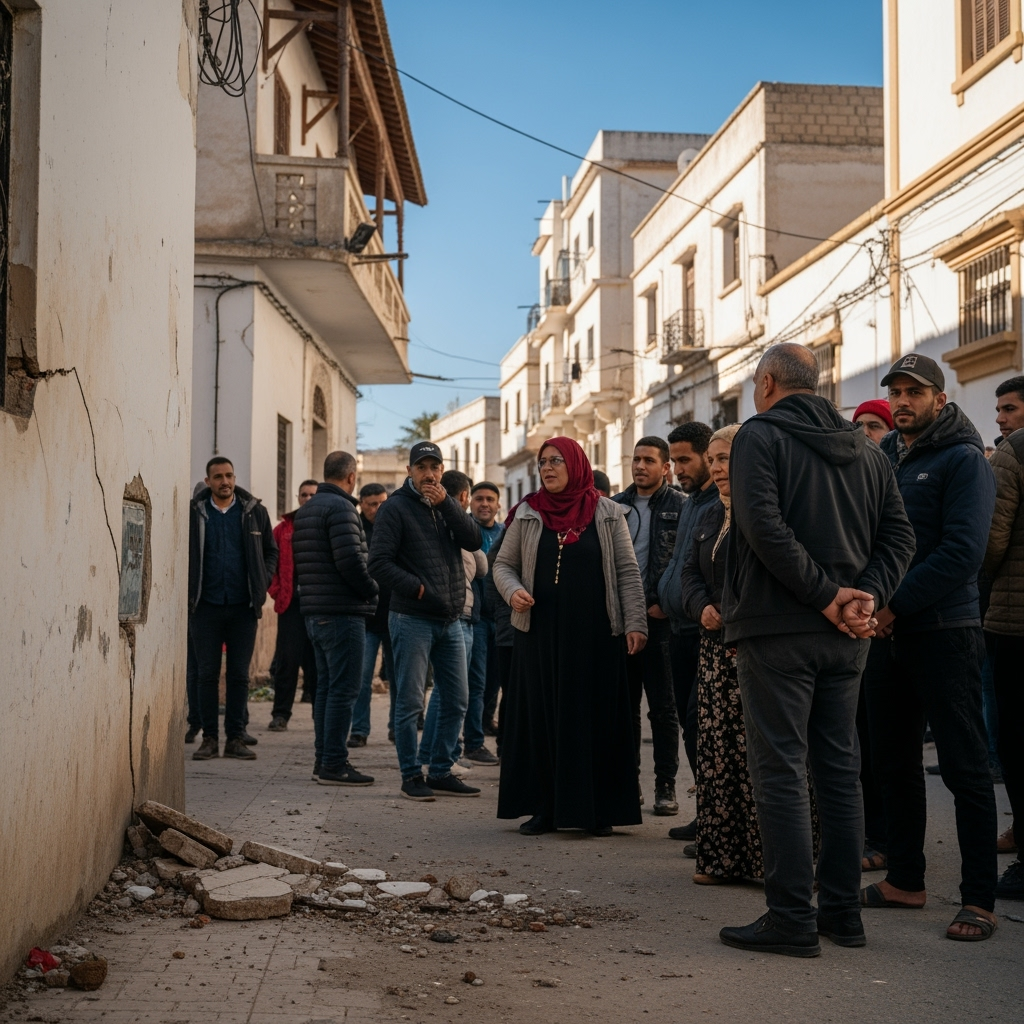
Al-Nahar Algerian Television announced that a 4.8 magnitude aftershock followed the earthquake in Tebessa. The aftershock threatened an area 26 km southeast of Neferin, located on the border with Tunisia. Dr. Chafik Aidi, a geophysics expert and head of the Seismic Monitoring Department at the National Network, revealed last January the reason behind the intense seismic activity. Commenting on the seismic activity witnessed in several Algerian provinces, the geophysics specialist said: “Every year, a different province experiences intense seismic activity… which is considered normal activity given Algeria’s tectonic location.” Aidi added in a statement to Al-Nahar that sometimes there is intense activity in a certain area, noting that they are currently monitoring this activity, and “additional stations have been dispatched to the area to detect every small movement with the small network.” Algeria occasionally experiences earthquakes and tremors, the most severe of which shook Boumerdes province in the north of the country in May 2003, with a magnitude of 6.8, resulting in the death of 2,277 people, as well as causing significant material losses and massive destruction in the region.