In the UAE, doctors are investigating how AI, genetic data, and predictive health tools can detect serious conditions like heart attacks, diabetes complications, and fertility issues long before symptoms appear. Experts believe this could save lives but also poses ethical and structural challenges.
During the ‘Diagnosing Before Symptoms’ session at the 5th Future of Healthcare Summit 2025 organized by Khaleej Times, Dr. Samer Ellahham, Medical Director at Cleveland Clinic, likened the quality of data in predictive medicine to making popcorn. “If the data is poor, no algorithm, no matter how advanced, can yield good results,” he stated. “You can’t make a tasty snack from burnt kernels.”
He emphasized that predictive healthcare necessitates a shift from physician- or admin-centered systems to caregiver-focused models. Integration of sensors, continuous monitoring, and electronic health records from the outset is crucial for providing actionable insights.
Stay updated with the latest news. Follow KT on WhatsApp Channels.
For instance, Dr. Ellahham pointed out that wearable devices and biometric tracking can alert clinicians to early signs of heart disease or diabetes, allowing for interventions before hospital admission becomes necessary. “It’s about transitioning from reactive care to preventive action,” he explained.
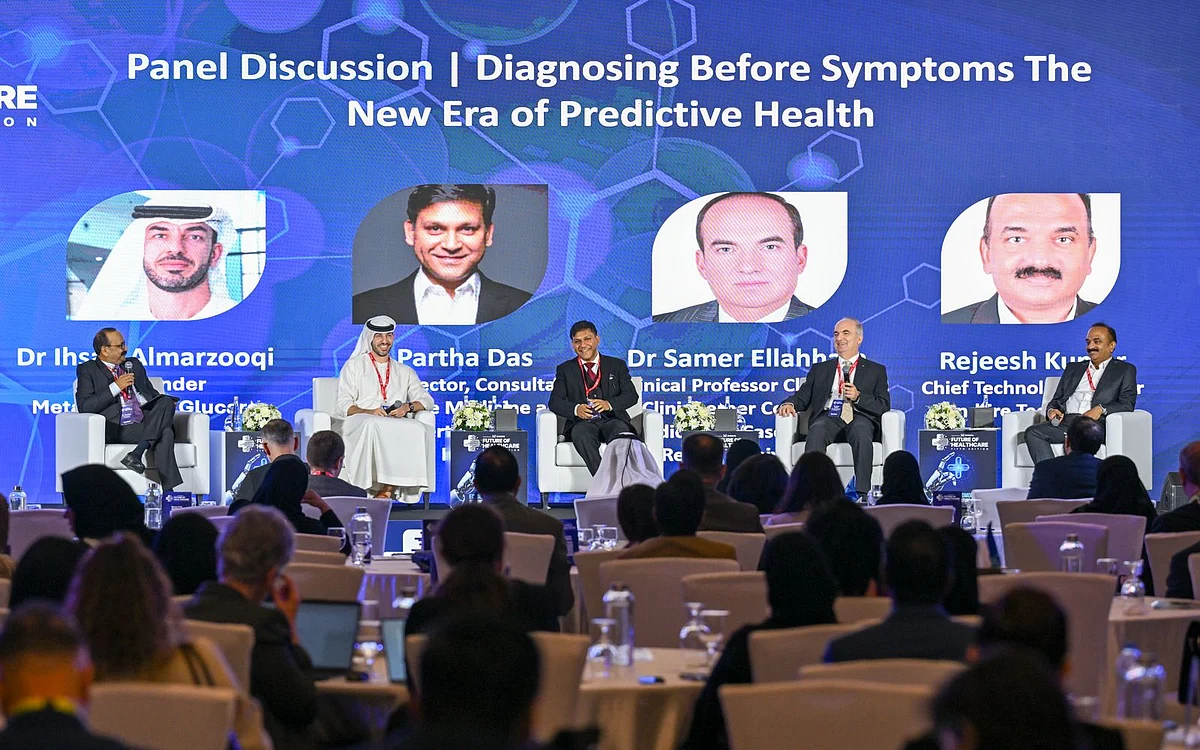
From left: Dr. Riaz Khan, Chief Strategy Officer at HOSMAC; Dr. Ihsan Almarzooqi, Co-Founder of Metabolic; Dr. Samer Ellahham, Medical Director at Cleveland Clinic; Dr. Partha Das, Medical Director at Orchid Fertility; and Rjeesh, Chief Technology Officer at Mindfire, during their session on “Diagnosing Before Symptoms: The New Era of Predictive Health”. KT Photo: Muhammad Sajjad
Dr. Ihsan Almarzooqi, Co-Founder of Metabolic, explained how predictive technologies are transforming diabetes care. Computational coronary calcium scoring, traditionally requiring an expensive CT scan, can now be performed via retinal scans for diabetics, moving testing to the start of the care pathway.
“We’ve been using this for about a year, providing early insights without invasive procedures,” he noted, emphasizing both patient benefits and cost efficiency.
Predictive tools are also influencing reproductive medicine. Dr. Partha Das, Medical Director at Orchid Fertility, shared a story of a couple who discovered genetic risks for their future children. This revelation caused distress and raised ethical questions, illustrating the limitations of predictive testing.
“These tests can save lives or prevent serious conditions, but they can also lead to complex ethical situations when families act on genetic predictions,” he stated. Dr. Das stressed the importance of counseling and informed decision-making in responsibly using these tools.
Despite the potential, all speakers agreed that adoption is slow. Current insurance models, clinician resistance, and outdated guidelines often prevent the full use of preventive tools. “As long as reimbursement favors hospitalizations over prevention, these technologies will remain underutilized,” Dr. Ellahham noted.
Experts highlighted the need to integrate predictive tools with patient-centered care. AI, genetic testing, wearables, and continuous monitoring can empower both doctors and patients, but systems, regulations, and reimbursement models must evolve in parallel.
The event, themed “Echoes of Tomorrow | Building the Future of Care,” gathered senior leaders from public and private healthcare institutions across the region to explore how innovation, technology, and collaboration are reshaping patient care, focusing on AI, predictive health, and preventive medicine.