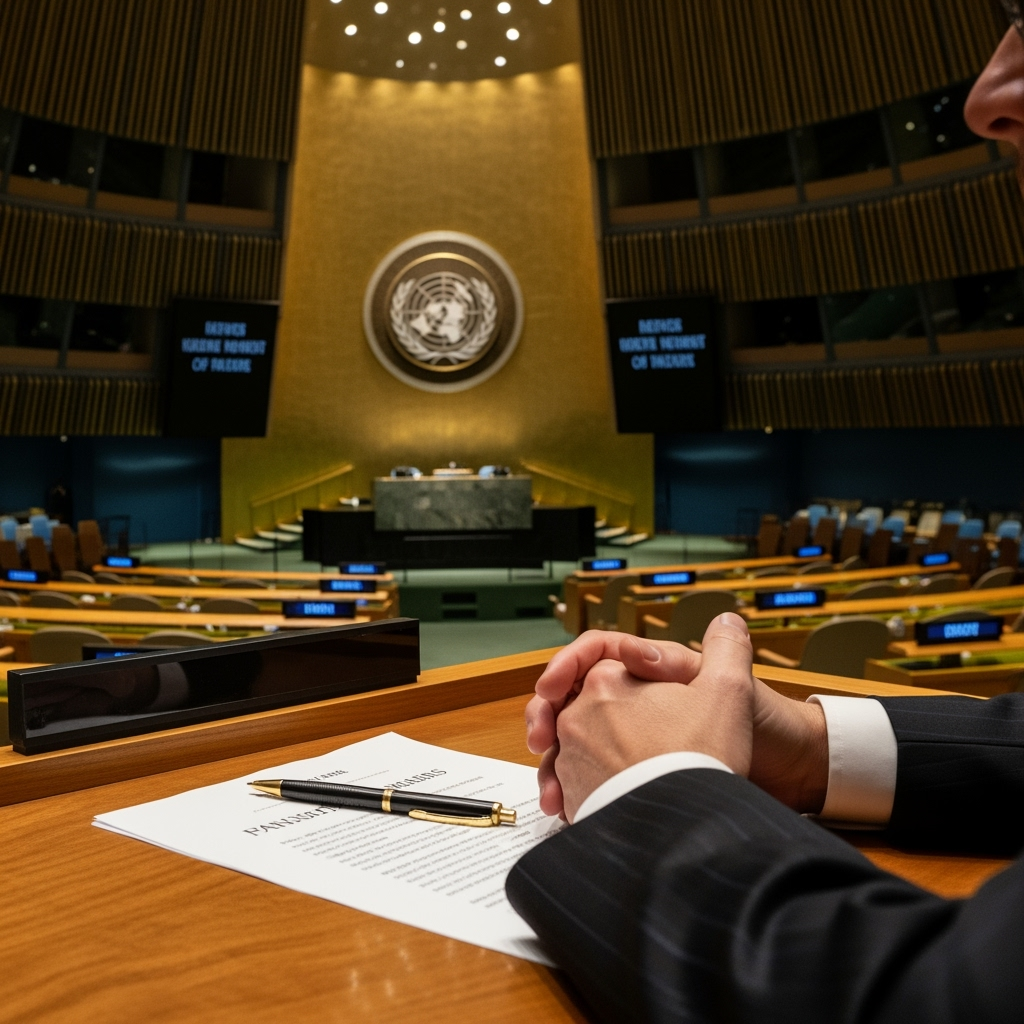
On the sidelines of the United Nations General Assembly, Grossi considered that reaching a diplomatic solution is still possible. This comes after Tehran threatened last Saturday to suspend its cooperation with the UN agency if sanctions are reimposed on it. He added, “The important thing is that communication is ongoing,” noting that he intends to meet with Iranian Foreign Minister Abbas Araghchi today, Monday.
Earlier today, Monday, the Russian Foreign Ministry announced that Deputy Foreign Minister Sergei Ryabkov invited ambassadors from France, Germany, and the United Kingdom to discuss the matter, pointing out that the “European Troika” lacks the legal grounds to reimpose sanctions on Iran. A statement published on the Russian Foreign Ministry’s website said, “The European countries participating in the Joint Comprehensive Plan of Action are urgently called to stop provocations, abandon their escalatory path, and return to negotiations that would dispel any baseless doubts and prejudices surrounding Iran’s peaceful nuclear program, taking into account international law and Iran’s legitimate interests under the Nuclear Non-Proliferation Treaty.”
In turn, the Russian diplomatic mission announced today, Monday, following a meeting between Deputy Foreign Minister Sergei Ryabkov and diplomats from countries, that the results of the UN Security Council’s discussion of the draft resolution to reimpose sanctions on Iran do not obligate member states of the organization. The diplomatic mission added in a statement: “The Russian side pointed out that the United Kingdom, Germany, and France lack the legal basis and procedural capabilities for such measures.”
The Russian Foreign Ministry confirmed that “the results of the UN Security Council’s discussion, on September 19, regarding the draft resolution to reimpose restrictions on Iran, due to their legal invalidity, do not obligate UN member states to any commitments and cannot form the basis for any practical steps to impose sanctions on Tehran.” On August 28, the United Kingdom, France, and Germany (the three EU member states) informed the UN Security Council of the launch of a reimposition mechanism which was lifted under the 2015 nuclear agreement. Subsequently, the UN Security Council, on September 19, rejected the draft resolution not to reimpose sanctions on Iran, which means reinstating the UN Security Council’s restrictions. This is expected to occur after September 27.