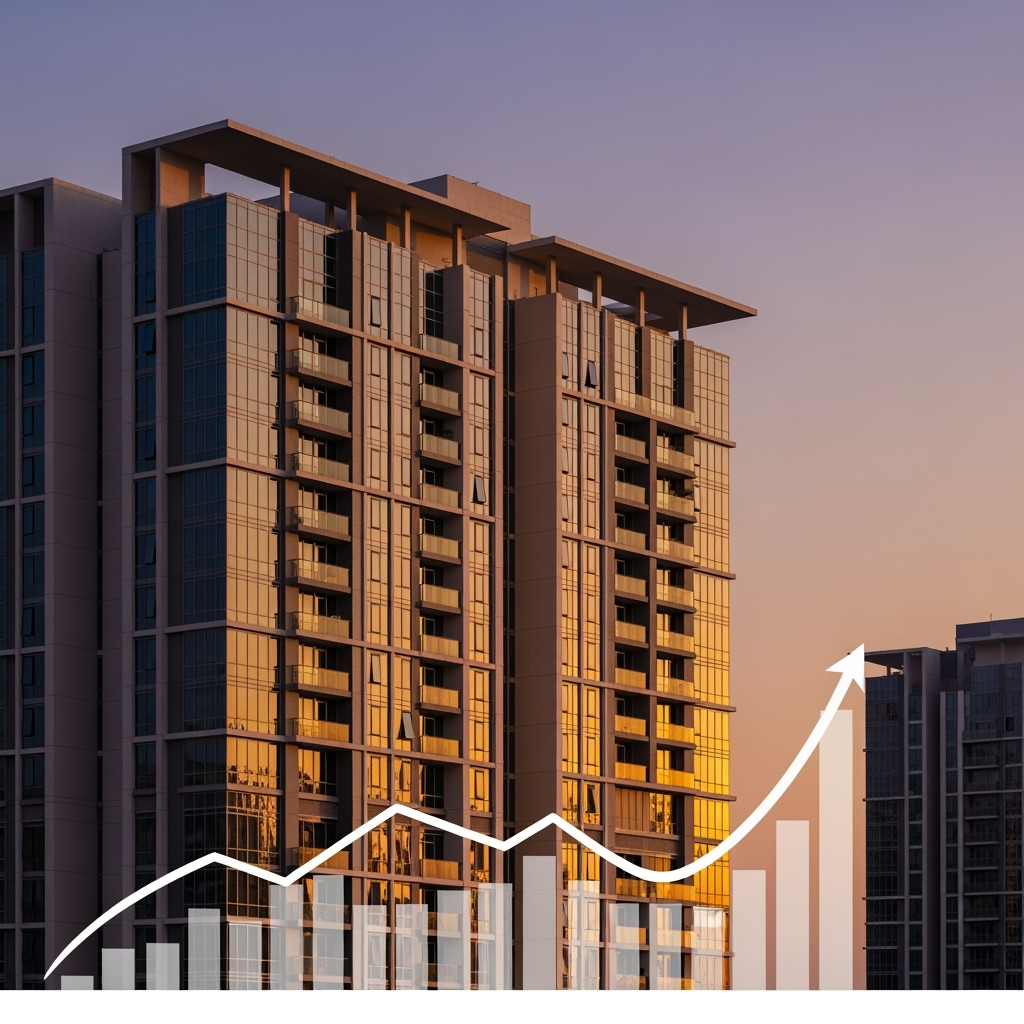
Dubai’s property market showcased its resilience in August, with apartments leading the charge in both sales and rentals. Despite August traditionally being a slower month due to summer heat and travel schedules, strong demand persisted, highlighting the enduring allure of Dubai real estate to investors, residents, and global buyers.
According to Dubai Land Department (DLD) figures, total property sales amounted to Dh40.45 billion in August. Although this represented a 22 percent decline from July, the adjustment was largely seasonal and anticipated.
More importantly, sales still recorded a robust 6 percent year-on-year increase, indicating that Dubai’s growth momentum remains strong. The emirate’s rising population, now exceeding four million—an increase of 1.5 million over the past decade—bolsters long-term demand across residential segments.
Apartments dominated transactions in August, making up 89 percent of all sales by volume and 71 percent by value. This shift in demand was notable as villas and townhouses had a larger share just a month prior.
Compared to August 2024, apartment sales values surged by 26 percent, according to DLD data, while brokerage Allsopp & Allsopp reported an even higher 31 percent jump.
Analysts attribute this surge to the growing number of expatriates relocating to Dubai, along with investors finding attractive opportunities in the rental and holiday home markets.
Apartments offer a more accessible entry point than villas, in terms of purchase prices and rental yields, making them appealing for newcomers and portfolio builders alike.
The strength of this segment is also evident in pricing trends. DLD reported the average apartment sale price at Dh1.9 million in August, while Allsopp & Allsopp placed the figure higher at Dh2.6 million, reflecting brisk activity in prime communities.
Interestingly, there was a 25 percent month-on-month increase in transactions for apartments priced below Dh1 million, indicating a diverse buyer base including first-time homeowners, mid-income residents, and investors seeking affordable rental stock.
Property market analysts noted that Dubai’s apartment market is attracting domestic, regional, and a growing pool of international buyers.
Data from industry sources shows a sharp increase in buyers from South Korea, South Africa, Australia, and Canada, drawn by Dubai’s reputation for safety, stability, tax advantages, and its status as a global business hub.
V. Sivaprasad, chairman of Condor Developers, noted that a mix of affordability at the entry level and prestige in the luxury segment makes Dubai’s apartment market uniquely versatile for buyers.
“For landlords and investors, rising rental yields and high occupancy levels continue to underpin returns. For the city as a whole, the sector is a critical pillar supporting economic expansion and population growth.”
V.S. Bijukumar, a real estate consultant, said Dubai’s enduring appeal lies not just in its skyline or lifestyle, but in its ability to adapt, attract, and thrive in a changing global landscape. “With apartments driving resilience, the city has reinforced its status as one of the world’s most dynamic and reliable real estate markets.”
The emirate’s consistent top ranking in international indices for livability, digital infrastructure, and lifestyle further boosts its credibility as a relocation destination for mobile professionals and families.
With world-class amenities, reliable governance, and expanding visa options such as the Golden Visa and long-term residency permits, Dubai offers a seamless entry point for overseas investors seeking both a home and a foothold in one of the world’s fastest-growing economies.
The rental sector mirrored the strong performance of sales. Allsopp & Allsopp reported a 43 percent rise in total apartment rental value in August compared to July, alongside a 48 percent jump in leasing transactions.
Demand remained concentrated in prime areas like Downtown Dubai, Dubai Marina, Business Bay, Jumeirah Lake Towers, and Town Square.
A particularly encouraging sign is the growing flexibility among landlords, with nearly half (49 percent) now willing to accept four or more cheques, making the rental market more tenant-friendly and accessible to a wider demographic.
Leasing registrations also rose 34 percent during the month, suggesting continued expansion of the tenant base. Beyond short-term fluctuations, the fundamentals of Dubai’s property market remain robust. Year-on-year comparisons show a 28 percent increase in total apartment sales transactions and a 20 percent rise in off-plan sales volumes, according to DLD.
Allsopp & Allsopp data further confirms a 26 percent rise in average apartment sale prices and a 31 percent surge in total transaction value for apartments.
Apartments accounted for 68 percent of overall sales in August. These figures highlight not only the segment’s current strength but also its critical role in ensuring long-term resilience for Dubai’s real estate sector.
As population growth continues and international demand rises, apartments offer a flexible, scalable, and affordable solution for housing while delivering attractive returns for investors.
Even in a month often marked by seasonal slowdown, Dubai’s real estate market has shown that confidence remains unshaken. Apartments, in particular, are proving to be the backbone of growth, serving both the city’s expanding population and its increasingly diverse investor base.