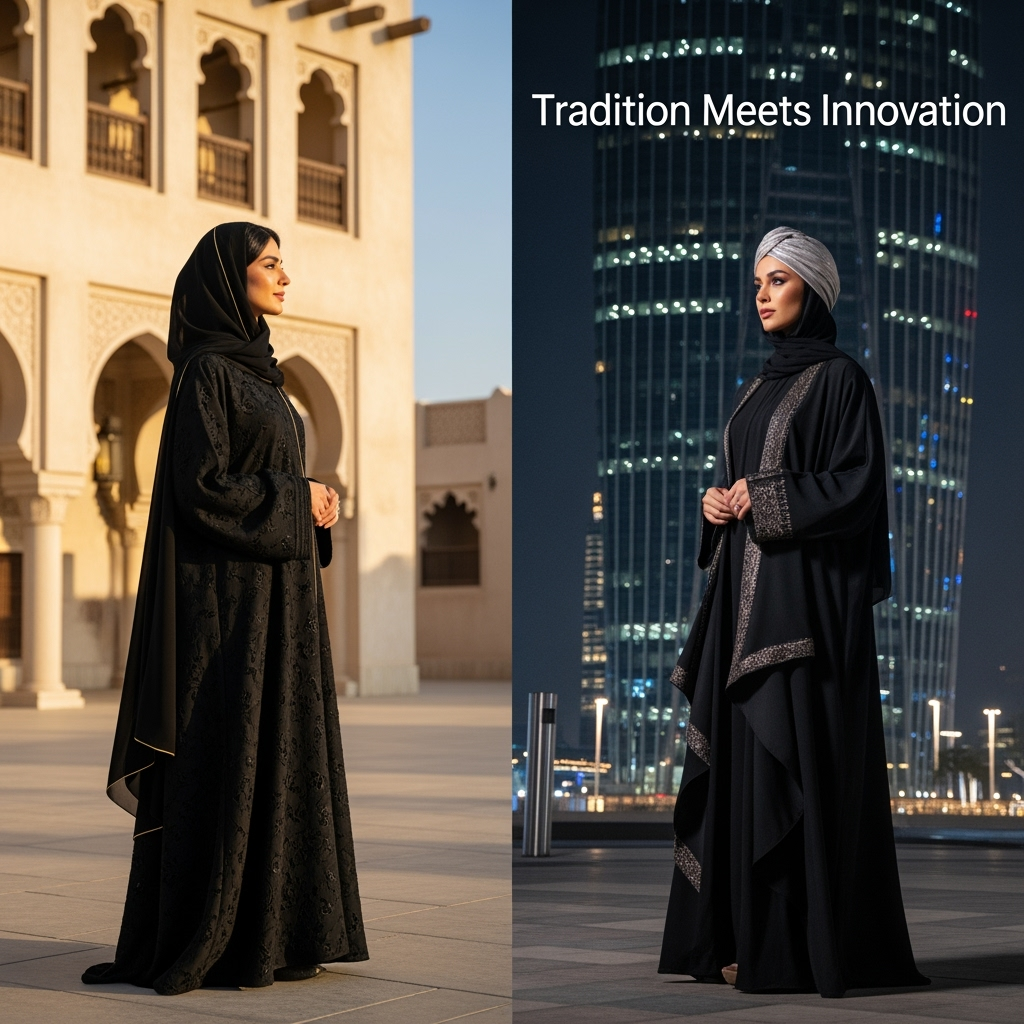
To know the character of a culture, look to its traditions for the truth. Nowhere is this clearer than in the wardrobe worn by its citizens. In the UAE, the throbe – also known as the dishdasha or kandura – is the quintessential garment that speaks volumes. It reflects a people who value simplicity by design, with detailing in key areas, evolution through tech innovation, and pragmatism infused in daily life.
The garments themselves trace back generations, all the way to pre-Arabia. In the book “History of Egypt under the Government of Mohammed Ali” (1823) by Félix Mengin, the author describes the ruler of the first Saudi state, Imam Abdullah Bin Saud Al Saud, wearing a silhouette similar to the one worn today.
Today, the humble kandura – a loose neck-to-ankle garment most often seen in white – is worn alongside a shemagh and ghutrah (square scarf worn as a headdress).
It’s an outfit loved fiercely and worn proudly by the people of the UAE. Case in point: In 2023, Emirati astronaut Sultan Al Neyadi wore a traditional outfit while on the International Space Station during Eid. “It was a proud moment for us, the UAE, and the Arab world,” says Ahmed AlHashimi, co-founder and CEO of Signature Yashamgh, the brand behind the outfit. “Sultan Al Neyadi spent six months at the International Space Station, taking his Emirati identity with him. He wore a Signature Yashmagh ghutrah made specially for his mission. It symbolized how heritage can travel into the most futuristic frontier — space.”
The company is focused on the essentials that define the outfit. “They are the most recognizable symbols of Arab identity. They act almost like a cultural ‘flag’ — instantly linking the wearer to the region. They provide a strong base for innovation while keeping tradition intact,” explains AlHashimi.
But is it really enough to be a tradition’s bearer? No, believe the founders, which include Mishal Almarzooqi and Khalid Belhoul. Instead, they call for the essence of the community, the outfits, to represent the times, for designs to evolve to their sleekest best. “We found a gap between manufacturers and users: products were heavy and uncomfortable for the Gulf’s hot climate,” says Al Neyadi, explaining the need for the brand. “After research, we launched our first lightweight cotton shemagh in May 2019, and sold over 3,000 in the first year.”
He added that ghutrahs are often made using polyester, which can emit an odor when exposed to sunlight and sweat. To solve the problem, the company formulated a ghutrah spray, “with light fragrances.”
Signature Yashamgh also invested in R&D to create comfortable products with a common thread: climate resilience.
The study of tech and innovative practices also led them to create their second brand, Subha, which creates prayer beads using 3D printing. “These are eco-friendly beads in modern colors suitable for younger audiences,” says Al Neyadi. You can find these in the online store or in the gift shops at the Museum of the Future and Louvre Abu Dhabi.
“We position ourselves as both a fashion label and a tech-driven design lab,” he adds.
Tech is also used to make the label’s designs more accessible. For instance, it created the Asamah, a ready-to-wear pre-styled ghutrah, designed like a cap for convenience. Tourists and visitors unaware of the delicacies of dressing like an Arab can use the easily available AR filters and tutorials to get the know-how and into the flow. Besides, says Al Neyadi: “We are developing easy-to-wear products for tourists and supporting them with multilingual campaigns.”
Now, the company is future-focused; it is working on developing smart fabrics that are lighter, breathable, and climate-friendly. “We aim to bring Emirati-rooted fashion into global airports, museums, and fashion districts,” says the founder.
It is also keeping an eye on further collaborative opportunities. “We already collaborate with partners in Saudi Arabia and Bahrain,” says AlHashimi.
However, he admits that the challenge throughout the establishment and development of the business has been in accessing and convincing manufacturers and changing local perception of shemagh and ghutrah. “Even today, we face challenges convincing tourism and retail outlets to feature authentic Emirati products,” he says.
The idea for a luxury brand for shemaghs and ghutrah was sparked in 2019 when the founders of Signature Yashamgh realized that “these items were sold as secondary accessories in tailoring shops, often neglected despite being central to Gulf identity.”
“We wanted to redefine these items as lifestyle products, merging heritage with modern retail standards,” says AlHashimi.
As proud Emiratis themselves, the founders are committed to representing their culture the best way they can – through their clothes.