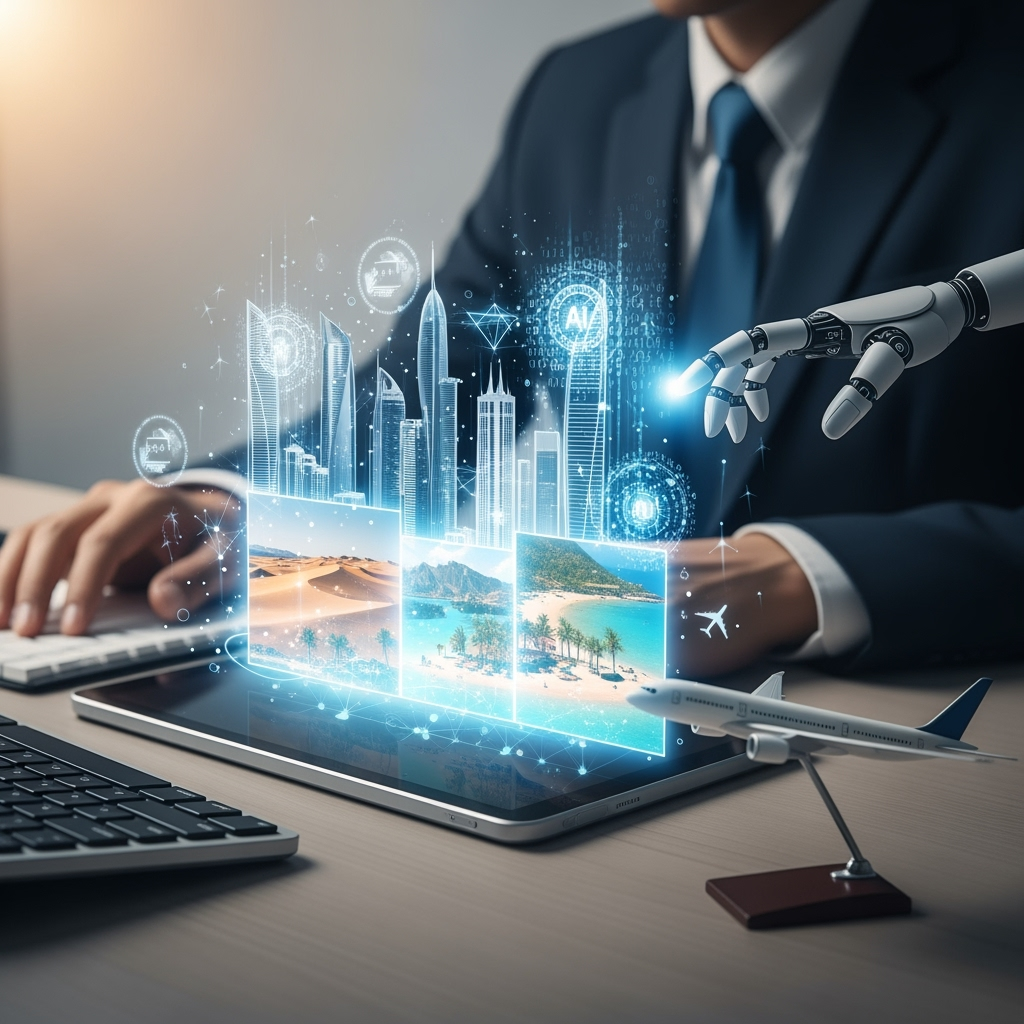
More than half—55 percent—of travel agents in the GCC worry that artificial intelligence (AI) will take over their jobs because people in the UAE and the Gulf region are increasingly booking flights, hotels, and holidays online.
A global study released by the B2B platform for hotels and travel bookings, RateHawk, revealed that concerns about AI taking their jobs are higher among GCC travel agents than their global peers (44 percent), who believe that AI could eventually replace them.
In contrast, only 20 percent of travel professionals in North America believe AI could eventually replace them.
Stay up to date with the latest news. Follow KT on WhatsApp Channels.
The UAE has one of the world’s highest internet penetration rates, and residents are among the most digitally savvy. In addition, smartphone penetration is also quite high in the country, making it easier for residents to buy air tickets and make hotel and holiday bookings through their gadgets.
With the arrival of AI, many people in the UAE and the region also use this new technology for their travel plans, reducing the role of travel agents.
Tourism is one of the largest sectors in the UAE and the region. According to the World Travel and Tourism Council, the tourism sector created 23,500 new jobs last year, taking the total number of employments to 833,000 in 2024.
WTTC sees the tourism sector employing 928,000 people by 2034, with one in 9 residents working in the sector.
Astrid Kastberg, Managing Director of RateHawk, said the travel industry is going through significant changes.
According to research by Kantar, 40 percent of global travelers have already used AI tools to plan their trips, and 62 percent are open to using them in the future. While this may seem concerning for travel professionals, the rise of generative AI is also driving higher expectations for personalized experiences.
In fact, reports show that more than half of younger travelers want a travel agent or trusted advisor to help them plan major trips. For agents, this means that professional expertise and the human touch are becoming even more valuable as demand for customized service continues to grow.
Kastberg added that it’s encouraging that one in three travel professionals surveyed are willing to use more AI tools in their work. “We believe that as long as agents continue to adapt and innovate, their skills and knowledge will remain indispensable,” she added.