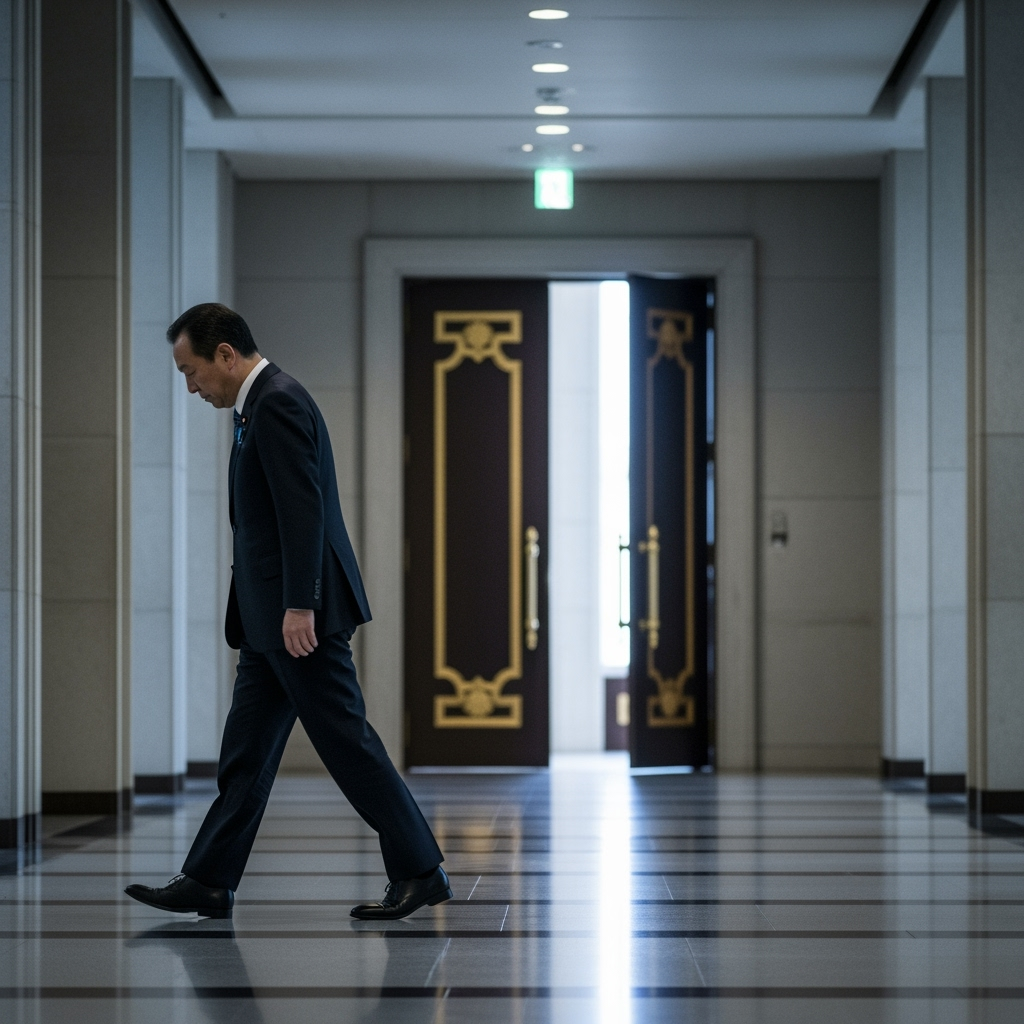
Shigeru Ishiba enjoys the intricate details of policy and the geeky pursuit of crafting military models, but his dream job as Japanese prime minister crumbled on Sunday.
Ishiba announced his decision to step down following calls for him to take responsibility for the ruling Liberal Democratic Party’s poor performance in the upper house elections in July.
The 68-year-old self-proclaimed defense “geek” had been at the party’s helm for less than a year—a position he secured on his fifth attempt.
Ishiba stated he would “step aside and make way for the next generation,” after members of his LDP urged his resignation and a fresh leadership election.
It was a swift and harsh downfall for Ishiba, the son of a regional governor and a member of Japan’s small Christian minority.
His resignation, however, also brings unwelcome turbulence for his party, which has governed Japan almost continuously since 1955.
Seen as a reliable figure, he won the party leadership in September 2024, becoming the 10th LDP leader to serve as prime minister since 2000.
Ishiba had promised to “create a new Japan,” revitalize depressed rural regions, and address the “quiet emergency” of Japan’s shrinking population.
He immediately called lower house elections for October 2024, but this backfired spectacularly, with the LDP suffering its worst result in 15 years.
That performance stripped the LDP and its coalition partner Komeito of their majority, forcing them to negotiate with opposition parties to pass legislation.
Then came the July vote that cost him the majority in the upper house, a result that fueled resignation speculation.
His government’s popularity ratings plummeted during its short tenure, with voters angered by price increases, especially for rice, which is twice as expensive as a year ago.
– Clumsy ways –
Ishiba, the father of two daughters, also appointed only two women to his cabinet, down from five under predecessor Fumio Kishida.
Ishiba’s sometimes clumsy ways—from the less-than-perfectly tidy arrangement of his tuxedo to his table manners—have also been rich fodder for social media memes.
He drew ridicule after being snapped apparently napping in parliament and for failing to stand up to greet other world leaders at a gathering in South America.
A video also surfaced of Ishiba eating an onigiri rice ball—a popular snack—whole and munching on it without closing his mouth.
“He eats like a three-year-old,” wrote one user on social media platform X.
– Lower auto tariffs –
A major challenge has been dealing with US President Donald Trump, who imposed painful tariffs on Japanese cars, steel, and aluminum.
One bright spot was Trump’s signing an order on Thursday to lower tariffs on Japanese autos to 15 percent instead of 27.5 percent.
The outcome marked a win for Japan, though it came weeks after the two countries initially unveiled a trade pact in late July and then appeared to diverge on its details.
Ishiba secured an early invitation to the White House in February and sent his tariffs envoy to Washington repeatedly.
During the US leader’s first term, Shinzo Abe fared better as Japan’s then-premier, managing to shield Tokyo from any tariffs and being dubbed a “Trump whisperer.”
Abe, who was assassinated in 2022, gifted Trump a gold-colored golf club and was a frequent guest of the US president.
According to Trump, Abe even nominated him for the Nobel Peace Prize. “There will never be another like him,” he said after Abe’s death.