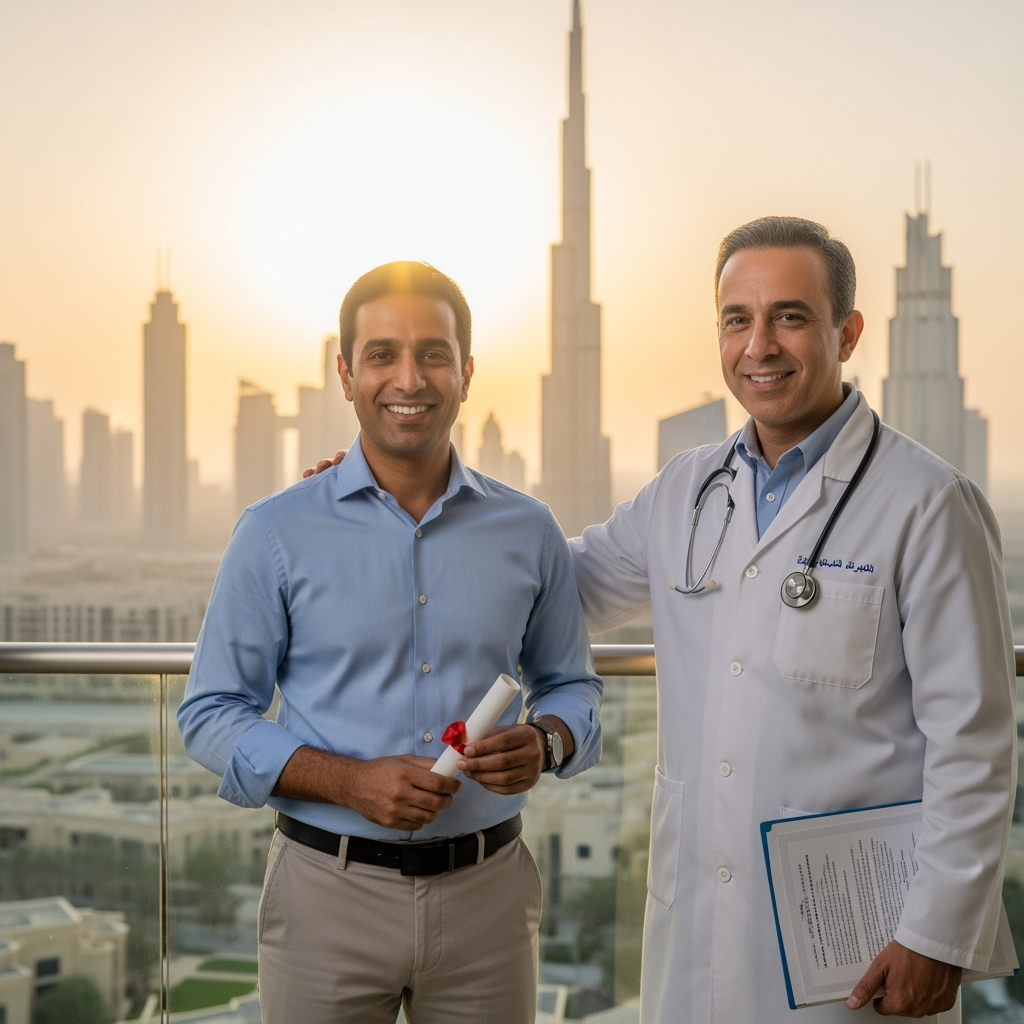
Hanan Jaber, a patient from Kuwait, has made a full recovery from oesophageal adenocarcinoma, a type of cancer in the oesophagus, following a successful Hybrid Minimally Invasive Oesophagectomy (HMIO) performed at King’s College Hospital London in Dubai. The surgery was led by Dr. Ahmed Hassn, consultant Esophago-Gastric, Laparoscopic, Bariatric, and general surgeon, as part of a tailored treatment plan that also included preoperative chemotherapy.
Hanan was first diagnosed with oesophageal cancer after experiencing significant symptoms and traveled widely in search of care, including consultations in the UK. She was eventually referred to Dr. Hassn and the specialized team at King’s Dubai, who designed an approach suited to the complexity of her condition. Treatment began with neoadjuvant chemotherapy to shrink the tumor before proceeding with surgery.
Reflecting on her journey before treatment, Hanan said: “Before I came to King’s, it felt like my life had come to a halt, and every day was full of uncertainty. I had been to different hospitals and still didn’t feel like I had clear answers until I met Dr. Ahmed and his team.”
The HMIO procedure combines thoracoscopic (chest) and laparoscopic (abdominal) techniques, allowing surgeons to remove the cancerous part of the oesophagus using small incisions rather than traditional open surgery. This approach reduces the risk of complications, minimizes pain, and shortens recovery time. According to Dr. Hassn, the average complication rate for oesophagectomy is less than 10 percent at King’s Dubai, compared to the international average of more than 30 percent, and most patients are discharged within four to five days, compared to the global standard of 10–11 days.
Commenting on the case, Dr. Hassn said: “When Hanan first presented, she had symptoms suggestive of advanced disease, so we carried out a full series of investigations, including endoscopy, imaging, and biopsies. This confirmed oesophageal adenocarcinoma, and we knew her best chance of recovery would be a carefully sequenced plan of chemotherapy followed by minimally invasive surgery. Every step was considered with the goal of maximizing her outcome while minimizing risk.”
Speaking about her experience, Hanan said: “Thank God the surgery was crowned with success. Dr. Ahmed followed up with me because he’s not just a doctor, he treats patients with empathy and compassion. He visited me a lot during the surgery and after.”
Reflecting on her recovery, Dr. Hassn commented: “I was very happy to see her two months after the operation, living her life normally and doing everything without any problems. We consider her completely cured.”
“Cases like this remind us of the importance of early detection, precise diagnosis, and a multidisciplinary approach. With the right treatment plan, patients can achieve excellent outcomes, even in situations that initially appear very challenging,” he added.
Hanan’s case demonstrates how advanced surgical techniques, combined with early intervention and patient-centered care, can deliver life-changing outcomes. She is back to her normal routine and enjoying her life after overcoming a serious and complex disease.