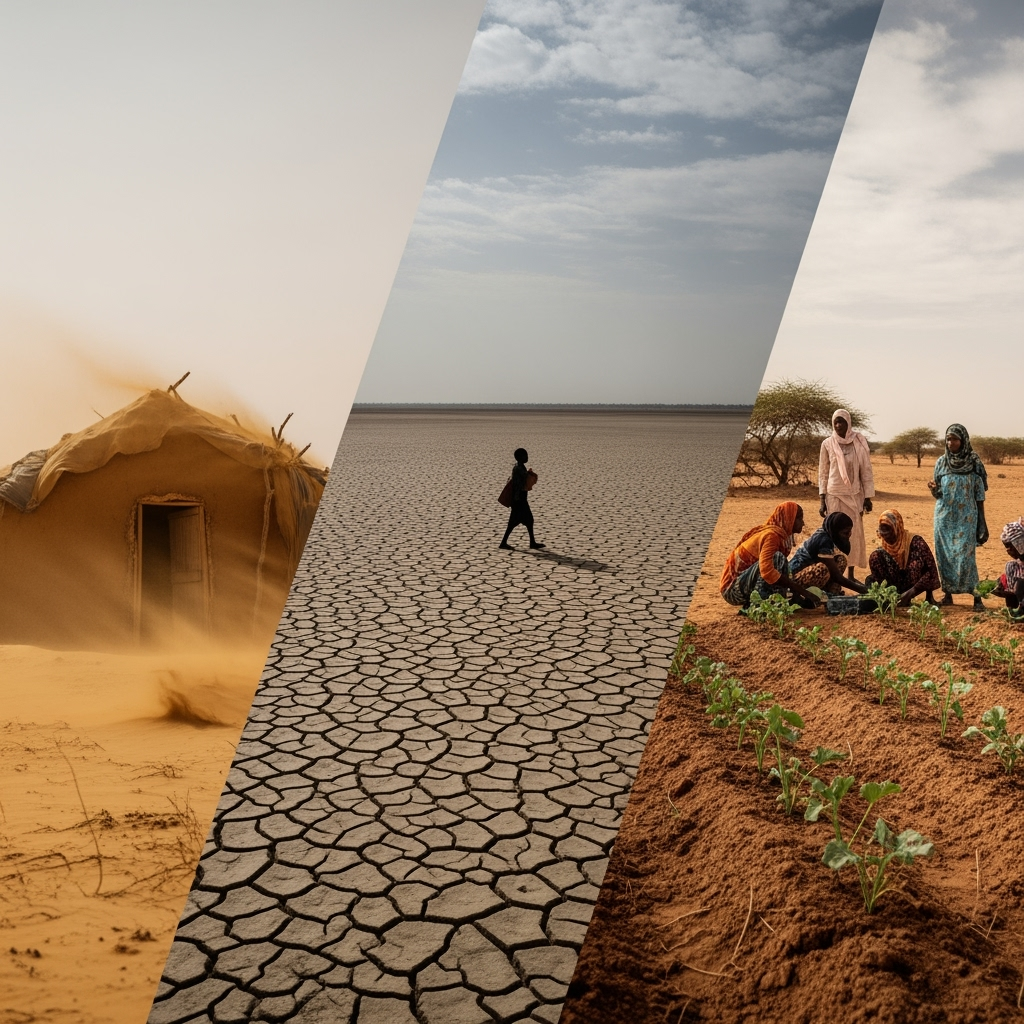
Bentley Brown, a filmmaker and film professor at the American University of Sharjah (AUS), has dedicated much of his career to highlighting stories from underrepresented communities. His latest short film, Guardian of the Well — a six-minute piece set in Chad during its most severe drought in fifty years — has been recognized at esteemed festivals like True/False and Encounters, Africa’s premier documentary festival. This film is the first in a trilogy focused on climate change, resilience, and memory in the Sahel. In a discussion with City Times, Brown shares insights on his return to Chad, the collaborative efforts that shaped the film, and the power of storytelling to amplify overlooked voices.
What motivated your return to Ati, Chad, your childhood home, to start this trilogy?
My father was a doctor in Ati, and I grew up witnessing both its beauty and the conflicts over scarce water resources. Disputes often arose over well access, and those memories lingered. Years later, a childhood friend proposed making a film, and after securing an AUS research grant, I returned. We filmed during the worst drought in half a century, followed by severe flooding. This stark contrast became central to the project — landscapes turning lush just as livestock succumbed to drought.
Why is a single well the focus in ‘Guardian of the Well’?
While filming, we stopped at Biir Gardi, a historic well still serving herders. Its system of horse-drawn ropes pulling water was captivating. What began as an unplanned stop became the film’s setting. This short, just six minutes long, experiments with time dilation and sound design crafted from recordings inside the well.
How did it feel to win at Africa’s largest documentary festival?
Screening at True/False was a career highlight, bringing global attention to the project. Afterward, Guardian of the Well was featured at Encounters, Africa’s top documentary festival, and other festivals in the US and Europe. For me, it’s not about quantity but selecting festivals that can uplift the work and engage new audiences.
What is the broader message you wish to convey?
The droughts and floods in Chad are not isolated events; they mirror broader climate change driven by industrialized countries. Simultaneously, the film gives a voice to Chadian Arabic speakers seldom heard on screen. We’re not pushing an activist agenda but offering testimony and observation. If the film inspires action, that’s great, but its primary aim is to bear witness.
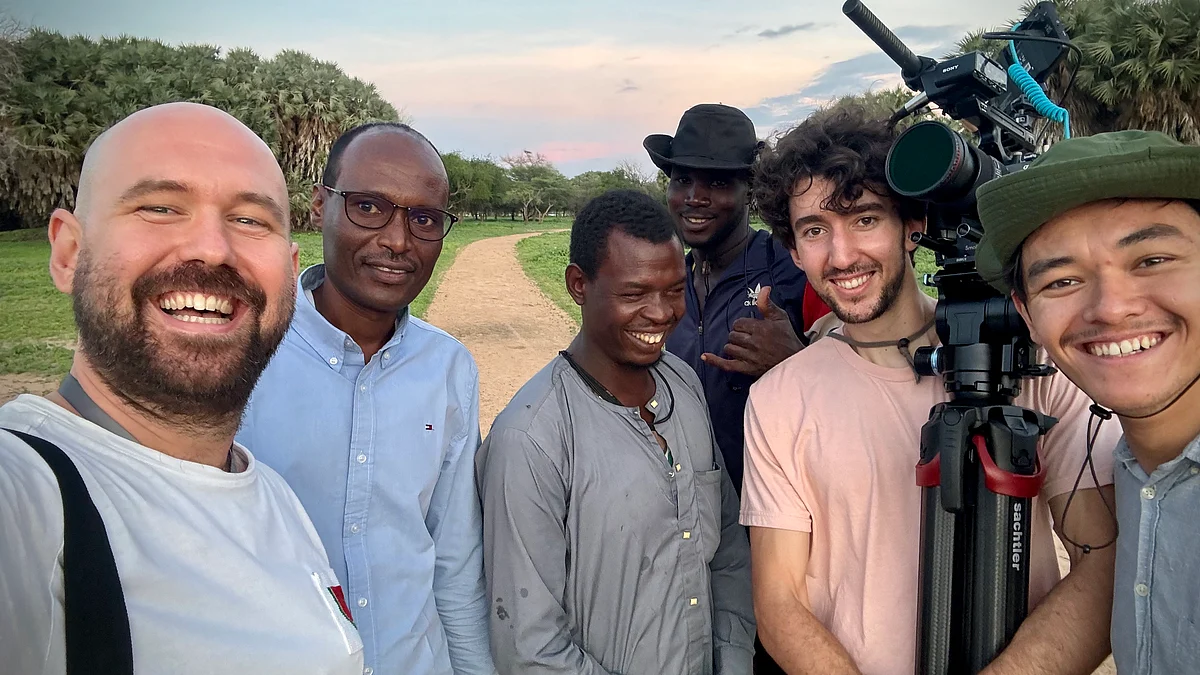
How did collaboration with your childhood friend Tahir Ben Mahamat Zene and cinematographer Gabriel Dae-sung Lee influence the film?
Tahir and I have a long history of collaboration, which is rooted in trust. Gabriel and second camera Daniel Egnal joined from the US, offering fresh perspectives. Once on the ground, we allowed them the freedom to respond to what they observed. This blend of local insight and new vision enriched the storytelling.
How do the next films expand on the trilogy?
The second film, Ephemeral River, examines flooding — the Batha River transforms from dry sand to perilous crossings threatening lives and livestock. It contrasts beautiful landscapes with the real dangers of hunger and ferry capsizing. The third film, tentatively called The Bull Driver, will explore herding paths, popular astronomy, and the sustainability of pastoral traditions. Each film experiments with new techniques, from sound design to narrative perspective.
Beyond film, you’re developing a book and installation with the Batha Collective. What’s the vision?
With designer Amparo Baquerizas and poet Aaron Brown, we’re expanding the trilogy into a book and exploring multichannel video installations. Thanks to a 421 Artistic Research Grant, we’re considering how to share these stories through various mediums and reach diverse audiences.
How do you view film as a tool for underrepresented voices?
Growing up in Chad, I saw how often its stories and dialect of Arabic were overlooked. Film lets us turn the lens inward and share frequently ignored perspectives. I am motivated by filmmakers who immerse audiences in lesser-known communities, and I strive to do the same — whether in Chad, Sudan, or here in the UAE.
How has support from AUS influenced your work?
AUS has been instrumental. Faculty research grants empowered my creative scholarship pursuits, and the university’s cultural diversity naturally fosters the exploration of global issues. The College of Arts and Sciences merges sciences, humanities, and arts, fostering experimentation and interdisciplinary work.
How do you balance teaching with filmmaking?
For me, they’re intertwined. Film is a research form, akin to writing. My projects — from climate documentaries to virtual reality archives — are both creative and scholarly. I strive to instill this curiosity in my students, encouraging them to see creative work as an intellectual contribution.