Estimates in Russia indicate that the annual accumulation of polymer waste ranges between 710,000 and 750,000 tons, with only 3 to 10 percent being recycled. The majority is either incinerated, buried, or treated through pyrolysis processes. Many types of plastics used in food packaging and consumer products take over ten years to decompose, and in some cases, plastic bottles can take up to a thousand years, according to university researchers. The study results were published in the “Polymer Science” journal.
Natalia Kibal, head of the “Chemical Technology of Polymers and Industrial Ecology” department at Volgograd State Technical University, explained that the currently available biodegradable plastics often lack good operational properties. She noted that flame resistance is necessary for materials used in packaging containers containing oil and combustible substances.
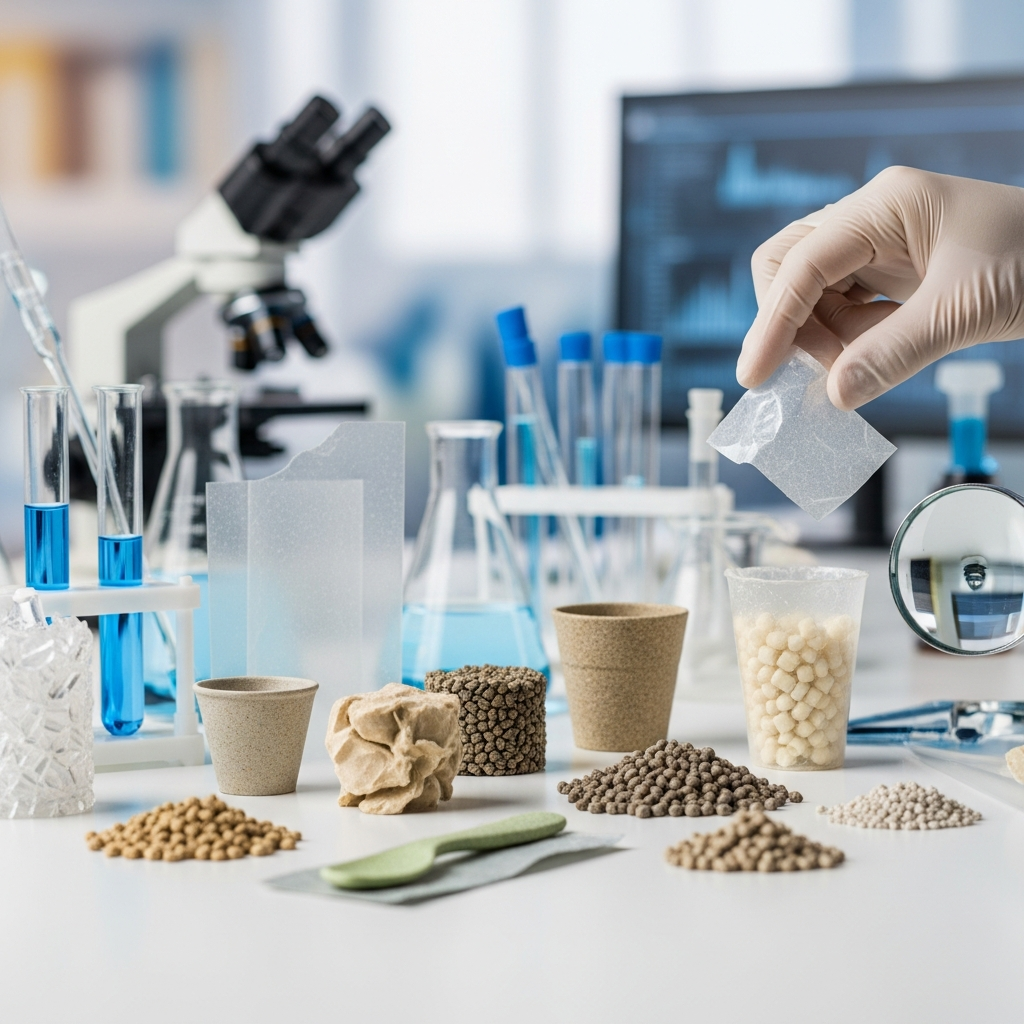
Researchers identified an effective technique for producing this type of polymer using the casting method. Kibal stated that adding these components improves the material’s heat resistance, increases its flame resistance, enhances its flexibility, and boosts its biodegradability, allowing it to actively decompose in soil under natural climatic conditions. Part of this work was supported by a grant from the Russian Science Foundation and the Volgograd Region Administration as part of a research project.