In today’s digitally-driven world, the sustained popularity of bookstores may appear surprising. However, the global book industry remains robust, with projections indicating growth from $142.72 billion in 2025 to $156.04 billion by 2030, fueled by both physical and digital formats, as per Mordor Intelligence. Remarkably, print books maintain 70% of the global market share, and bookstores contribute 65% to distribution, highlighting the continuous appeal of physical books.
This trend is evident in the Middle East, where the book market is experiencing a resurgence. The region is anticipated to grow at a 4% CAGR through 2030, positioning it as the fastest-growing book market globally. In Saudi Arabia, book market revenue is expected to hit $113.6 million by 2025, with a forecasted 15.8 million readers by 2030. Vision 2030 initiatives are promoting literacy and supporting local publishing, while younger demographics boost demand for both print and digital formats.
Similarly, in the UAE, the book e-commerce market reached $111.4 million by 2024. Platforms like Kinokuniya, Noon, and Amazon UAE offer hybrid models that blend physical retail with digital convenience. Despite the popularity of e-books and audiobooks, local bookstores remain vital, supported by cultural events, curated selections, and community involvement.
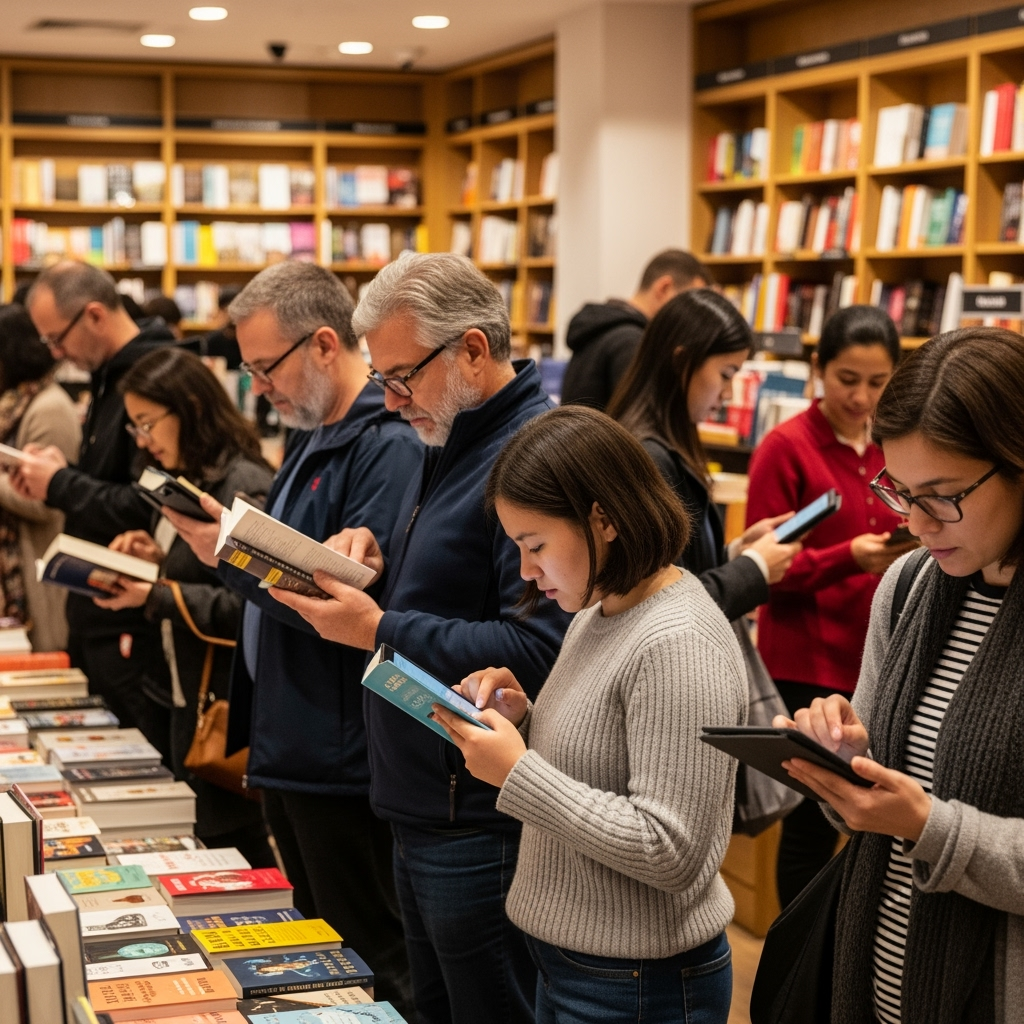
Bookstores are transforming into cultural hubs, offering everything from author talks to coffee lounges, proving their relevance in the digital age is not only surviving but thriving. In the Middle East and globally, bookstores are being reinvented as fundamental elements of modern literary culture.
Recently, Crossword Bookstores, one of India’s largest chains, inaugurated its first international flagship store in Dubai. With over 120 stores in 40 Indian cities, Crossword has been pivotal in India’s literary scene for over 30 years. This expansion into Dubai’s Silicon Central Mall marks a significant milestone in the brand’s global expansion.
“At Crossword, we believe a bookstore is more than just a place to buy books. It’s a cultural space, a community hub, and an experience that cannot be replicated online. The more digital we become, the more we need physical spaces for reflection, curiosity, and connection,” stated Aakash Gupta, CEO of Crossword Bookstores.
In India, where Crossword has grown to over 125 stores, families, children, and readers consistently seek out the physical bookstore experience. They enjoy discovering books by chance, engaging with knowledgeable staff for recommendations, and sharing this joy with loved ones. “This experiential aspect is the strongest business case for bookstores today, ensuring footfall, community loyalty, and relevance in a digital-first era,” Gupta added.
To adapt to changing consumer habits, stores are evolving into cultural destinations, offering not just books but curated stationery, gifts, toys, and lifestyle products. “This diversified model allows us to remain profitable while staying true to our identity as booksellers,” Gupta explained.
Dubai, as one of the world’s most cosmopolitan cities with a significant Indian diaspora and a strong international community, was a natural choice for Crossword’s first overseas store. “Dubai allows us to serve existing Indian customers abroad and introduce Crossword to a broader audience across the GCC,” Gupta commented.
The UAE boasts a young, educated, and diverse population that values knowledge, education, and lifestyle. With government initiatives promoting reading, such as the “Year of Reading” and the establishment of literary festivals and world-class libraries, books and reading are national priorities.
This environment is favorable for a brand like Crossword. “Our experience in India shows that when reading is supported by strong cultural and educational policies, demand for books is resilient and often growing. We are confident the UAE book market has significant potential, not just in books, but also in children’s content, educational toys, and gifts,” Gupta stated.
In the coming years, Crossword plans to replicate its success in India by creating a network of stores across the GCC. “The GCC presents a unique opportunity with its youthful population, multicultural communities, and strong commitment to education and culture. As we expand, we aim to collaborate closely with developers and partners who share our vision of differentiated, experience-led retail,” Gupta concluded.