Following a tumultuous week of violence, residents along the Afghanistan-Pakistan border are optimistic that a new ceasefire agreement will halt the clashes and rejuvenate essential cross-border trade.
While the border crossings remain shut, daily life is returning to normalcy. Bakers are busy kneading dough, fruit and vegetable vendors are setting up their carts, and customers are visiting shops once more.
“People can now breathe a sigh of relief. However, earlier, gunfire did damage some houses in our village,” said Sadiq Shah, 56, a shopkeeper from Baizai on the Pakistan side.
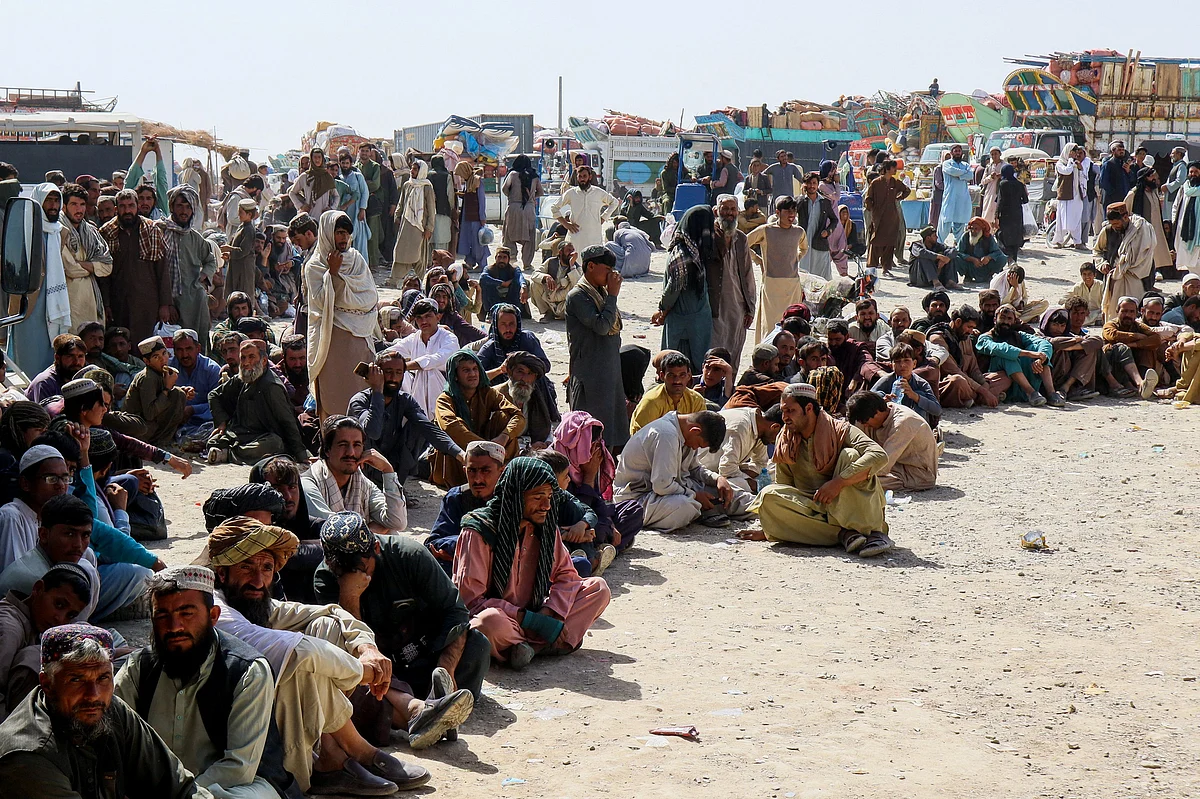
Afghans wait to register to return home, with trucks loaded with belongings in the background, after Pakistan closed border crossings following military exchanges, at the Chaman border in Balochistan Province, Pakistan, October 18, 2025. — Reuters
The conflict erupted after explosions in Kabul on October 9. The Taliban government accused its neighbor and initiated border offensives in retaliation, leading Islamabad to promise a strong response.
After further deadly clashes, the two countries agreed to an initial 48-hour ceasefire on Wednesday.
Pakistan carried out new strikes in Afghanistan on Friday, claiming to target armed groups allegedly harbored by the Taliban, which Kabul denies.
A second ceasefire was agreed upon on Sunday, bringing relief to many along the frontier.
“It’s unbelievable: both sides are Muslims, Pashtuns, so why fight?” questioned Shah. “Trade with Afghanistan used to pass through here, and now we’re shooting at each other. What nation does this?”
– ‘Financial Losses’ –
The border briefly opened this week to allow Afghan migrants expelled by Pakistan, a campaign initiated in 2023.
In Torkham, a typically bustling crossing into Afghanistan’s Nangarhar province, drivers stranded in vibrant trucks purchased tea from a vendor while they waited.
Over 1,500 trucks, trailers, and containers carrying essential goods like cement, medicines, and rice are stuck in Torkham, according to a senior Pakistani customs official in Peshawar.
Abdul Rahman Habib, spokesperson for the Taliban’s economy ministry, stated that fruit and vegetables are spoiling as they await export to Pakistan.
“Businessmen are suffering financial losses,” he noted, without specifying the extent of the damage.
Habib cautioned that if this situation continues, “it might lead to increased prices, unemployment, and market instability.”
“Trade relations should be independent of political issues,” he told AFP.
Post-peace talks in Doha, Qatar’s foreign ministry announced the ceasefire arrangement includes “mechanisms to secure lasting peace,” the details of which remain undisclosed.
Niaz Mohammed Akhund, a 39-year-old car dealer in Spin Boldak, an Afghan town recently embroiled in conflict, said “residents are thrilled with the ceasefire.”
“They lack farmland or alternative income sources — everyone relies on cross-border trade, on both sides,” he expressed.
Nematullah, a 24-year-old vendor, also shared with AFP his hopes that “this issue won’t arise again.”
On the Pakistani side, market worker Imran Khan urged both nations to forge a “mechanism to end these conflicts and start treating each other as brothers.”