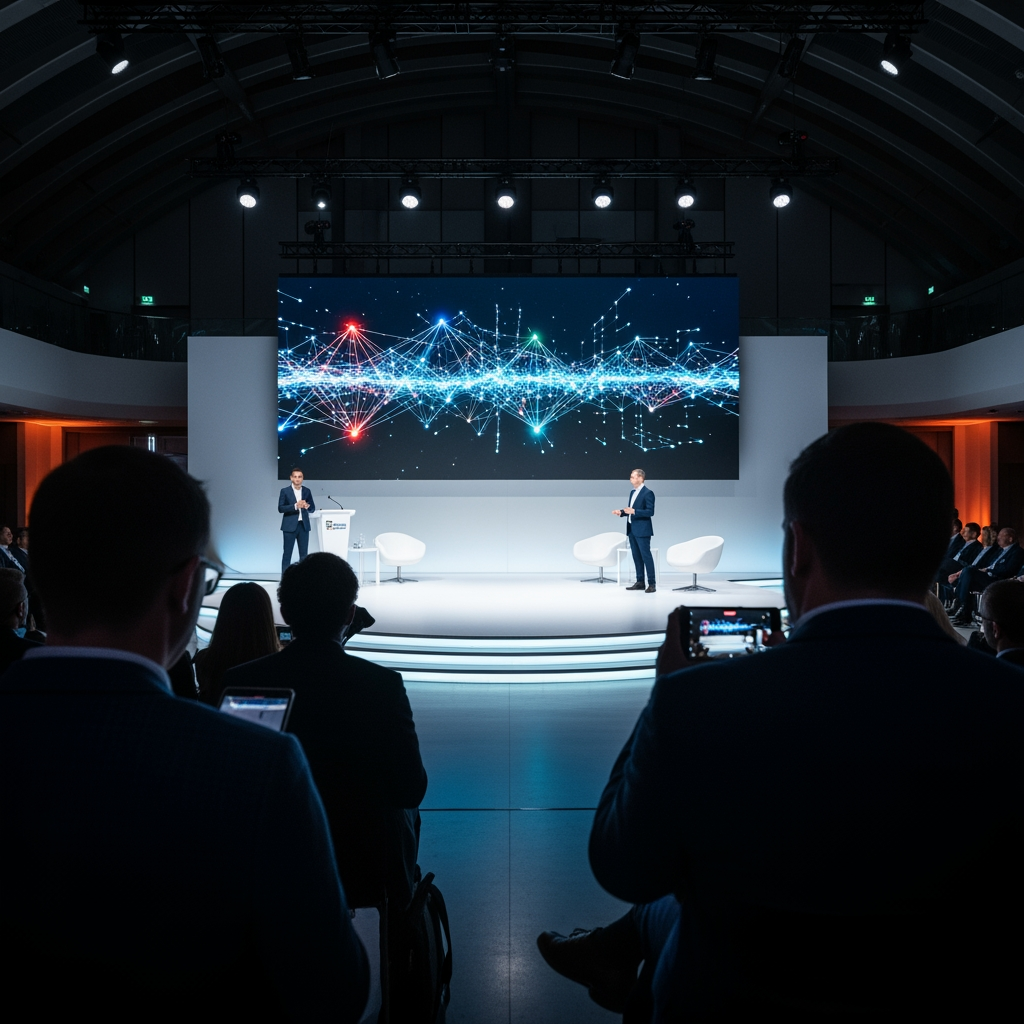
On November 6–7, 2025, the second Culture.Media.Digital Forum was held at the MosKino Film Factory in Moscow, gathering leaders from media, technology, arts, cinema, blogging, and the broader creative industries. The event drew over 8,000 attendees and featured more than 160 speakers from over 20 countries, including media executives, film directors, producers, journalists, bloggers, musicians, IT experts, and representatives from digital platforms, streaming services, and government entities.
The 2025 forum focused on the CIS media market’s potential growth and the integration of cultural and digital ecosystems, reaching over 350 million Russian-speaking users. Discussions involved experts from Belarus, Uzbekistan, Kazakhstan, Azerbaijan, and Armenia, along with Russian creative industry leaders. Key topics included developing localized AI tools, creating regional distribution platforms, standardizing content metrics and procurement models, and new strategies for content monetization.
The forum also emphasized growing collaboration between the CIS and MENA regions, highlighting shared goals in media innovation and cross-border production. MENA participants included Firas Deni, Director of Physical Production for Scripted Content at MBC Studios (Saudi Arabia); Aisha Al-Ameri, Head of Post-Production at Abu Dhabi Media Network (UAE); Madonna Khafaja, Co-Founder and Managing Director of Whitebee Media (Dubai); and Ahmed Farag, Regional Executive Director at Global Business Alliances (Egypt). Their contributions highlighted the Middle East’s rapidly evolving film, broadcast, and post-production sectors, shaped by multilingual audiences and strong digital infrastructure, aligning with CIS efforts to establish unified creative and technical standards.
Forum’s Business Agenda: From Ideas to Action
The business agenda included six thematic tracks linking culture, technology, media, and business: Media Network, Influencers, Technomagic, Art Resource, PRology, and Kinofield. Over two days, the program hosted more than 50 events, including sessions, panel discussions, and presentations with speakers from over 20 countries, such as Azerbaijan, Armenia, Belarus, Brazil, the UK, Iran, Kazakhstan, South Korea, Uzbekistan, Romania, the UAE, and India.
The forum began with the plenary session “CIS Media Market: Infrastructure, Content, Cooperation,” where representatives from major media holdings, MosKino Film Factory, streaming platforms, and IT companies discussed the future of media and content development in the CIS. Discussions covered emerging media formats, platform requirements, and best practices for content release across the region.
Day two featured a plenary session on “Scaling Content: Tools and Standards Across the CIS,” focusing on challenges in content adaptation and unified release. Speakers addressed barriers such as diverse legal frameworks, localization needs, and moderation policies. Participants included Ilkin Mahammadli, producer and member of the Association of Film Commissioners International (Azerbaijan), and Firas Deni of MBC Studios (Saudi Arabia), who expressed interest in collaboration with Russian partners and exploring Russia’s film incentive program. “This could become a bridge between Russia, the CIS, and the Arab world. We are looking for partners everywhere,” Deni remarked.
Aisha Al-Ameri of Abu Dhabi Media Network shared insights from the UAE’s dynamic broadcasting and post-production sector, stressing the need for harmonized workflows and moderation standards. Her comments emphasized how MENA’s experience with multilingual production and cross-border licensing could guide the CIS’s efforts toward creative and technical unification.
International Headliners
The forum’s business program featured several global cinema icons. The session “Series Over Scenes: How Streaming Rewrote the Film Market” included French cinematographer Michel Amathieu, known for his work with Jan Kounen, Emir Kusturica, and Agnieszka Holland, and projects such as Dobermann, Blueberry, Versailles, and The Walking Dead: Daryl Dixon. Amathieu discussed how streaming has transformed audience behavior, turning cinema from an event into an ongoing content experience.
Italian cinematographer Vittorio Storaro, a three-time Academy Award winner for Apocalypse Now (1979), Reds (1981), and The Last Emperor (1987), participated in an open session, sharing his reflections on visual storytelling and the evolution of film aesthetics.
Madonna Khafaja, co-founder and managing director of Whitebee Media (Dubai), explored the transformation of traditional broadcasting in the digital age. She explained how Dubai’s media ecosystem, combining national broadcasters, OTT platforms, and influencer-led studios, is redefining the balance between linear programming and on-demand content, positioning the UAE as a leader in hybrid content models.
On November 7, the TechSorcery track hosted “Lights. Camera. Question: An Interview with Morandi,” featuring Andrei Ropcea, frontman of the Romanian duo Morandi, known for hits like Angels (Love Is the Answer) and Save Me. The conversation was moderated by Russian actress and TV host Avrora (Irina Yudina).
Forum’s New Formats
Beyond discussions, the forum offered engaging experiences such as a retro gaming zone styled after the 1980s and ’90s, featuring original Sega and PlayStation 1 consoles with classics like Pac-Man, Battle City, and Mortal Kombat. The nostalgic setup, complete with vintage furniture, tube TV, and neon décor, was a crowd favorite.
A literary corner showcased books from Ad Marginem, Chitai-Gorod, Eksmo, and MIF publishers, offering curated titles on culture, media, and design alongside author meet-and-greets.
Over two days, four autograph sessions featured well-known media personalities like Olga Parfenyuk, Roza Syabitova, Garik Martirosyan, and Elena Letuchaya, attracting enthusiastic audiences.
Forum Outcomes and Significance
The international Culture.Media.Digital Forum reaffirmed its status as a pivotal platform uniting experts, creators, and innovators. Organizers highlighted the growing interest in cross-industry collaboration and the ongoing development of the CIS media ecosystem. The event not only inspired dialogue but also led to new partnerships, pilot initiatives, and tangible projects, showcasing how the forum is where ideas evolve into actionable opportunities.