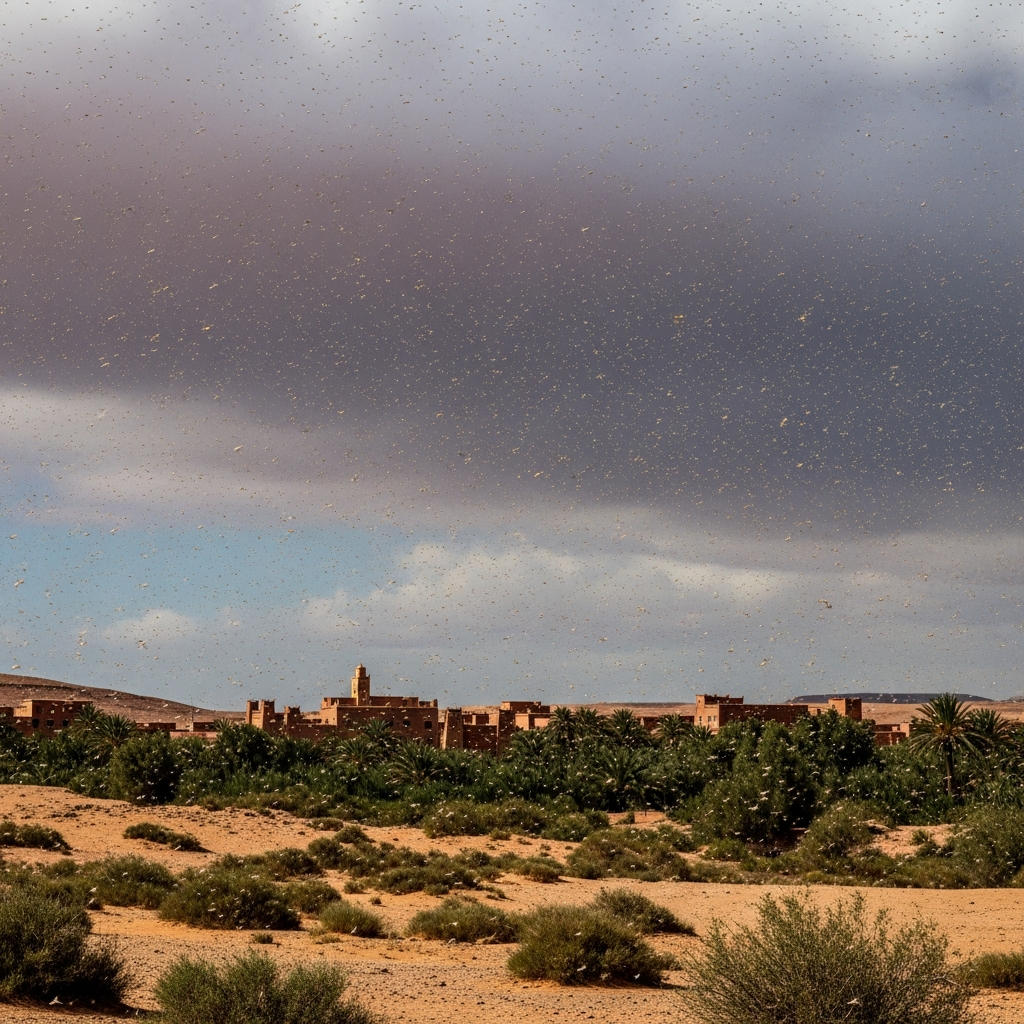
Hespress reported on Tuesday evening that desert locusts have begun to spread in Moroccan areas such as Tiznit and Guelmim. The organization noted the presence of mature and immature adult locusts in several southern areas, increasing the likelihood of the invasion expanding in the coming period. The newspaper indicated that locust attacks persisted throughout November, with swarms moving northward, raising concerns about their arrival in new areas.
More than 4,184 hectares of Moroccan agricultural lands have been treated, with intensive control operations ongoing to limit the spread of this pest. With increasing winter rains in the region, conditions that encourage locust activity are expected to grow.
The organization pointed out that if the rains continue, those areas may become more threatened, requiring intensified control efforts in these vulnerable regions. Some areas have not yet been inspected, meaning there is a possibility of small groups of immature locusts that could contribute to further spread.
The FAO has called for increased surveillance operations in these areas to ensure control of the situation before it worsens. Reports have also indicated the presence of groups and swarms of larvae from Bir Gandouz to Laayoune, with some larvae reaching advanced growth stages.
It emphasized that these advanced stages pose a greater threat, as locusts in this stage can quickly transform into adult insects, potentially affecting agriculture on a large scale.