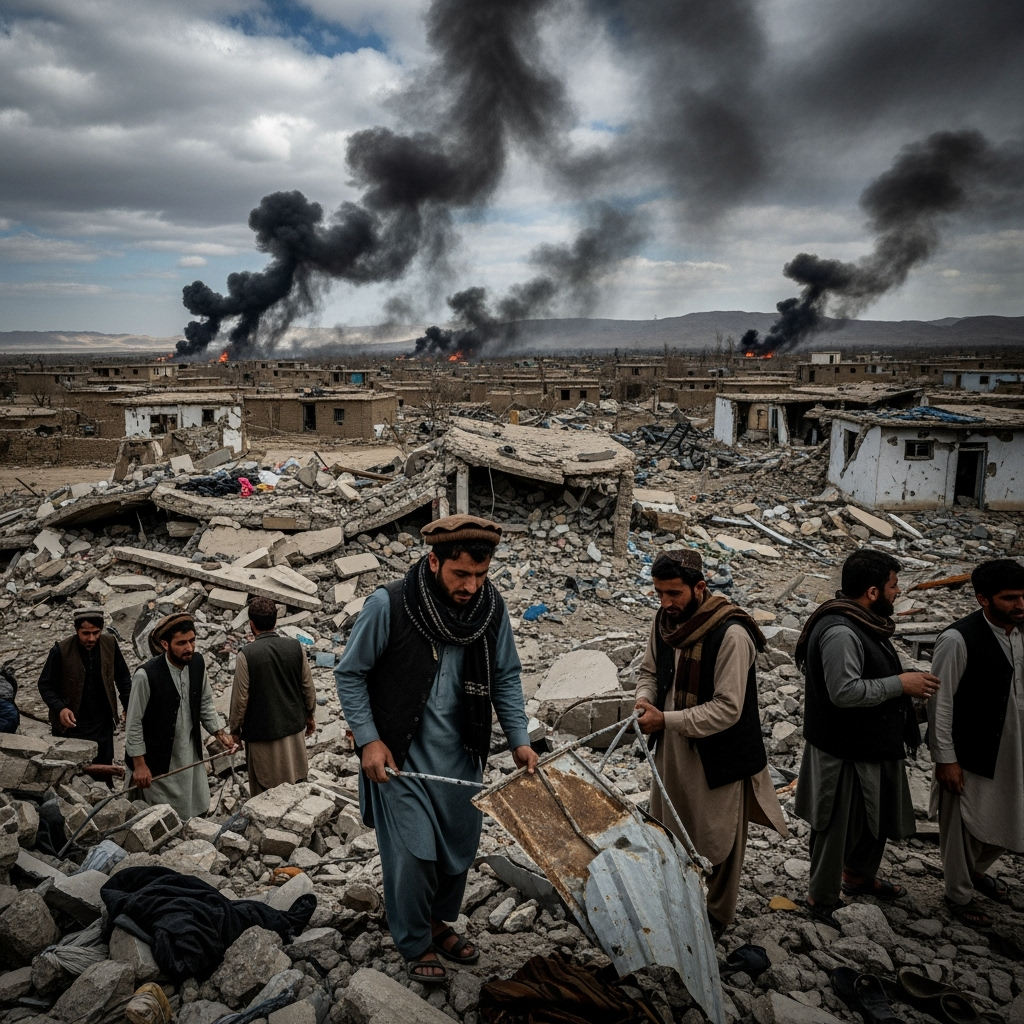
A catastrophic 6.0-magnitude earthquake shook eastern Afghanistan late Sunday night, catching many people in their sleep or as they prepared for bed.
There are fears that hundreds have died, with Afghan expats in the UAE increasingly worried about their families’ safety back home. Many have struggled to contact their loved ones due to significant damage and the challenging, mountainous terrain of the impacted areas.
Haji Obaidullah Sader Khail, chairman of the Afghan Business Council in the UAE, expressed concerns that the death toll could rise significantly, as many remain buried under debris.
“The Afghan business community in the UAE convened today to explore ways to assist those affected by the earthquake,” Obaidullah told Khaleej Times in a Monday interview.
“We plan to provide essential supplies like food, medicine, blankets, and other necessities. Given the destruction of many homes, we’re also considering offering tents for temporary shelter. Currently, local authorities are evaluating the needs. Once we have more information, we’ll do our utmost to support them.”
He added, “Over 800 people have died, and many are still searching for missing family members. I fear the death toll might rise further. Most homes are mud-built, and there are no proper roads in these remote areas. Access is mainly possible via donkeys and horses.”
Afghan national Noor Mohammed, a UAE resident for nearly 18 years, reported that relief workers have reached the affected regions, but he also fears the actual casualty figures could be much higher than reported.
“The worst-hit areas include the mountainous regions of Kunar and Jalalabad,” he stated. “Friends in both cities confirmed many people remain trapped under rubble as rescue efforts persist. Kunar has been particularly devastated — entire villages have been destroyed. The current concern is that the death toll could exceed 2,000.”
“Due to the mountainous terrain, it’s extremely challenging for rescue teams to access affected areas. The Afghan government is deploying helicopters to reach those in need,” Mohammed added.
‘I can feel the pain’
“800 people are a significant loss, and I feel the pain of those families who have lost their children,” said Akramuddin Mahmoodi, an Afghan car sales advisor living in Dubai.
He was speaking with a customer by phone when he first heard about the earthquake in his homeland. Overwhelmed with worry, he had to end the call as he couldn’t handle the anxiety.
“The first thing I did was call my mother to check if she and the family are safe,” he told Khaleej Times. The 26-year-old car salesman moved to the UAE in January, leaving his family behind in the South Asian nation.
Though his family wasn’t affected by the tremors, Mahmoodi noted that all Afghans are suffering, partly due to the economic crisis caused by weak job creation and halted local production, as reported by the United Nations. Discussing the earthquake, he described it as a terrible feeling because “we Afghans, even if not related, are connected by heart.”
Additionally, children face greater risks of injury and death in an earthquake due to their vulnerability. In the quakes that hit western Afghanistan in October 2023, over 90% of the victims were women and children. “It’s even worse when a father witnesses his children’s deaths,” Mahmoodi said. “A mother never wants to live to see that; they feel the most pain more than anyone else.”
Gut-wrenching feeling
Sadaf Haddad, a board member of the Afghanistan Cultural Club at the American University of Sharjah, sat with her parents as the news broke, their eyes fixed worriedly on the screen. “It was a moment of panic and dismay. Hearing the rising death toll was gut-wrenching,” she said.
Most of her family and friends live in Afghanistan, and the first thing she and her parents did was call and text them to “reassure ourselves of their well-being,” she added. “Upon contacting them, I learned that the earthquake was strong and terrifying, forcing them to evacuate their homes in the middle of the night, fearing infrastructure collapse.”
The university student noted that Afghanistan is struggling, “with little to no equipment to help those in need. Although active authorities have pledged and presumably begun assisting the injured and displaced, it will be a lengthy process, delaying aid for those in urgent need.”