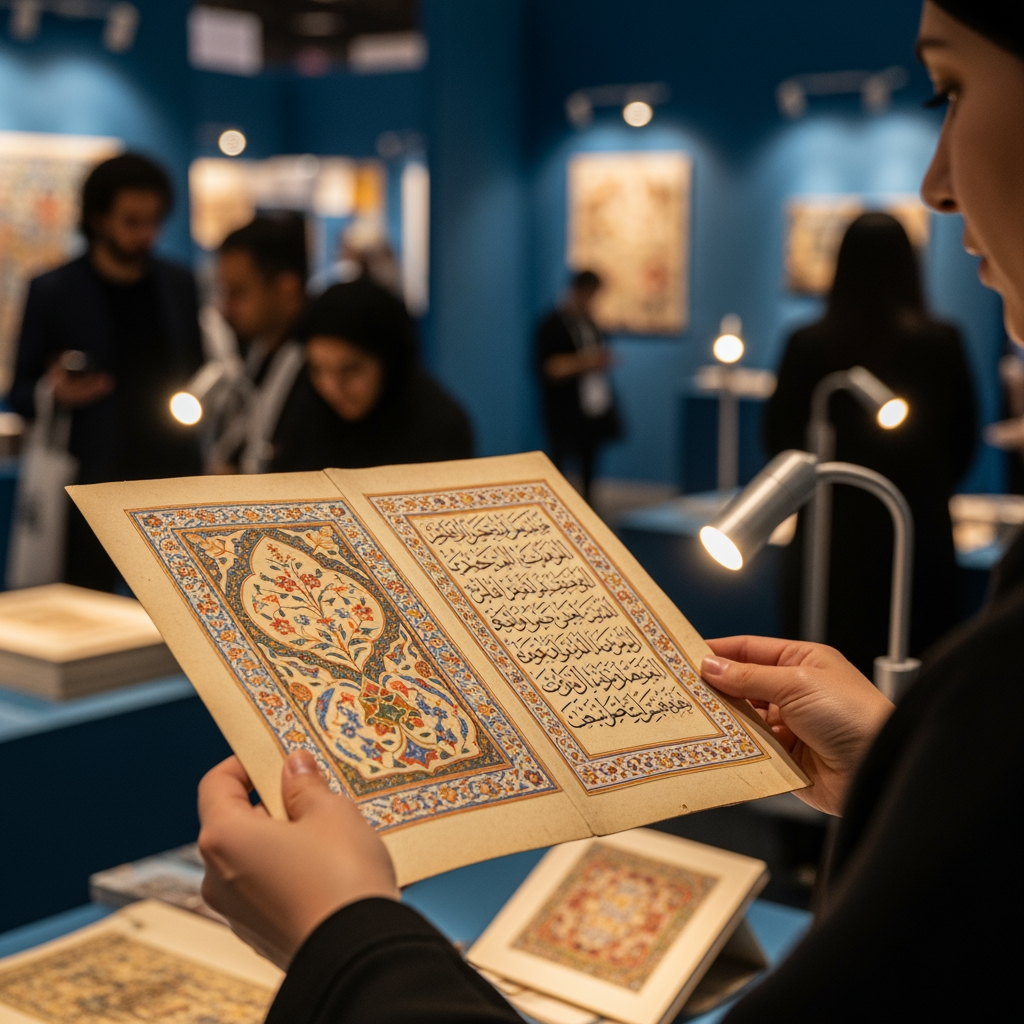
Attendees of the 44th Sharjah International Book Fair (SIBF) have a unique opportunity to view a significant piece of Islamic art history: a facsimile edition of a Quran manuscript penned over a thousand years ago by renowned calligrapher Abu al-Hasan Ali Ibn Hilal, better known as Ibn al-Bawwab.
This meticulously reproduced manuscript is exhibited at the Safir Ardehal booth from Tehran, where visitors can admire the precision and elegance of early Arabic calligraphy.
“This is among the oldest complete Quran manuscripts attributed to a known scribe,” explained Hamed Deshdashti from Safir Ardehal. “It’s a facsimile of the Quran originally penned by Ibn al-Bawwab in 391 AH, around 1000 CE. The original is securely housed at the Chester Beatty Library in Dublin, Ireland. The uniqueness lies in Ibn al-Bawwab’s transformation of Arabic writing into an art form of perfect proportion and spiritual beauty.”
Stay updated with the latest news. Follow KT on WhatsApp Channels.
Masterpiece of Proportion
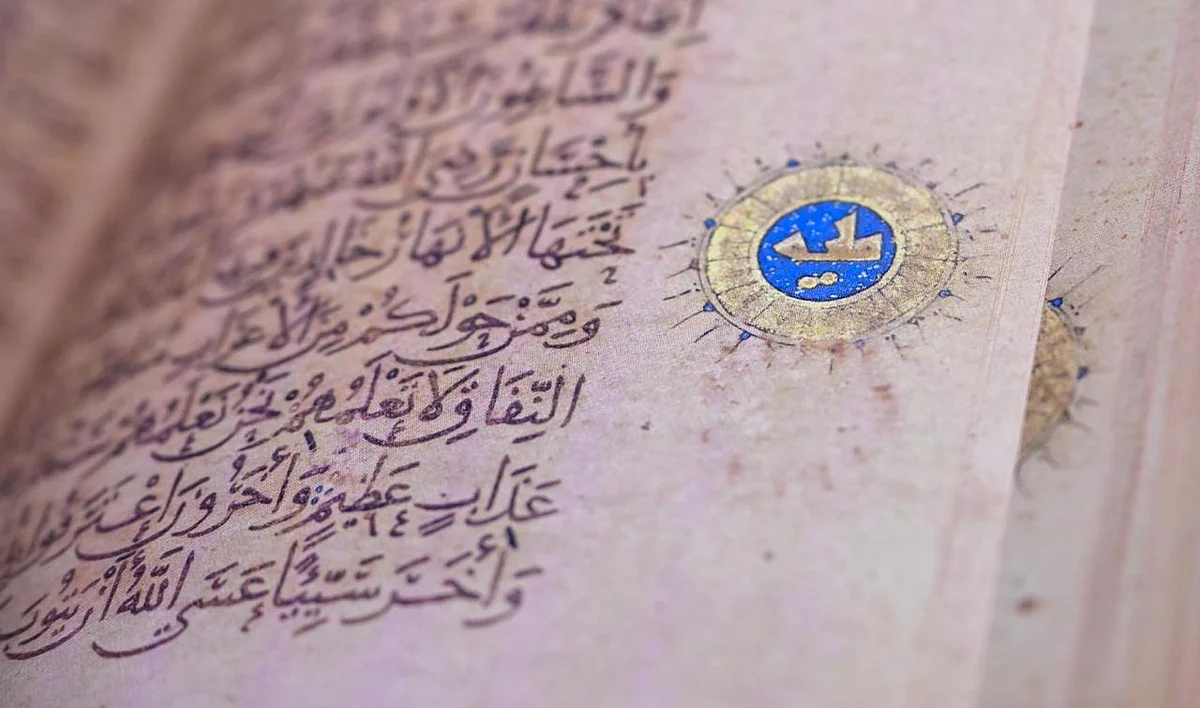
Deshdashti highlighted that the Quran is inscribed in the naskh script, a style polished and perfected by Ibn al-Bawwab. Each page features 16 lines of neatly balanced text, with smooth letters, consistent spacing, and steady strokes. “In this Quran, every letter breathes within its own space,” he stated. “Ibn al-Bawwab considered beauty to reside in balance—each curve, each dot follows a harmony and rhythm.”
Unlike earlier Quranic scripts, such as the square and angular Kufic, Ibn al-Bawwab’s naskh style introduced fluidity and readability. “His lines flow like poetry. That’s why contemporary Arabic calligraphy, from printing to design, adheres to the principles he established over a millennium ago.”
Crafted by One Hand
Deshdashti mentioned that the Chester Beatty Quran was likely entirely written and embellished by Ibn al-Bawwab himself. He not only transcribed the verses but also designed the gold embellishments and chapter headings. “He was a perfectionist. The writing, the gold leaf, the floral borders—all appear to originate from the same hand,” he noted.
The calligrapher utilized natural ink made from soot and gum arabic with a reed pen (qalam) cut at a precise angle, enabling him to create both fine and bold lines with a single stroke. The text was inscribed on vellum paper—a smooth surface derived from animal skin, which has preserved the manuscript for centuries.
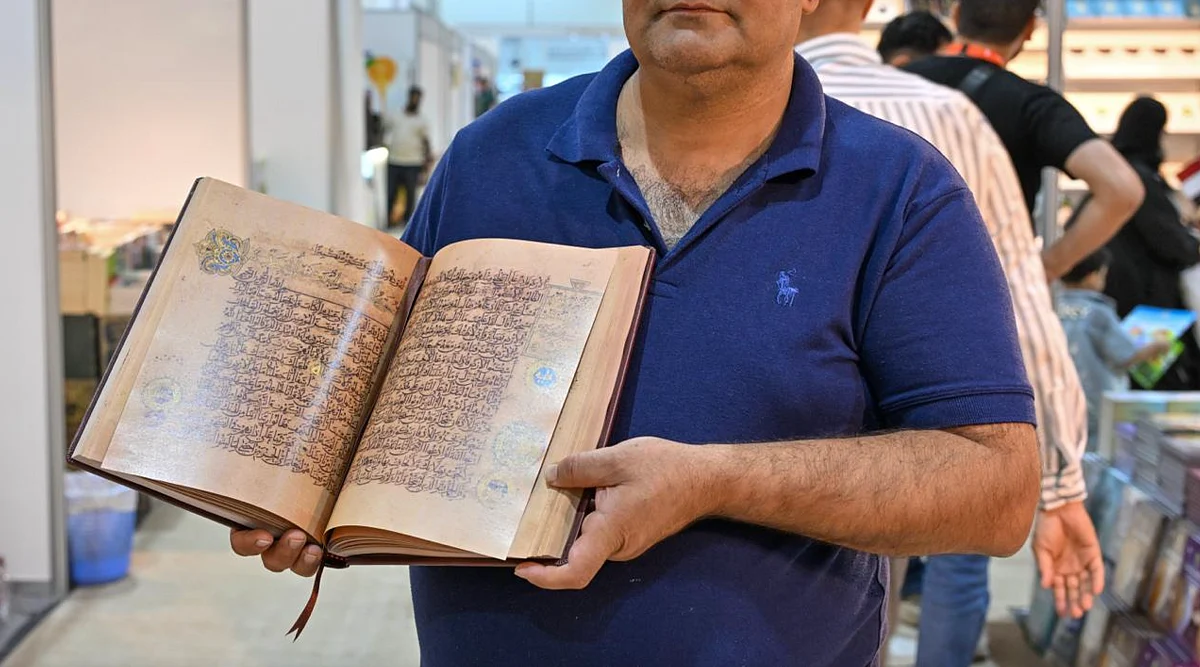
“For visitors, this facsimile is more than just an ancient book. It’s a gateway to history and craftsmanship. What you see here is pure human artistry, no machine can replicate the harmony between ink, line, and faith,” Deshdashti remarked.
The original Quran by Ibn al-Bawwab remains one of the most prized treasures of Islamic civilization, preserved under strict conditions at the Chester Beatty Library. “But having its replica here in Sharjah is equally significant. It reminds us of the brilliance of Muslim artisans and how their art continues to inspire the world,” Deshdashti added.