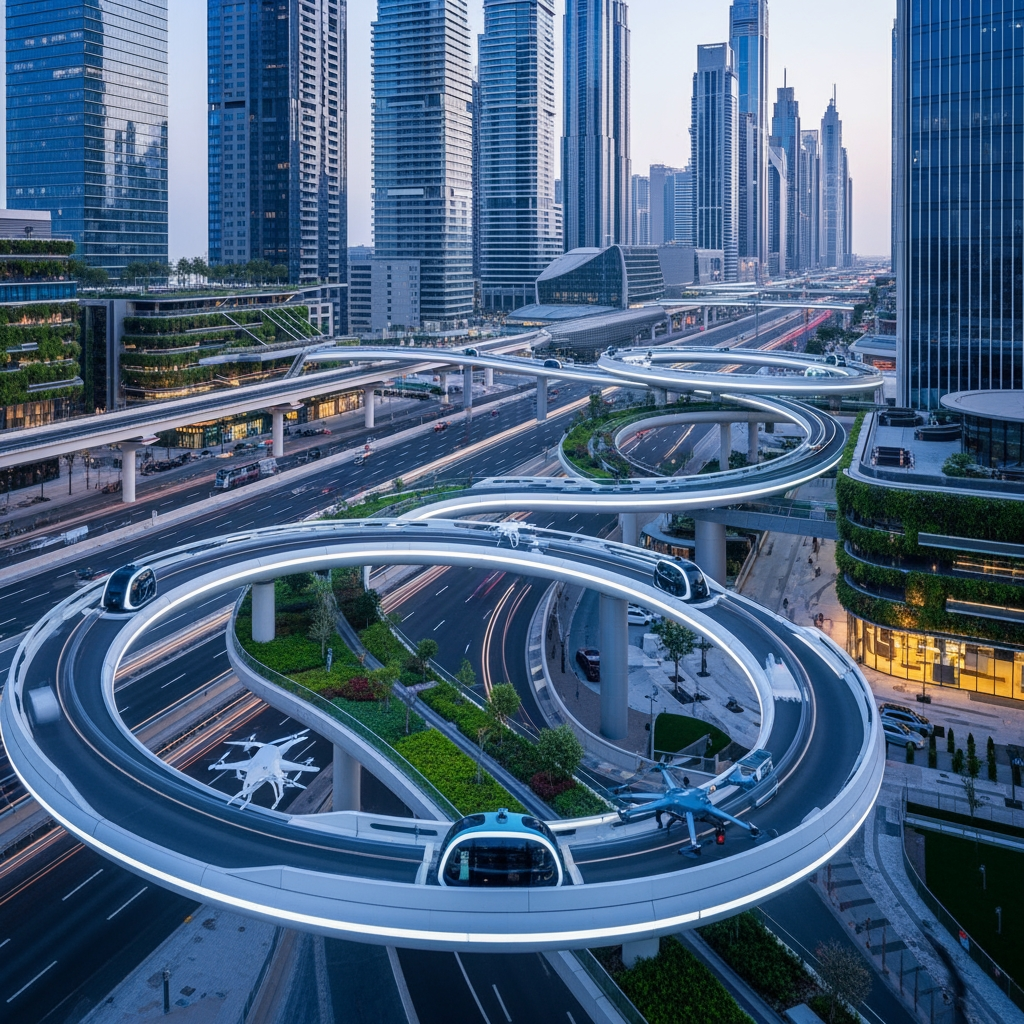
From enhancing its road network and air transport to the innovative Loop project, Dubai is advancing its goal to become a smart, future-ready city, setting new benchmarks through its infrastructure projects.
The emirate is transforming urban commuting, not just with cars or the metro, but also by foot and bike, through the ambitious Future Loop project, a pivotal element of the Dubai Walk Master Plan.
Pedestrian-Friendly City
Unveiled on December 7, 2024 by Sheikh Mohammed bin Rashid Al Maktoum, Vice-President and Prime Minister of the UAE and Ruler of Dubai, the Dubai Walk Master Plan aims to transform the emirate into a pedestrian-friendly city all year round.
The master plan includes a 6,500km network of modern walkways covering 160 areas across Dubai. It plans to build 3,300km of new walkways and renovate 2,300km of existing ones by 2040, along with more than 900km of walkways planned beyond 2040.
It also involves developing 110 pedestrian bridges and underpasses to enhance connectivity. This ambitious initiative aims to boost pedestrian and soft mobility from 13% to 25% by 2040.
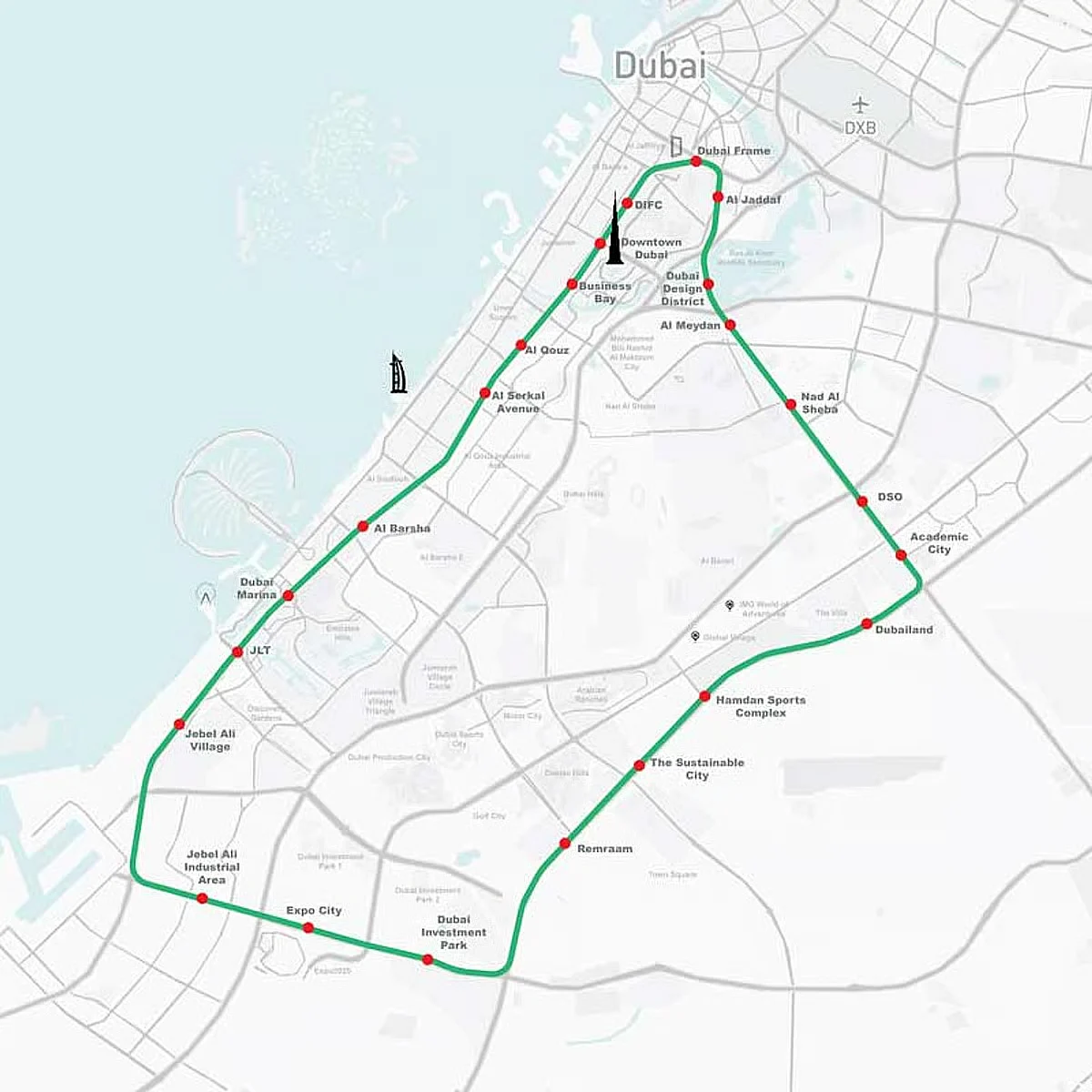
Here is a proposed map of Dubai Walk Master Plan
What is Future Loop?
The ‘Future Loop’ project, to be implemented near the Museum of the Future, is designed as an elevated, climate‑controlled walkway.
The Future Loop will link 10 key locations and feature a 30,000-square-metre air-conditioned level for year-round pedestrian use. The pathway will also include 30,000 square metres of open spaces with shaded structures and green areas to lower temperatures and assist pedestrians.
This project, including commercial spaces, will be developed through a public-private partnership.
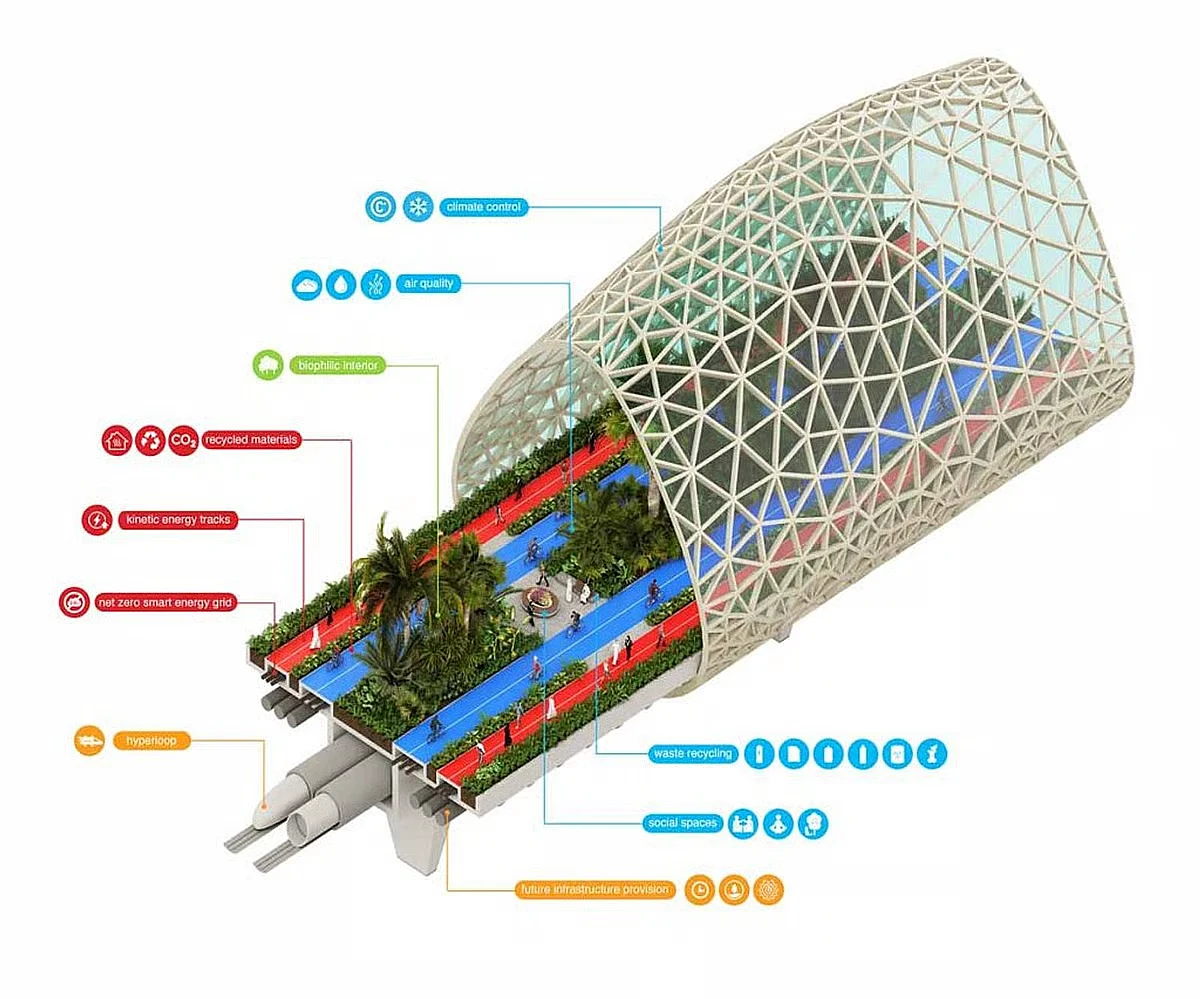
The walkway features an iconic bridge with an architectural design that complements its surroundings. Spanning 2km in length and varying in width from 6 to 15 metres, the bridge connects major economic and business landmarks, including the Dubai World Trade Centre, Museum of the Future, Emirates Towers, Dubai International Financial Centre (DIFC), and nearby Metro stations.
More than just a showcase, the Future Loop will integrate into Dubai’s transport system, close to metro and tram stations, cycling tracks, and the future transport network.
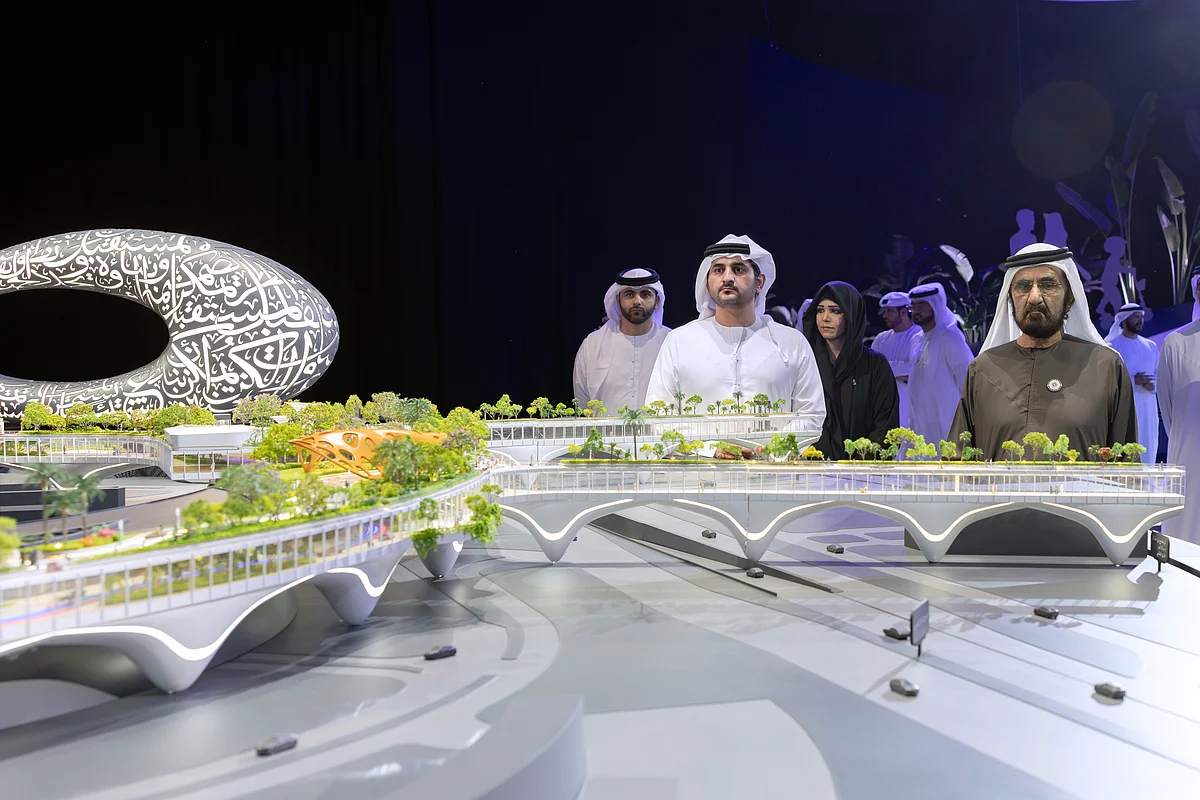
A model of The Future Loop reviewed by Dubai Ruler. Photo: DMO
Enhancing Quality of Life
The Future Loop is a crucial part of Dubai’s 20-Minute City goal, aiming to enable 80% of residents to reach essential services within a 20-minute commute.
Alongside the Quality of Life Strategy 2033, the Dubai Walk Master Plan seeks to make Dubai more pedestrian-friendly. The plan aims to improve pedestrian safety, connect areas with existing walkways, and incorporate creative and cultural features into soft mobility infrastructure to enhance each area’s unique character.
It also promotes collaboration with strategic partners to deliver innovative infrastructure solutions while engaging youth to contribute creative ideas for walkway design and amenities.
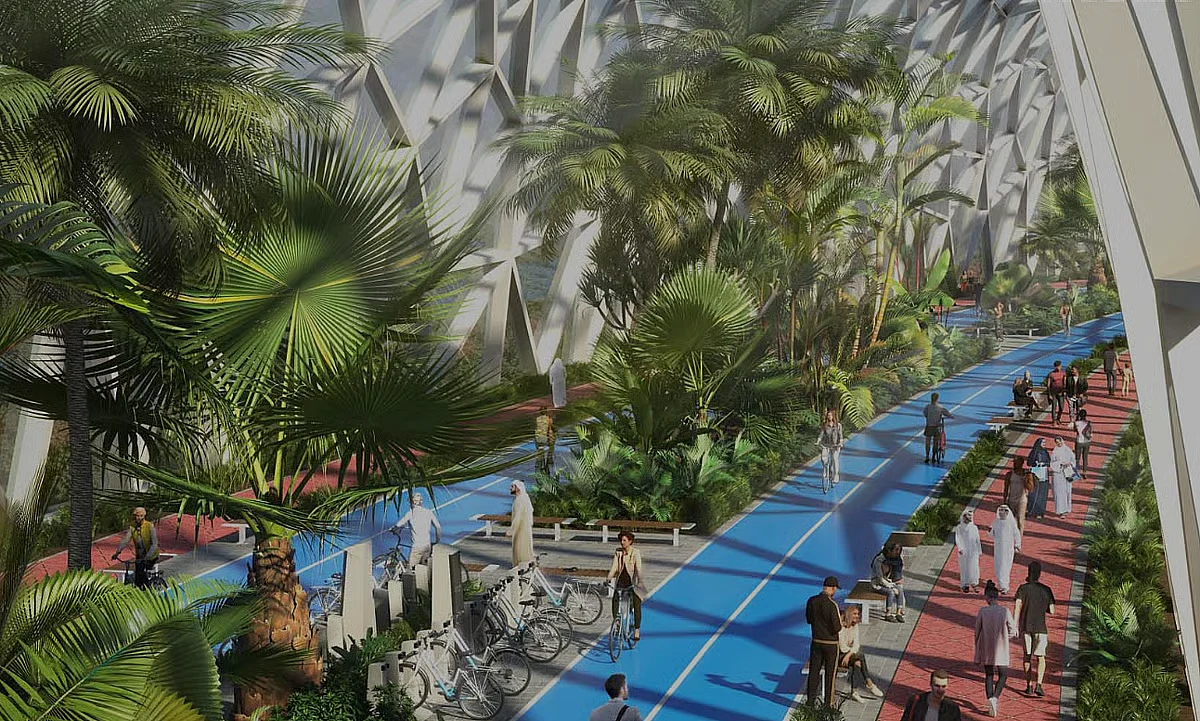
Climate-controlled walkway
What the Future Loop Means for Residents
-
Offers more accessible, comfortable pedestrian commute options, replacing cars in key areas.
-
Integrates into the transport system: walk and cycle to metro, tram, and other mobility services.
-
Supports Dubai’s vision of being more livable, sustainable, and people-centered.
-
Enables 80% of residents to access essential services within a 20-minute commute.
The Future Loop Timeline
While the master plan extends to 2040 (and beyond), active projects related to the Future Loop are already in progress, and the government has included it in major infrastructure reviews.
Sheikh Hamdan bin Mohammed bin Rashid Al Maktoum, Crown Prince of Dubai, Deputy Prime Minister, Minister of Defence, and Chairman of The Executive Council of Dubai, recently reviewed the progress of infrastructure projects aimed at enhancing the road network, including The Future Loop.