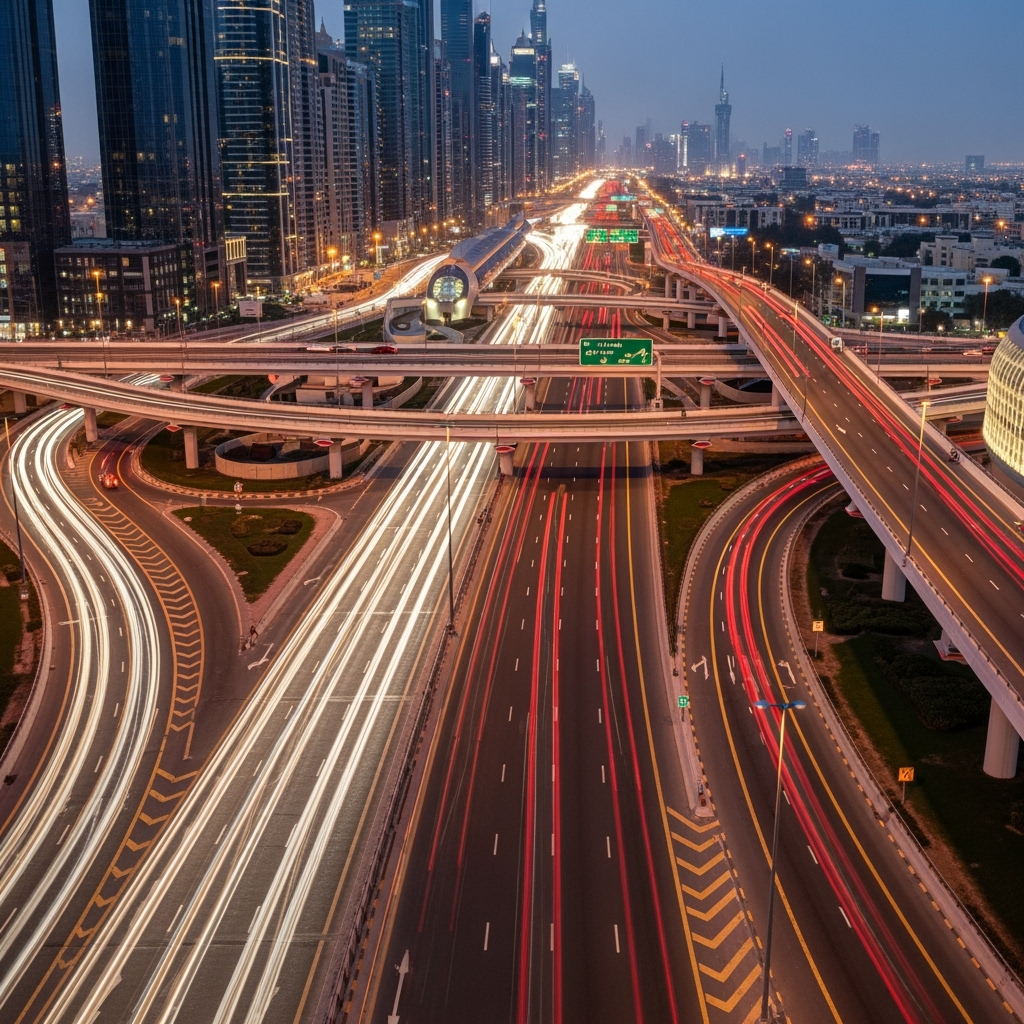
The Roads and Transport Authority (RTA) announced on Thursday that upgrading the central traffic signal control system at key intersections in Dubai has boosted road efficiency and traffic flow by 16% to 37%.
This revamped traffic system incorporates advanced technologies, artificial intelligence, and predictive analytics to enhance traffic management.
“The upgrade and alignment have exceeded our initial expectations, with overall travel times improving by 10% to 20%. At Jumeirah Street intersections, the gains reached 37%; Al Badaa Street saw 29.4% improvement; Kuwait Street had a 16.9% increase, and Omar Bin Al Khattab Street experienced a 16.4% rise,” stated Mohammed Al Ali, the director of Intelligent Traffic Systems Department at RTA’s Traffic and Roads Agency.
Stay informed with the latest updates. Follow KT on WhatsApp Channels.
Al Ali added, “The project’s first phase showed an ability to identify congestion patterns and respond proactively. It also utilized digital twin principles to test traffic scenarios before implementation.”
“Signal timing adjustments boosted operational efficiency, shortened waiting times, and improved coordination between intersections, ensuring smoother flow, reduced congestion, and prioritization for emergency vehicles, public transport, and pedestrians,” Al Ali noted.
The RTA’s new system, called UTC-UX Fusion, employs digital twin technology to predict traffic, simulate changes, and dynamically adjust signal timings. It supports multimodal transport, including private vehicles, public transport, pedestrians, and cyclists.
It integrates with V2X connected vehicle technologies and will incorporate data from various smart devices in the future, enhancing monitoring and enabling precise traffic analysis.
Al Ali mentioned that the RTA will continue upgrades in multiple phases, aiming for full completion by the third quarter of 2026. By then, around 300 intersections in Dubai will adopt this new-generation system, improving mobility for all road users, whether by car, public transport, walking, or cycling.