On Thursday, Britain, France, and Germany initiated a 30-day procedure to reinstate UN sanctions on Iran due to its contentious nuclear program, a move likely to heighten tensions just two months following bombings by Israel and the United States on Iran.
A senior Iranian official swiftly accused the three European nations of undermining diplomacy and insisted that Tehran would not succumb to pressure from the E3’s activation of the “snapback mechanism.”
The three countries were concerned about losing the authority to reinstate sanctions on Tehran by mid-October, which were previously lifted under a 2015 nuclear agreement with global powers.
French Foreign Minister Jean-Noel Barrot stressed that the decision does not mark the end of diplomacy. His German counterpart, Johann Wadephul, called on Iran to fully collaborate with the UN nuclear watchdog and engage in direct discussions with the United States over the upcoming month.
A senior Iranian official told Reuters that the decision was “illegal and regrettable” but hinted at potential engagement.
“This move is an action against diplomacy, not an opportunity for it. Diplomacy with Europe will persist,” the official stated, adding: “Iran will not yield under pressure.”
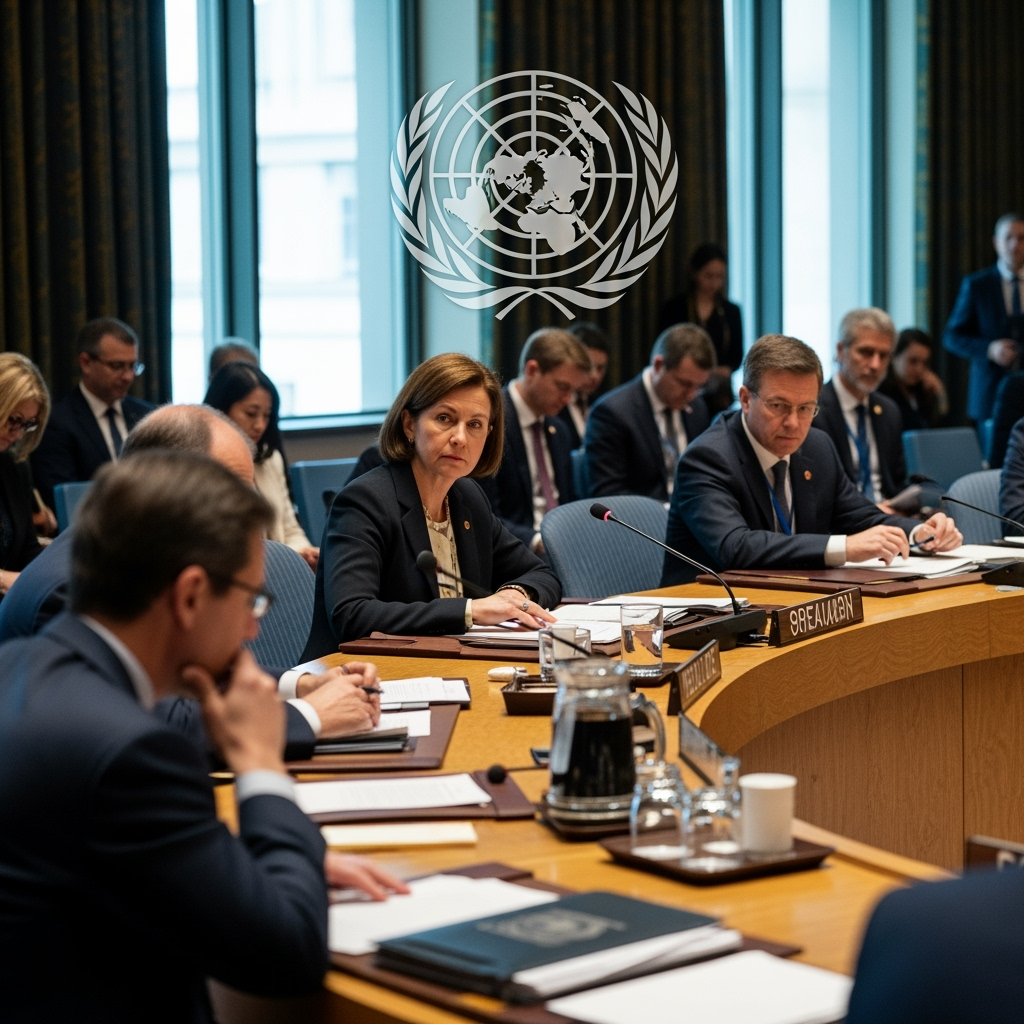
The U.N. Security Council is scheduled for a confidential meeting on Friday at the E3’s request to deliberate on the snapback action against the Islamic Republic, according to diplomats.
Since mid-June, following the Israeli and U.S. bombings of its nuclear sites, Iran and the E3 have engaged in numerous talks aiming to delay the snapback mechanism. However, the E3 determined that the discussions in Geneva on Tuesday did not result in substantial commitments from Iran.
The E3 acted on Thursday, alleging that Iran breached the 2015 deal designed to prevent the development of nuclear weapons in exchange for lifting international sanctions. The E3, along with Russia, China, and the U.S., were signatories to that agreement.
In 2018, U.S. President Donald Trump withdrew Washington from the accord during his first term, criticizing the deal as biased towards Iran. His second administration engaged in unsuccessful indirect negotiations with Tehran earlier this year.
U.S. Secretary of State Marco Rubio endorsed the E3’s move, stating that the Europeans had clearly outlined Tehran’s “significant non-performance” concerning its nuclear obligations.
Rubio mentioned that the United States remains open to direct engagement with Iran “to achieve a peaceful, lasting solution to the Iran nuclear issue.”
An Iranian source stated Tehran would only consider talks “if Washington guarantees no (military) strikes during the discussions.”
The E3 expressed hope that Iran would engage by the end of September to provide sufficient commitments regarding its nuclear program, allowing them to postpone concrete action.
“The E3 is committed to utilizing every diplomatic tool to ensure Iran never develops a nuclear weapon. This includes our decision to trigger the ‘snapback’ mechanism today through this notification,” they wrote in a letter to the U.N. Security Council, seen by Reuters.
“The E3’s dedication to a diplomatic resolution remains steadfast. The E3 will fully utilize the 30-day period following the notification to address the issue that prompted the notification.”
Iran has previously warned of a “harsh response” if sanctions are reinstated, and the Iranian official mentioned it is considering its options, including withdrawing from the nuclear Non-Proliferation Treaty.
The E3 had proposed extending the snapback for up to six months to facilitate serious negotiations if Iran resumes full U.N. inspections – which would also aim to account for Iran’s substantial stockpile of enriched uranium not verified since the June strikes – and engages in talks with the United States.
Frustration Grows in Iran
The U.N. process allows for 30 days before sanctions affecting Iran’s financial, banking, hydrocarbons, and defense sectors are reinstated.
Concerns over renewed United Nations sanctions are fueling frustration in Iran, where economic anxiety is rising, and political divisions are deepening, as reported by three insiders close to the government.
As the potential for stricter international restrictions threatens to further isolate the Islamic Republic, officials in Tehran remain divided — with anti-Western hardliners advocating defiance and confrontation, while moderates support diplomacy.
Iran’s rial sharply weakened since Wednesday following a Reuters report about the E3 moving to initiate the return of United Nations sanctions.
Iran has been enriching uranium to up to 60% fissile purity, close to the approximately 90% needed for bomb-grade, and had enough material enriched to that level, if further refined, for six nuclear weapons before the airstrikes by Israel began on June 13, according to the IAEA, the U.N. nuclear watchdog.
However, actually manufacturing a weapon would take more time, and the IAEA has stated that while it cannot ensure Tehran’s nuclear program is entirely peaceful, there is no credible evidence of a coordinated weapons project.
The West argues that Iran’s nuclear program advancements exceed civilian needs, while Tehran insists it seeks nuclear energy solely for peaceful purposes.