A statement from the Egyptian Prime Minister’s office, issued this Friday morning, stated that Egypt aims to reach over 65% by 2040 through efficient management and utilization of available natural resources, maximizing their returns, relying on renewable energy, reducing fossil fuel use, and minimizing carbon emissions. This was discussed during a meeting between the Egyptian minister and a World Bank delegation led by Almud Weitz, the Regional Director for the Infrastructure Sector in the Middle East, North Africa, Afghanistan, and Pakistan, along with her accompanying delegation.
The meeting explored ways of cooperation in supporting and developing the unified network’s capacity to accommodate renewable energies, while working to secure necessary funding for several renewable energy electricity generation projects in Egypt. It involved preparing the technical inputs required for the optimal expansion plan for electricity generation capacity to meet demands. The bilateral meeting discussed “assisting in selecting the technologies used and completing economic evaluations as part of the expansion planning process for generation capacities, and future projects within the permanent and dynamic plan of the electricity and renewable energy sector to strengthen the unified network. This includes adding lines and transformer stations at different voltages and integrating new capacities, especially from renewable energies, and converting the current network from a conventional to a smart grid through building and developing its capabilities and infrastructure.”
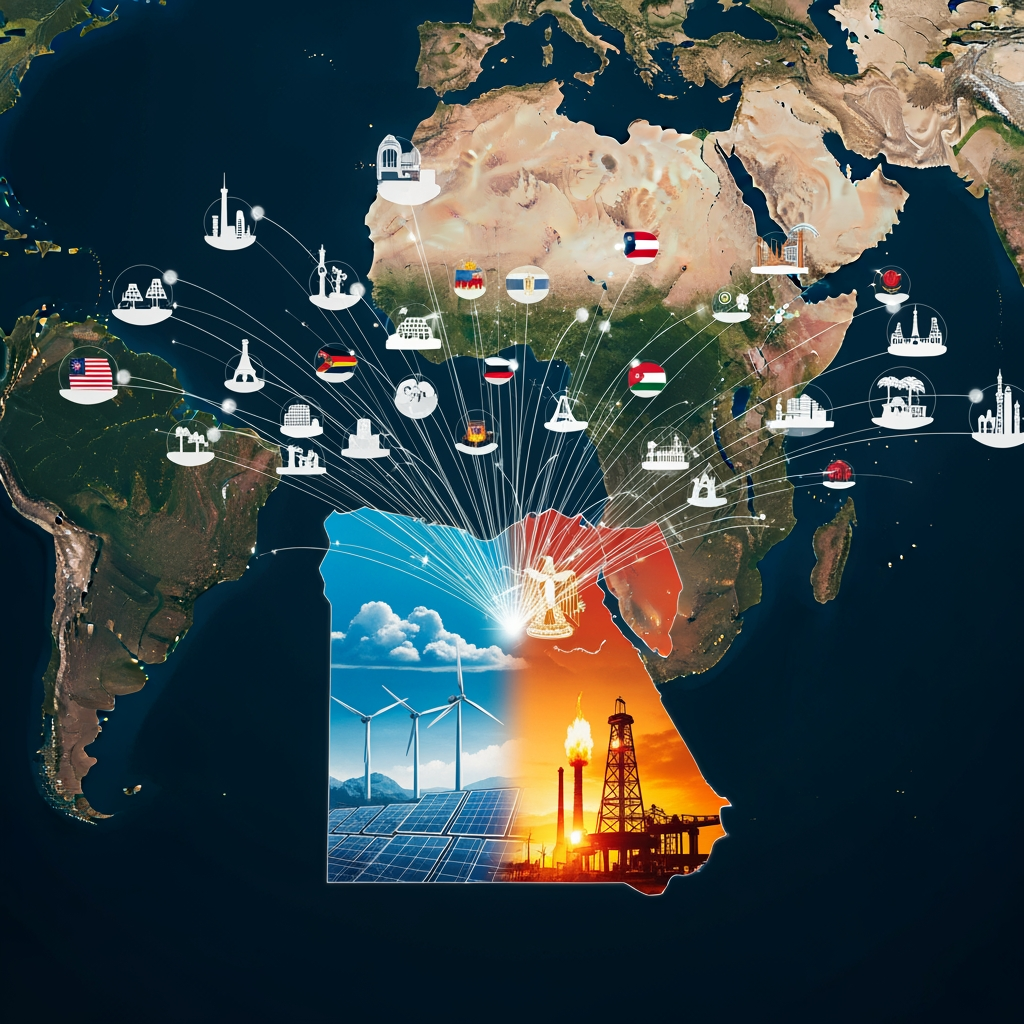
Ismat emphasized that Egypt continues to work towards becoming a regional energy hub, linking energy markets in Africa, Europe, and Asia, thanks to its strategic location and fundamental infrastructure projects. The Egyptian minister noted existing electrical interconnection projects with neighboring countries such as Sudan, Libya, and Jordan, as well as the ongoing project to connect with Saudi Arabia. He clarified the shared vision with European Union countries to implement electrical interconnection projects, pointing out ongoing projects with Greece and Italy as significant endeavors aimed at achieving regional energy integration and stabilizing electrical networks, which will bring economic benefits to the involved countries and parties.